Home

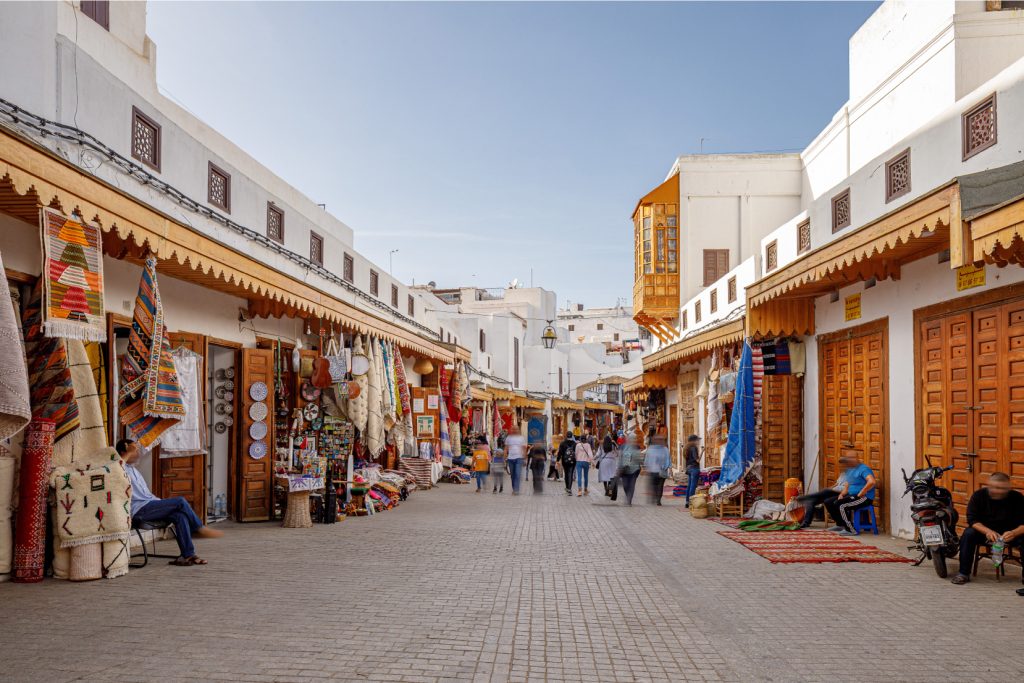
Founded in the 12th century, Rabat is a city combining modernity and heritage, represents the balance between tradition and innovation. Iconic monuments and cultural events reflect its influence, recognized by UNESCO World Heritage listing in 2012.

EXHIBITION

Established under the high vision of His Majesty King Mohammed VI, the Foundation for the Safeguarding of the Cultural Heritage of Rabat carries a living mission: that of transmitting the soul of a city to all generations, across time and across borders.

Inscribed in 2012 on the UNESCO World Heritage List as “Rabat, Modern Capital and Historic City: a Shared Heritage,” the city embodies a rare dialogue between centuries of history and the creativity of a vibrant, ever-evolving culture.

Under the leadership of Her Royal Highness Princess Lalla Hasnaa, the Foundation embraces a vision where heritage is not merely preserved, but shared, understood, and cherished — by the youngest children taking their first steps in discovery, by students and scholars deepening their knowledge, by adults reconnecting with their roots, and by visitors from all over the world drawn by the spirit of Rabat.

The Foundation’s action is guided by a spirit of cultural mediation, forging bonds between past and present, tradition and innovation. It mobilizes all forms of transmission — from the ancestral gestures passed down through generations to the most advanced digital technologies — to make heritage accessible, vibrant, and meaningful to all.

Workshops, interactive tools, artistic and scientific encounters: each initiative seeks to awaken curiosity, nurture understanding, and inspire a sense of belonging — among specialists who read the hidden language of monuments, and among all those who seek to feel the living heartbeat of a historic city.

It is within this vision that “The Art of the Rabat Carpet” exhibition finds its full meaning.

More than an exhibition, it stands as a tribute — a tribute to the master craftswomen of Morocco, whose talent, generosity, and timeless knowledge give birth to marvels where beauty and utility are interwoven. Through their inspired hands, patiently transmitting ancient gestures, the Rabat carpet flourishes, carrying within its threads the values of continuity, creativity, and shared spirit.

In honoring these guardians of heritage, the exhibition salutes a living legacy — a testament to the enduring power of craftsmanship, and to the silent yet luminous contribution of those who, across generations, nurture the cultural soul of Morocco.

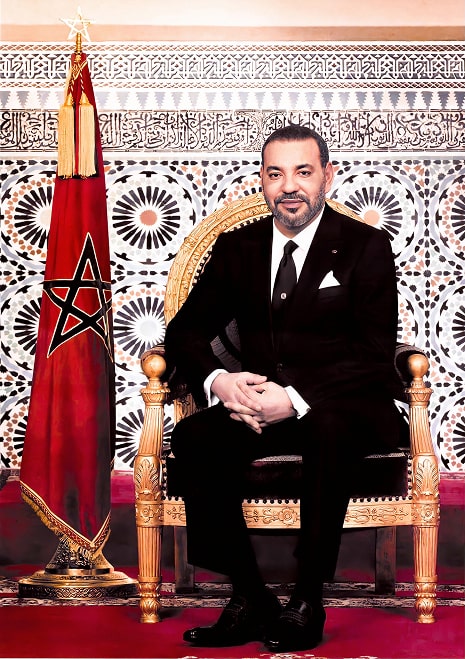
His Majesty King Mohammed VI

Foundation

The Foundation for Safeguarding the Cultural Heritage of Rabat was created by His Majesty King Mohammed VI to preserve both the material and intangible heritage and landscape of Rabat. Indeed, since 2012 a part of the city has been registered on UNESCO’s list of World Heritage Sites, as “Rabat, Modern Capital and Historic City: A Shared Heritage”.

MOROCCAN CARPET

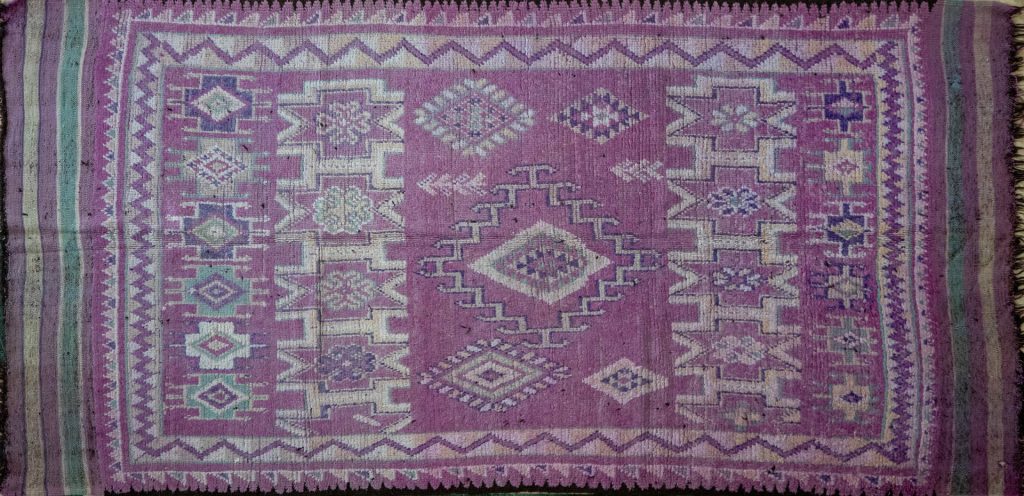
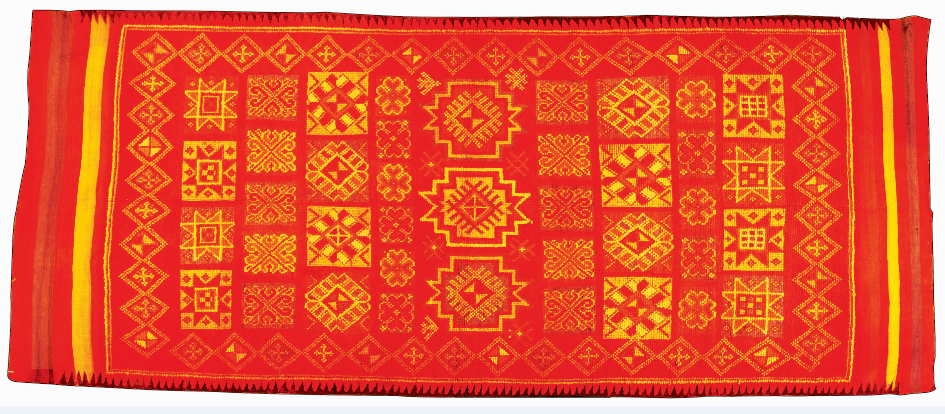
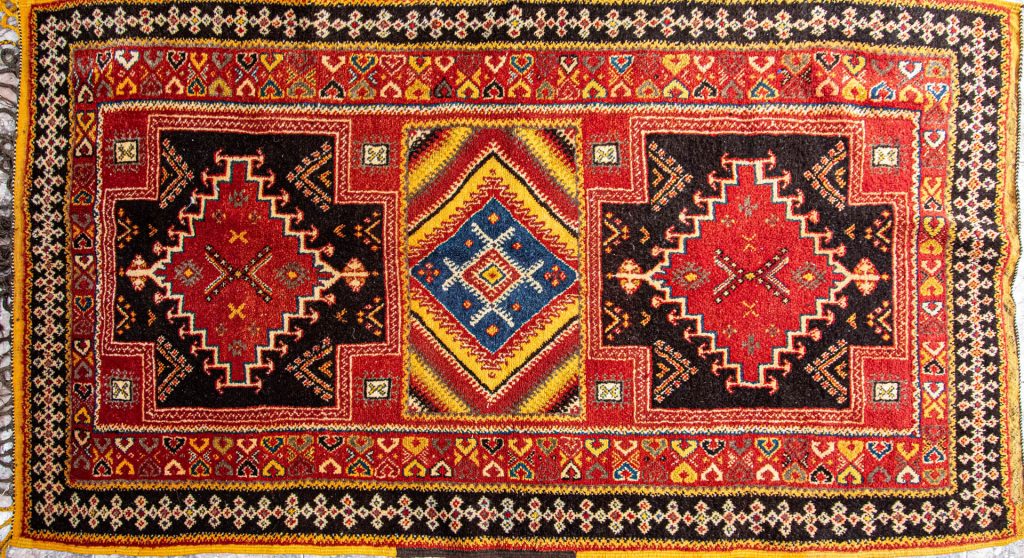
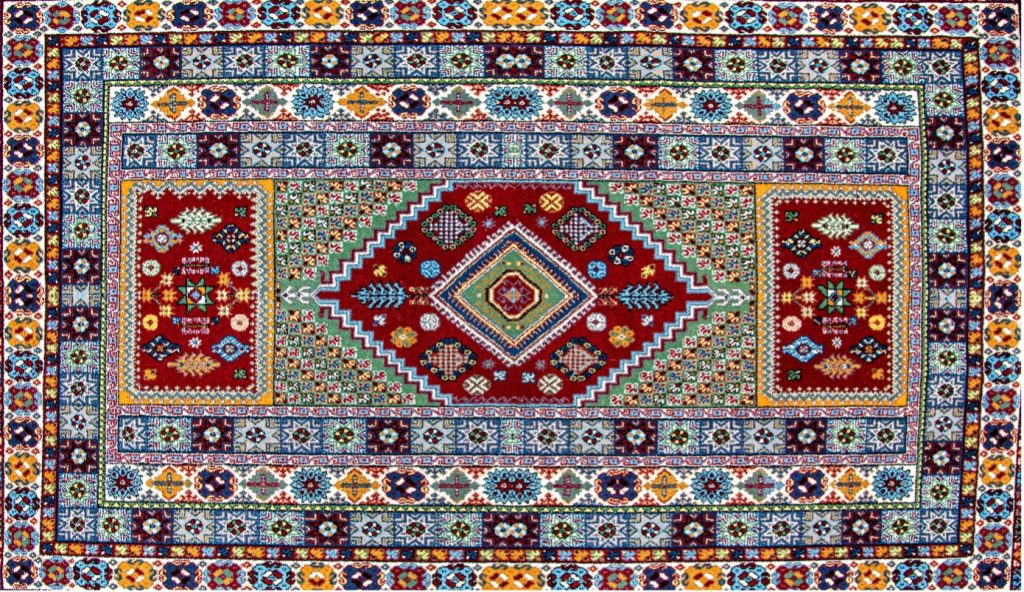
The Moroccan carpet, recognized as intangible heritage, embodies ancestral know-how passed down through generations. Urban, rural, Haouz, or oriental, each carpet reflects its region’s identity. A source of income for rural women and central to social rites, it remains a living symbol of Moroccan culture, preserving tradition while adapting to modern times.

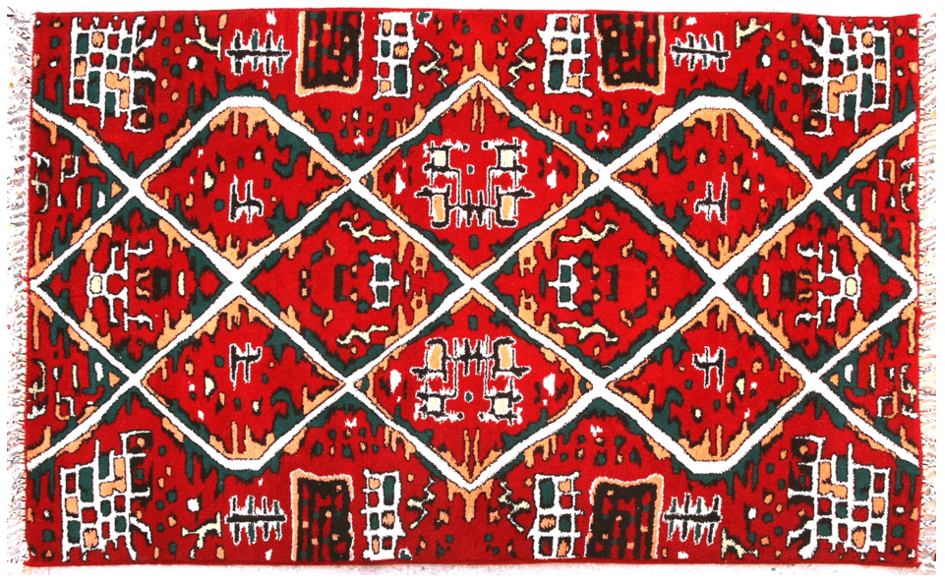
Eastern Morocco Carpets, Béni Bouyahyi Tribe

Eastern Morocco Carpets, Aït Bouchaouen Tribe

Eastern Morocco Carpets, Aït Bouchaouen Tribe

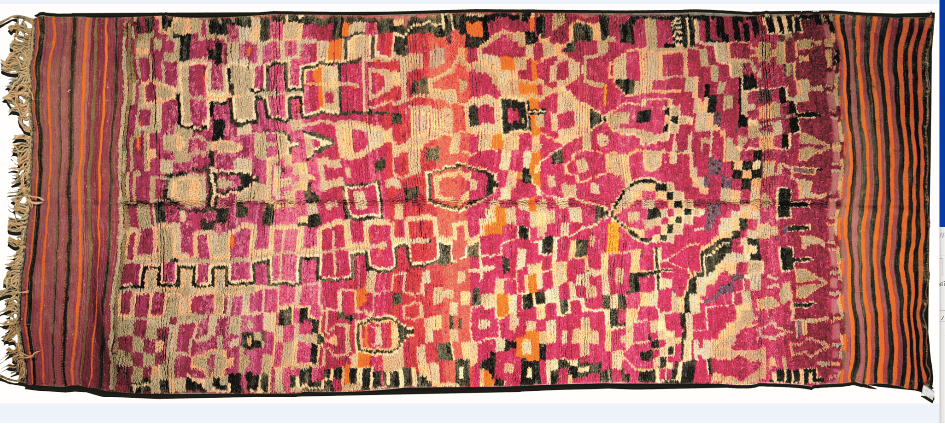
Haouz Carpets of Marrakech, Oulad Bousébâa Tribe

Haouz Carpets of Marrakech, Oulad Chennane Tribe

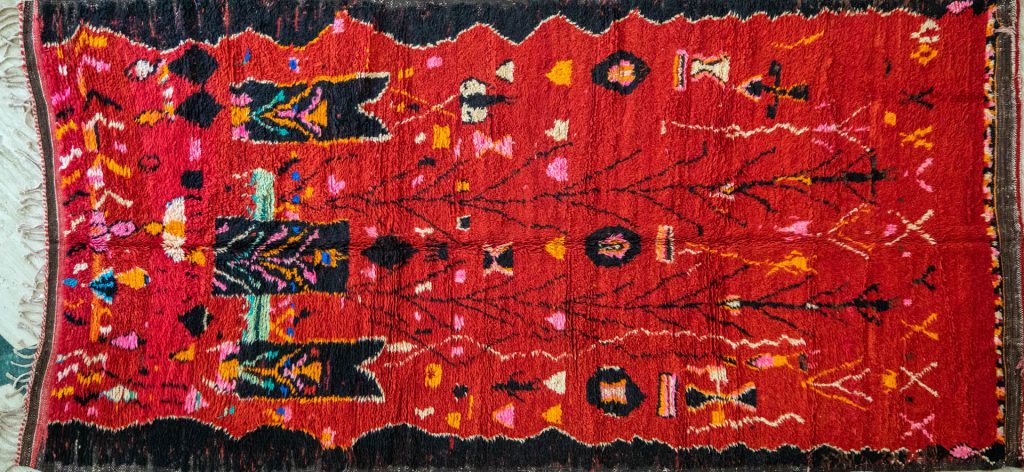
High Atlas Carpets of the Aït Tamassine Tribes

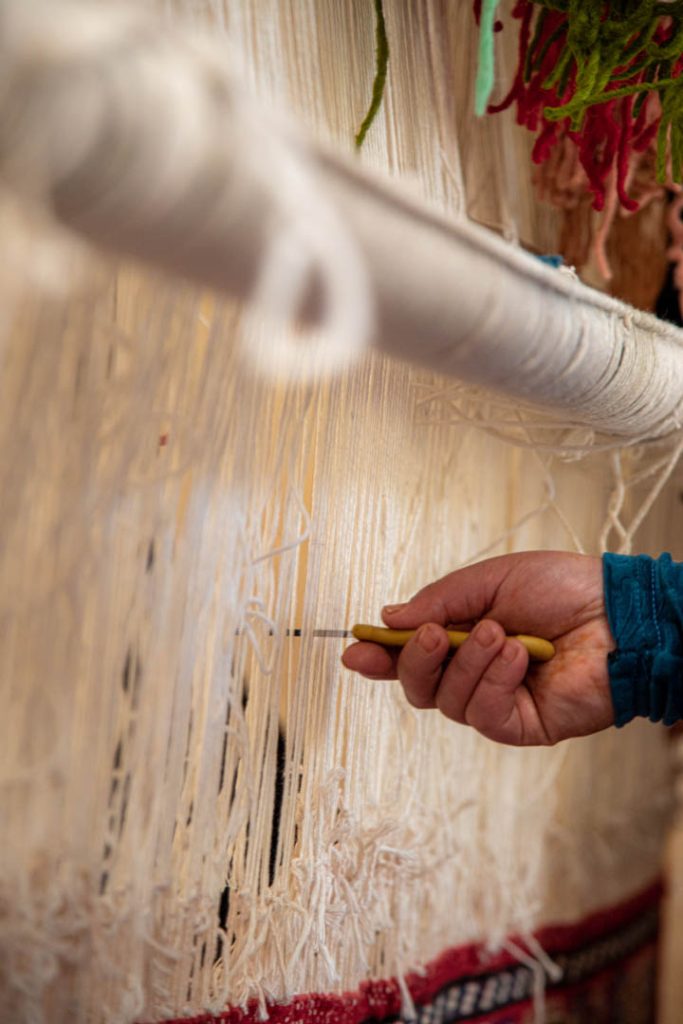
The exhibition on the R’bati carpet highlights a refined craftsmanship passed down in Rabat’s medina. From spinning to finishing, each step reveals the beauty of the artisanal gesture.

Rituals, legends, and feminine figures are evoked. Thanks to cooperatives and innovation, this heritage lives on between tradition and modernity, weaving a connection between the past and the future.

Thread by thread :
The artful journey of the carpet

In Rabat, the carpet is not a simple decorative object. It is a presence, a silent anchor at the heart of the home. In the Moroccan salon as in modern interiors, it embodies a link between generations, the seasons of life, and shared emotions. One does not buy it lightly: it is carefully chosen for its design, color, and balance. It lies at the center of the space, a place for gathering and contemplation.

The carpet accompanies all moments: family evenings, religious celebrations, prayer vigils. It becomes table, bed, prayer mat, and place for exchange. Women pay special attention to it: they perfume it, fold it with care, and know how to read its quality. It is often passed down, kept as a keepsake, and occupies an almost sacred place in the home.

KOUBBA BI
ALHOUSNIYA

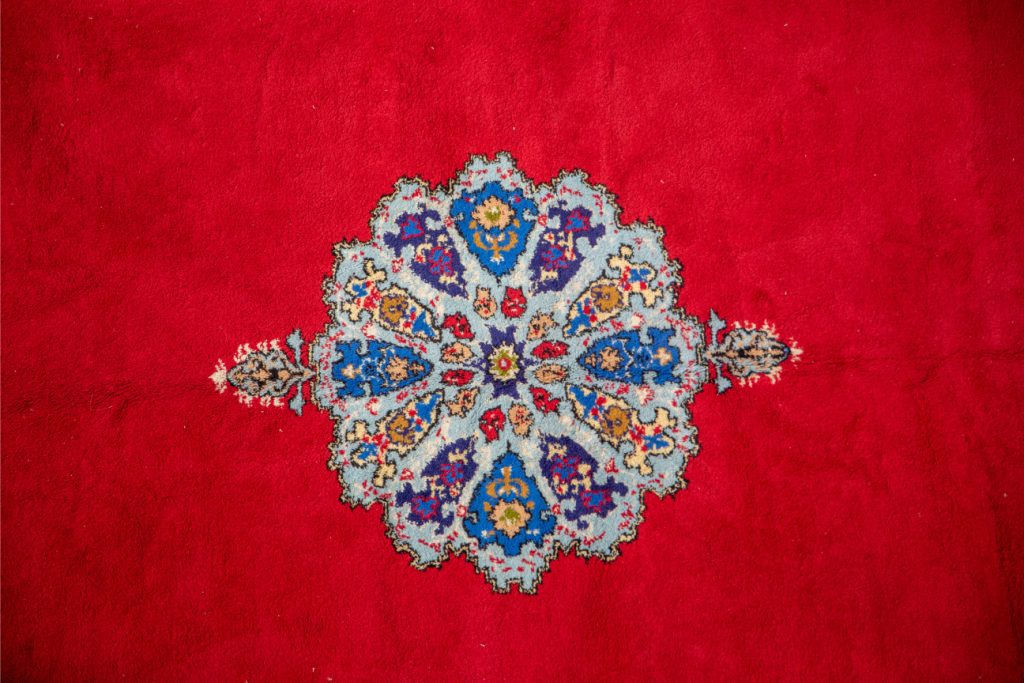
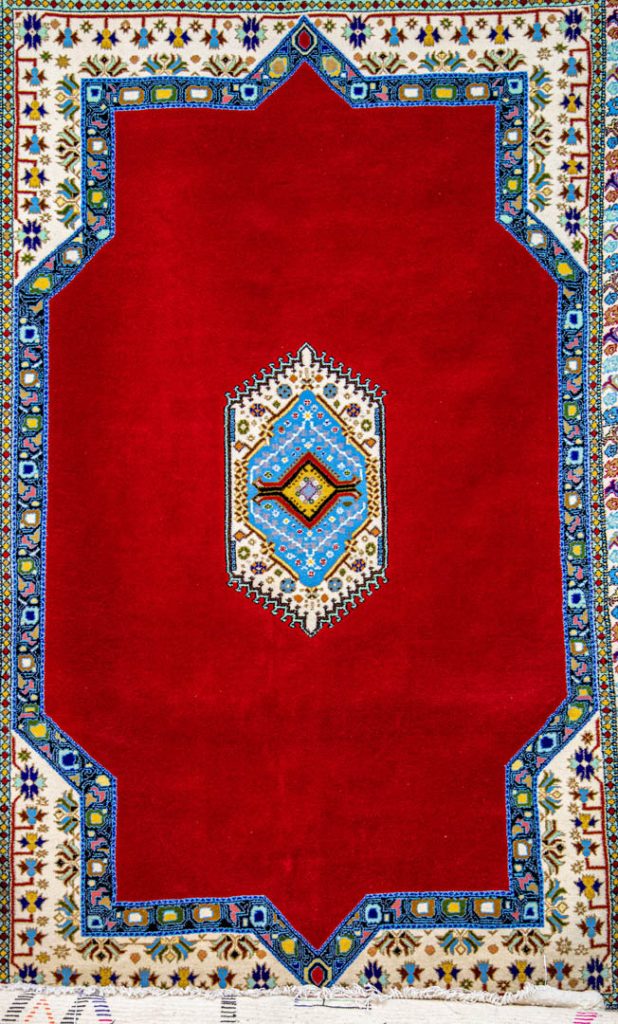
Stamped Carpet named Modern Rabat Carpet. Indeed, the field features a colour that is neither madder red or cochineal red.

KOUBBA BI
ASSLIMANYA

Clearly apparent bands thanks to the high contrast contours of colours in relationship to the body of motifs.

KOUBBA
MAFROUQA

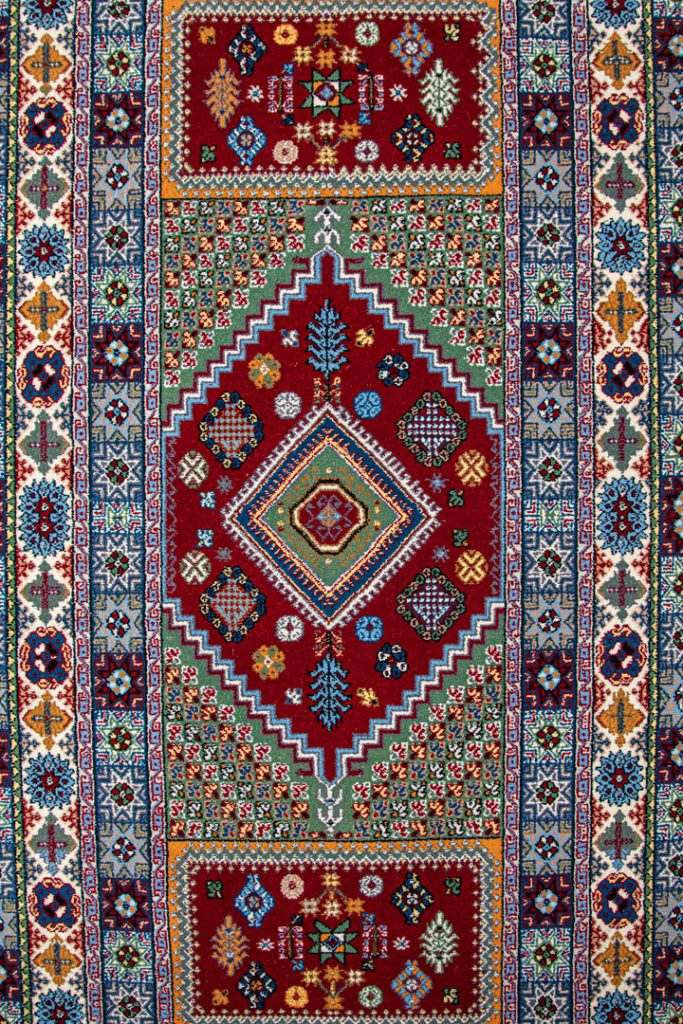
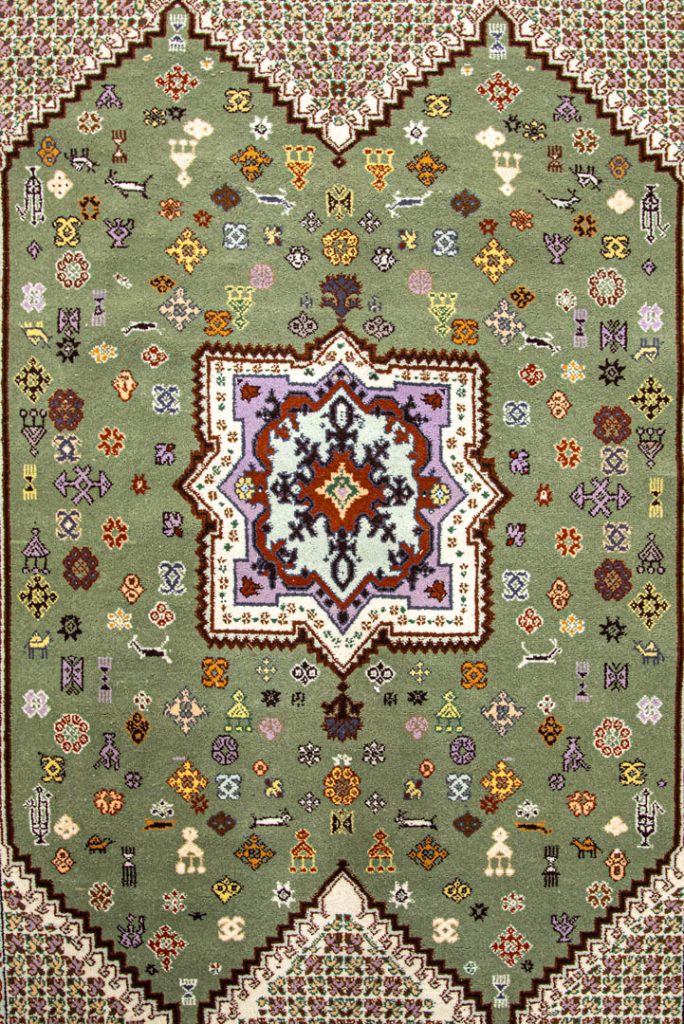
Carpet with a field known as Al Koubba, adorned by two triangles at each end. This composition is denominated Al Koubba Al Mafrouqa (split arches).

KOUBBA BI
ALHOUSNIYA

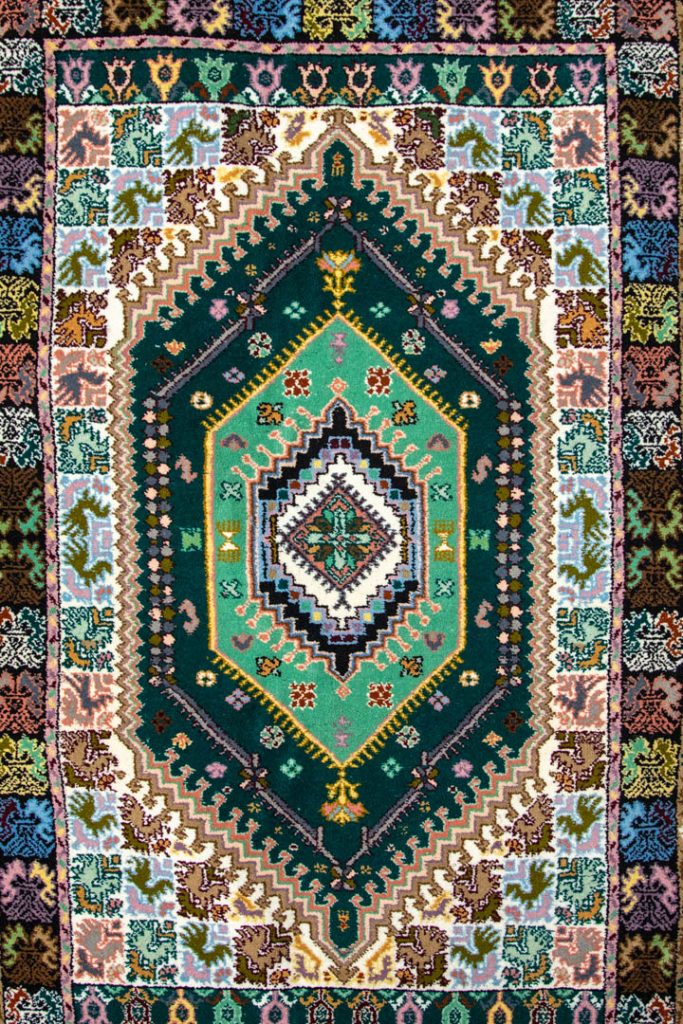
Carpet with warm colours that has a central medallion in a lovely orange that attracts the eye named Al Housniya, harmonising an orchestra of motifs.

Preparation of the raw material

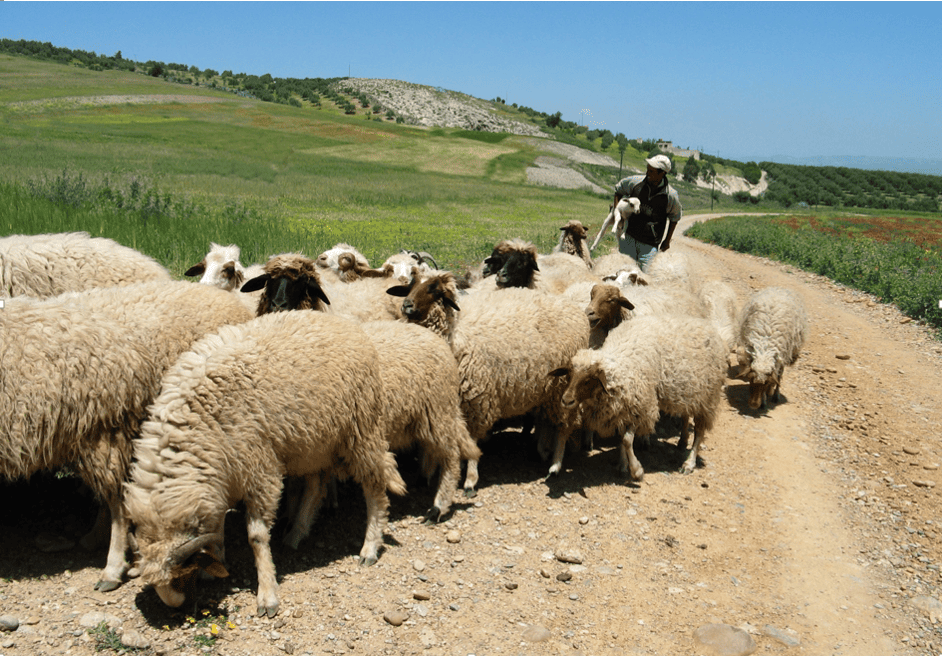
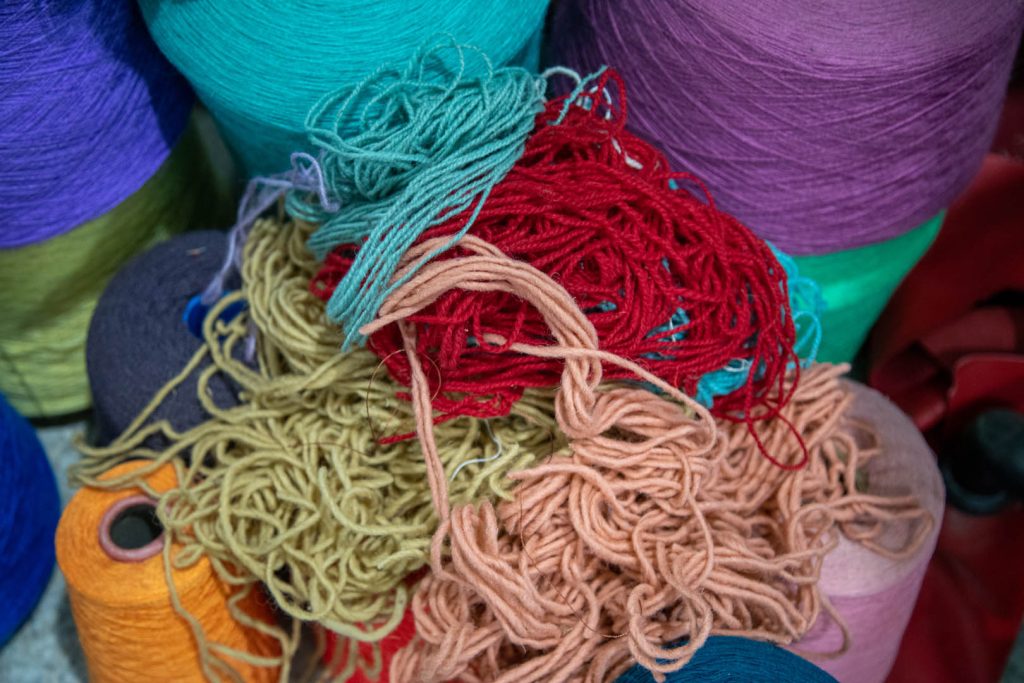
Morocco has a diverse sheep flock, with breeds such as Timahdite, known for the fineness of its wool, and Boujaâd, used for Rabat carpets. Boujaâd wool is ideal for floral-patterned carpets. The preparation of wool involves steps such as washing, carding, spinning, and dyeing with natural pigments. These processes are carried out in accordance with traditional practices and ancestral knowledge, with dyes made from plants like henna and indigo.
Step 1

The Traditional Shearing of Sheep in Morocco

In spring, traditional sheep shearing in Morocco is performed collectively in a solidarity-based group called “Twiza”. Equipped with the iron “maqass”, men shear with precision, guided by rhythmic folk songs. The valuable wool is carefully gathered. A celebratory meal follows this rural ritual, honoring wool as a household treasure and a cherished part of family heritage.
Step 2

Traditional Wool Washing

After shearing, wool is washed collectively by women along the Bouregreg river. Using the “Tighachte” plant, clear water or soap, they purify this noble material. Drained in reed baskets and dried in the sun, the wool is renewed. This ancestral washing, passed down through generations, unites women, nature, and time in a ritual of harmony.

Step 3

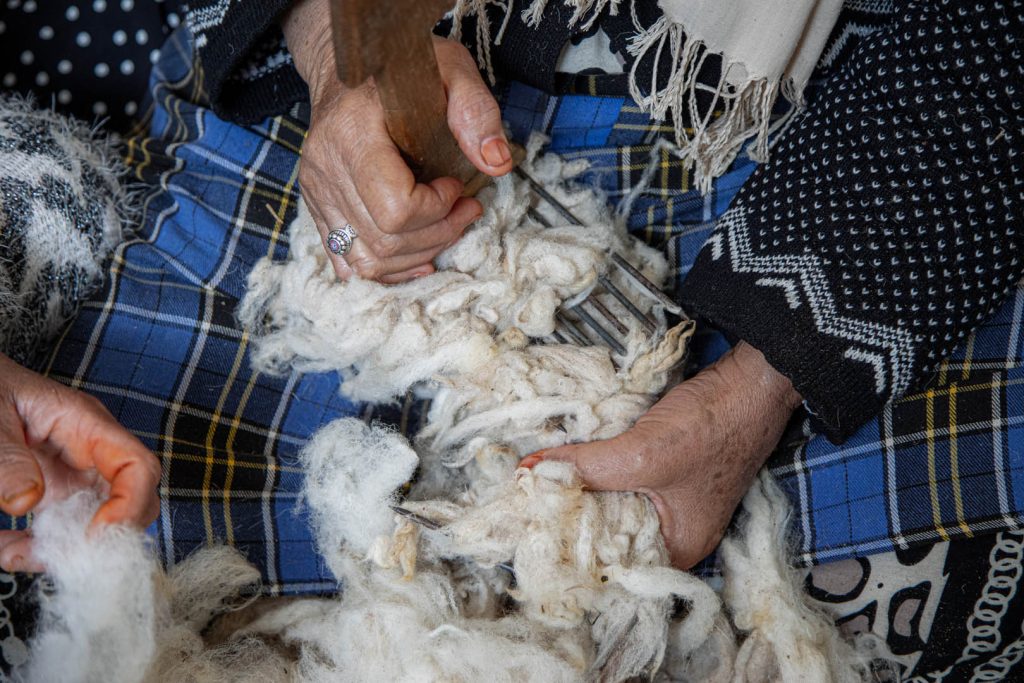
Combing the Wool

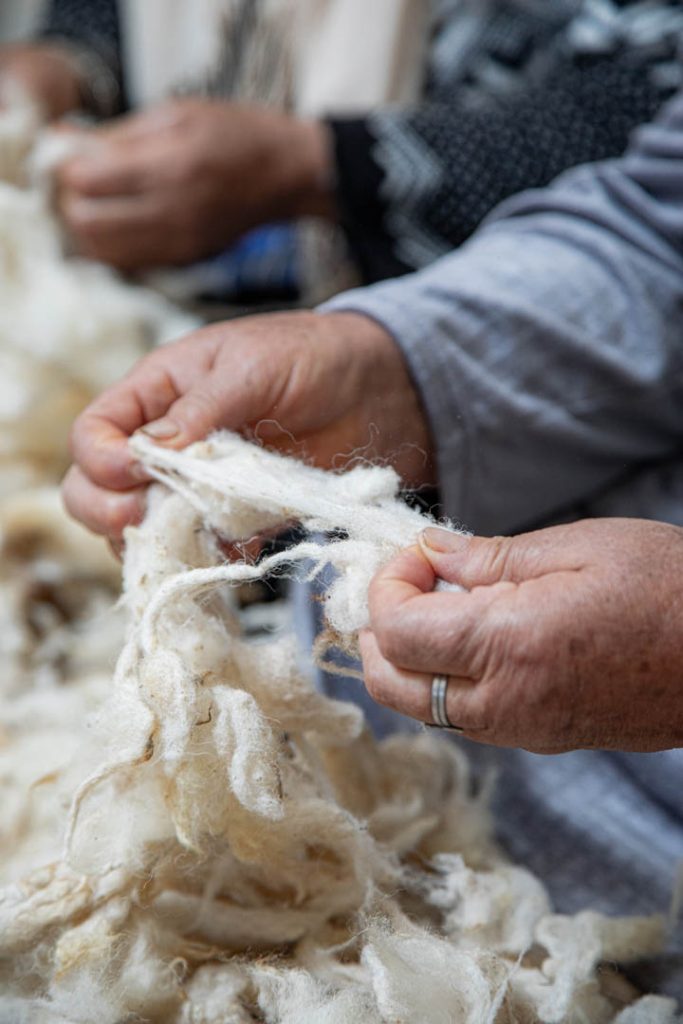
Wool combing begins at dawn, with metal-toothed wooden combs. The spinner sorts the washed fibers, drawing long strands she wraps around a distaff. In the quiet, only an old song is heard. It is a sacred ritual, where patience and love tame the wool, transforming it into a promise of future weaving.

Step 4

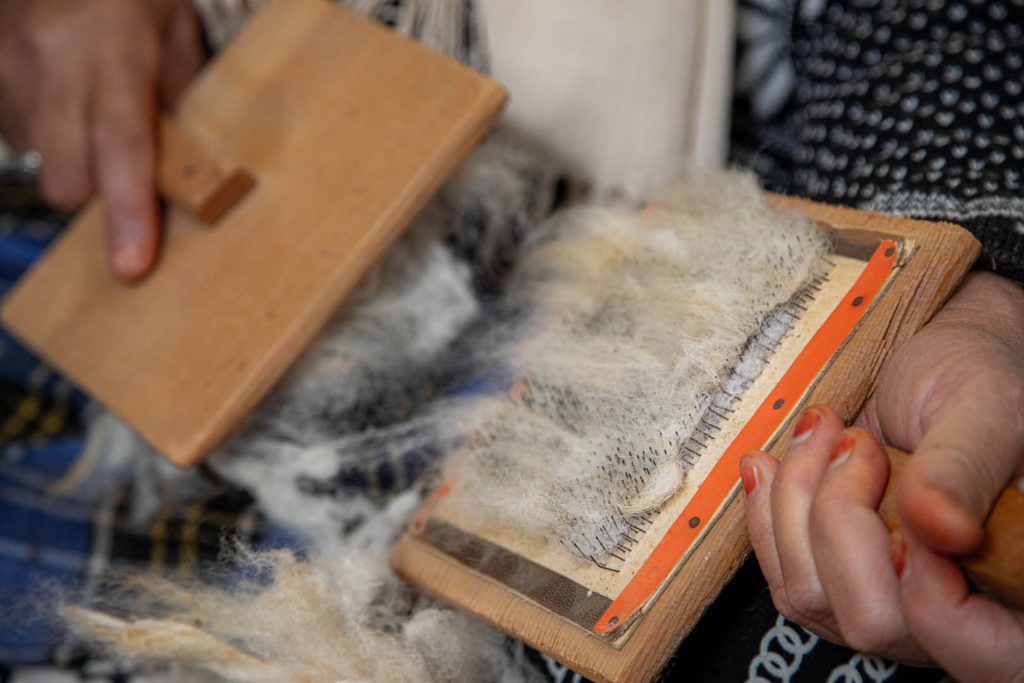
Carding the Wool

In a rural workshop, wool carding is a delicate and precise act. Using fine-toothed wooden paddles, women loosen and align short fibers, giving them flexibility and cohesion. These fluffy masses, sometimes blended, prepare the wool for spinning. It is a gentle gesture—a caress that precedes the birth of a future Moroccan carpet.

Step 5

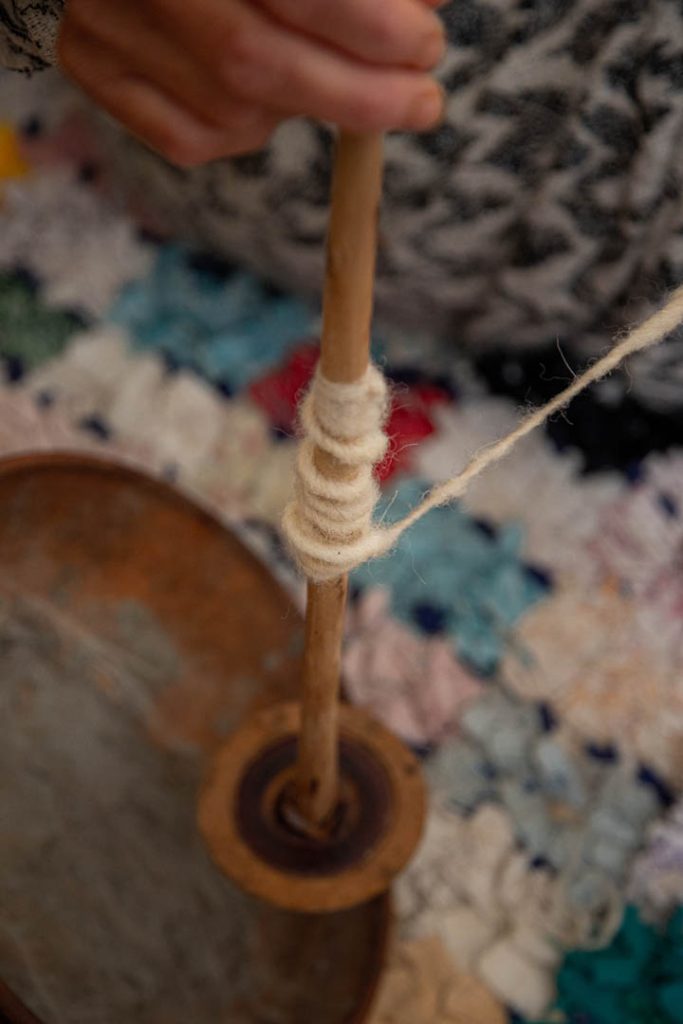
Wool Spinning

Spinning transforms wool into yarn using a wooden spindle. The spinner patiently stretches the fiber, creating strong or supple threads depending on their purpose. The motion is smooth, accompanied by song. Meter by meter, the wool becomes a thread of tradition—a promise of future carpet, a living link between ancestral skill and feminine memory.

Step 6

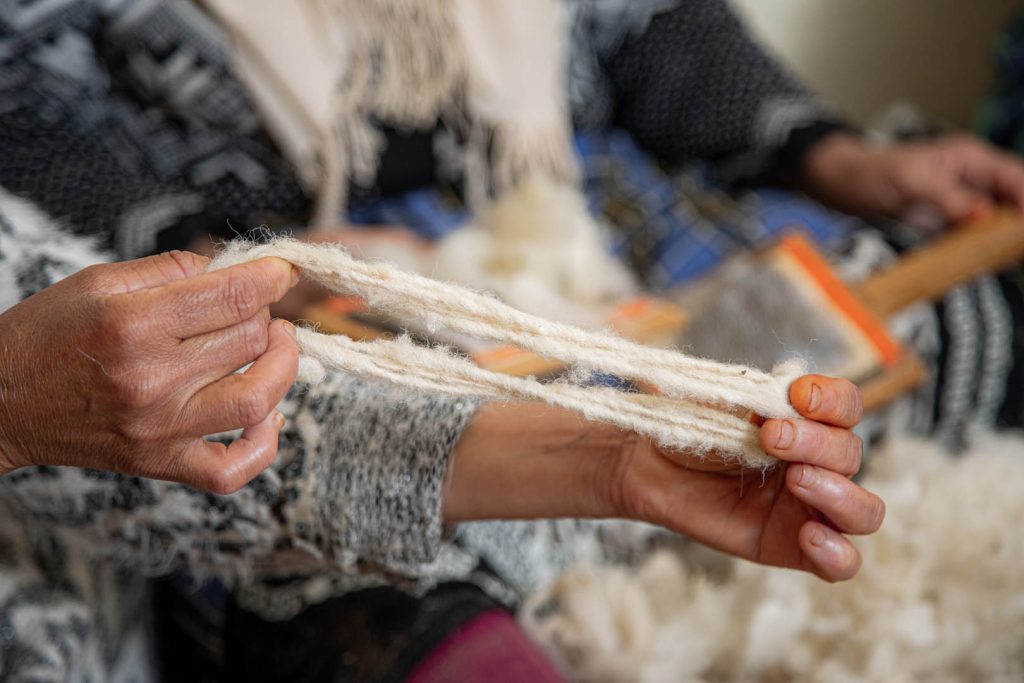
The Making of Skeins

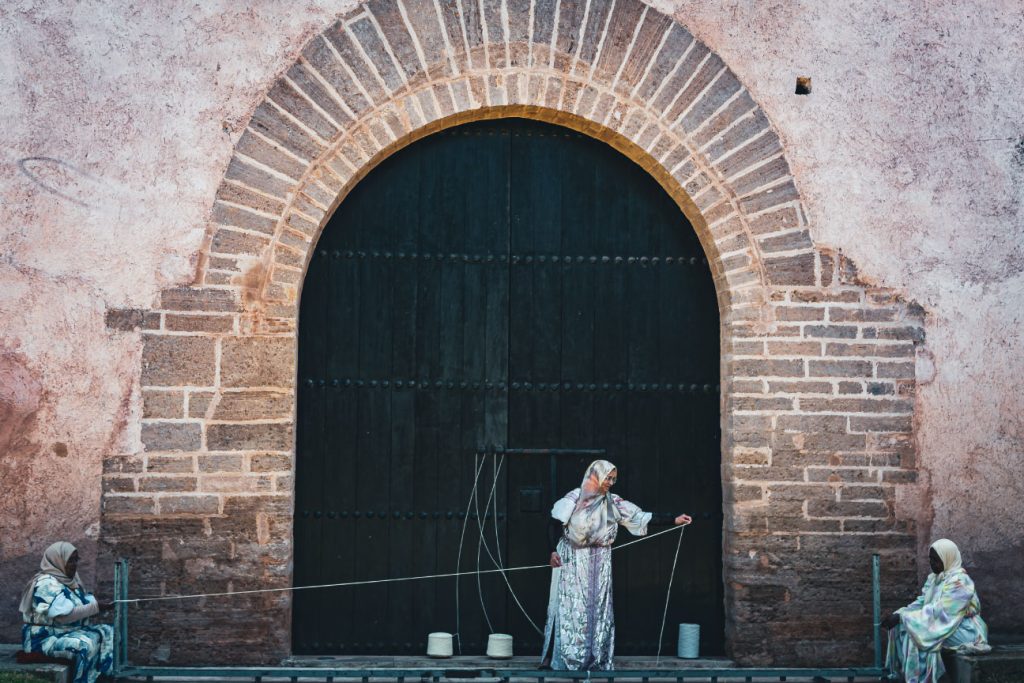
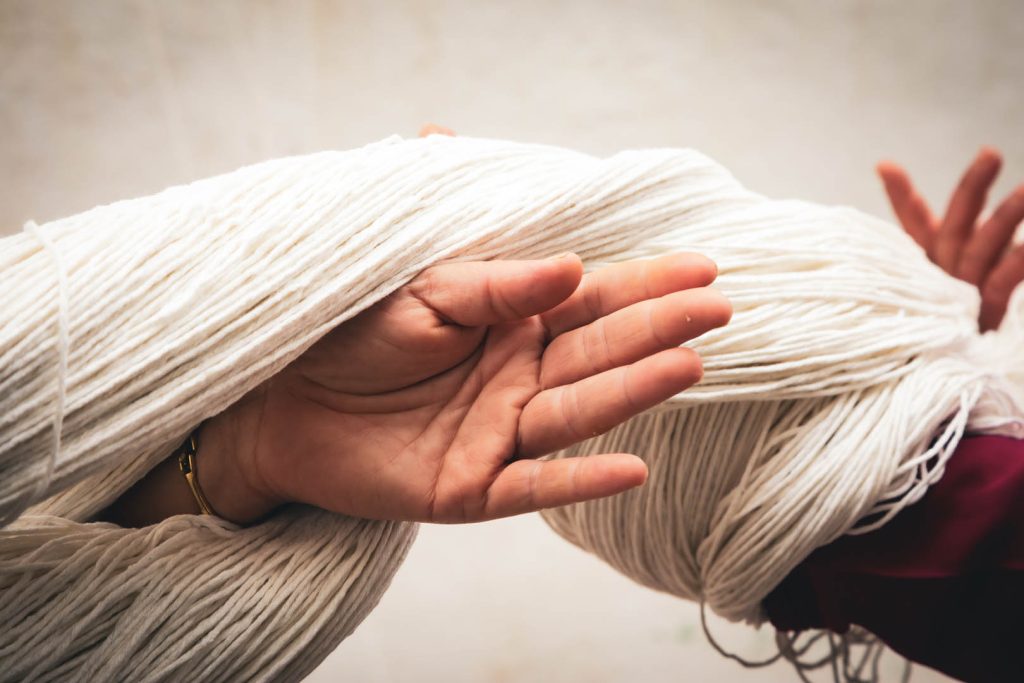
Winding into skeins gives the yarn its oval form through a precise gesture between hand and foot. This delicate motion unites discipline and softness. The skein, tied with a colored thread, is sent for dyeing or kept for future creations. It carries the promise of a future piece and the silent beauty of a craft passed down through generations.

Step 7

The Traditional Dyeing of Wool Threads in Morocco

In the living heart of the Rabat medina, where the alleys snake between the lime-washed walls, there once stood a special souk, vibrant with smells and colors: the dyers’ souk. It was a world apart, a sanctuary where wool came to life under the expert hands of dyers, in a silent ballet orchestrated by tradition.

Preparing for weaving

Wool is treated with deep respect, seen as a divine gift. This sacred connection reflects its role in the preservation of Moroccan heritage, even in a globalized world. Today, artisanal Moroccan wool supports a sustainable economic model. Cooperatives allow rural women to preserve their know-how while contributing to local development. Moroccan wool is thus a symbol of the country’s cultural identity, blending tradition and modernity.

Step 1

The Beginnings of the Carpet’s Silent Song

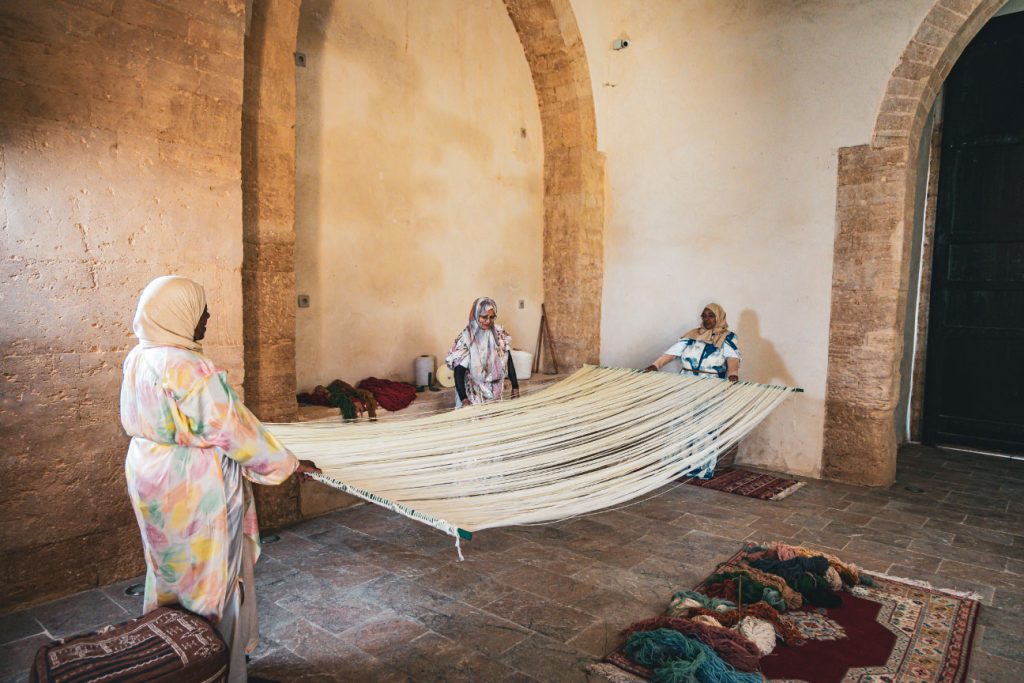
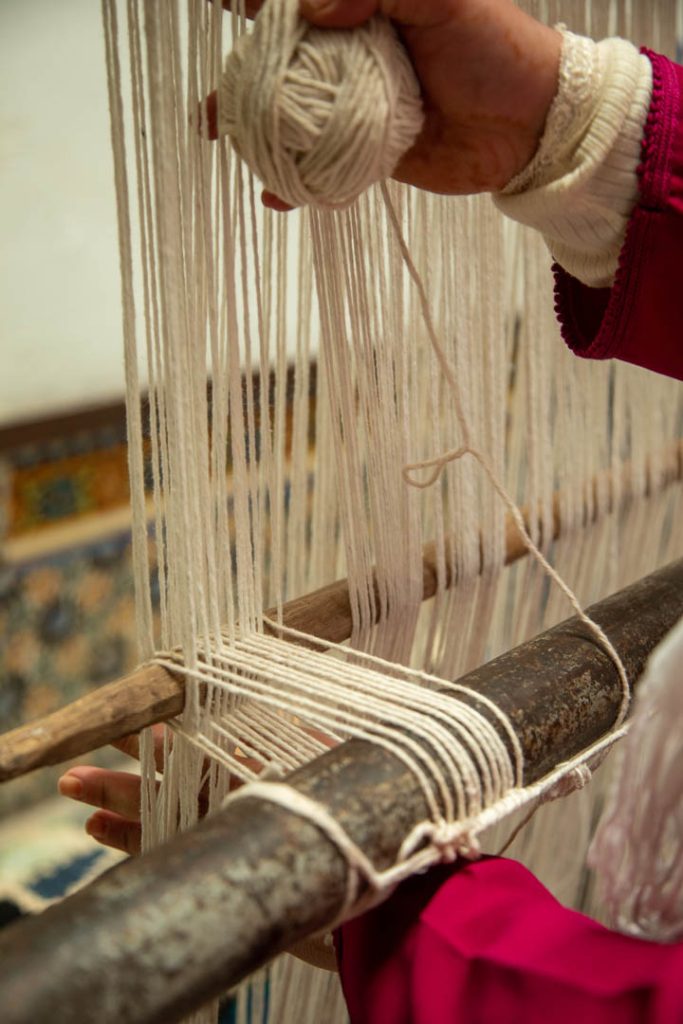
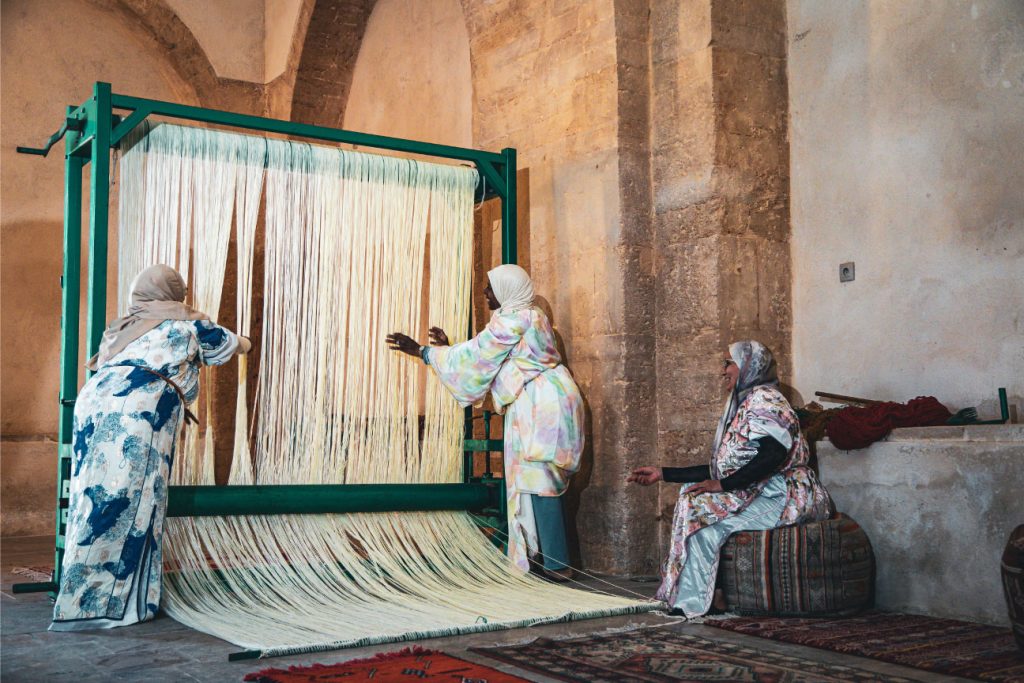
Warping, the sacred morning ritual of weaving, involves women stretching the warp threads between pegs, forming the structure of the carpet. This meditative gesture, passed down through generations, blends precision with sacredness. A string maintains the width for the weft. This collective moment celebrates transmission, nature, and marks the birth of the carpet—a poetic textile yet to come.

Step 2

The Stretching of the Chain: Symphony of Threads and Ancestral Gestures

Laying out the warp marks the start of the carpet’s creation. Once done on cedar wood with six women, it required balance and precision. Today, two women work with metal rods. Though tools have changed, the gesture remains sacred. Each carefully placed thread becomes a prelude to the textile poetry of the carpet to come.

Step 3

Mounting the Chain on the Loom: The Architecture of Weaving

Mounting the warp marks the carpet’s transition to creation. Once stretched on wooden looms, the warp is now fixed to metal frames, with the Quilo—a key tool for thread alignment—playing an essential role. This foundational step establishes the architecture of the weave, ready to welcome wools and colors in a perfectly balanced harmony.

Step 4

Mounting the “Annira” Heddle Rod: The Birth of the Carpet’s Soul

Mounting the “Annira” heddle bar breathes soul into the carpet. This bar, with its thread “Khite Annira,” separates even and odd threads, forming the “foule,” the basis of weaving. Inserting the reed “Algasba” allows adjustment. Simple in appearance, this spiritual step gives life to the threads and initiates the vibration of weaving.

Step 5

The Beginning of Weaving: the Ad’fira and the Chef

Weaving begins with the “Ad’fira” braid—protective and sometimes decorative—made of two twisted strands. It is followed by the “Chef” or “Attakhtita,” a knotless band in the dominant color, which stabilizes the carpet’s base. Once wider, it is now more discreet but remains essential. These first steps firmly anchor the carpet’s structure and begin its narrative.

Step 6

Making the Knots: The Beating Heart of the Carpet

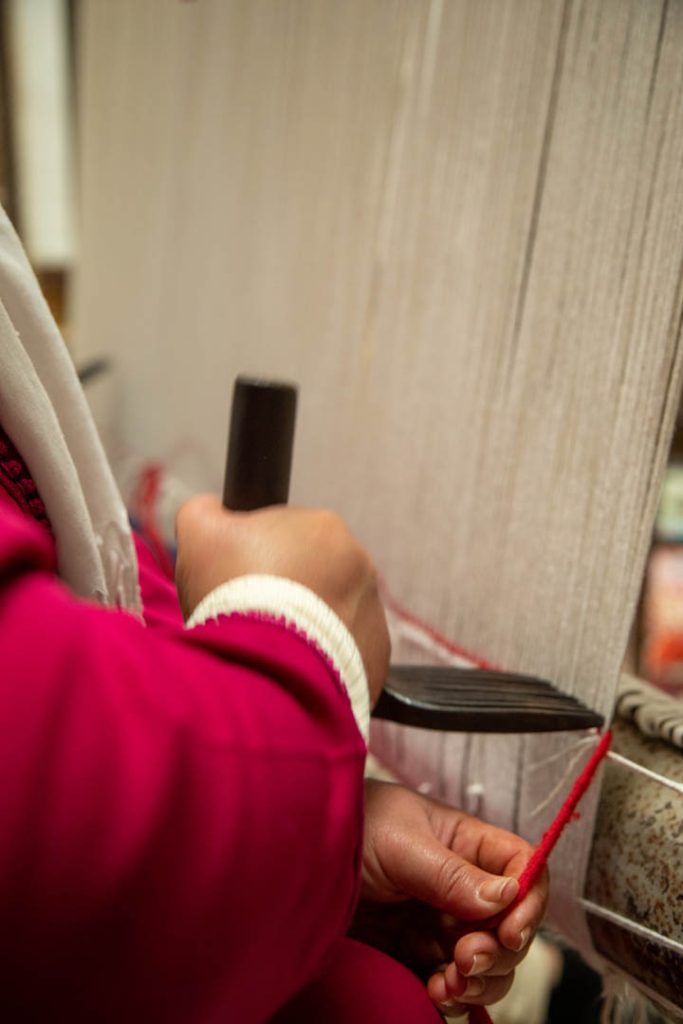
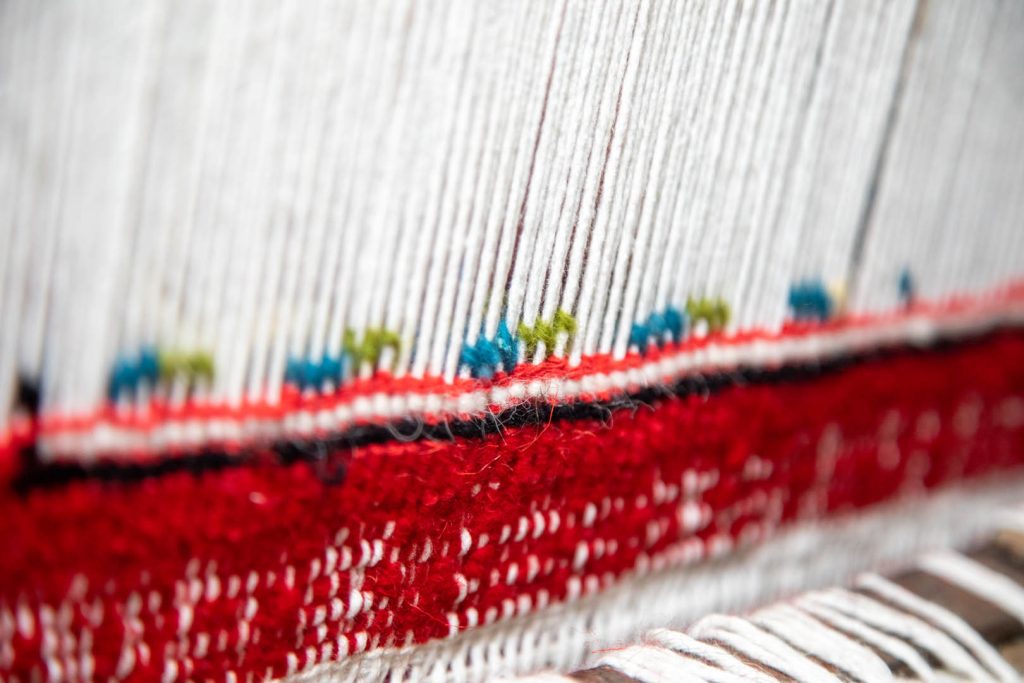
In Rabat, the “Aouqda R’batya” knot gives the carpet its texture and design. Formed around the “Hayir” and “Nayir” threads, each knot is followed by compression with the “Almadra” comb and rhythmic weft insertions. Vertically layered, the knots shape the carpet. Using strong threads and virgin wool, the design becomes a silent woven song

Step 7

The Edges of the Carpet: The Living Border of Weaving

The edges, or “Hachiate”, ensure the carpet’s stability by holding weft and knots. Made from thick cords called “Aarq”, they are the nerves of the weave. Their tension must be precise. Both technical and aesthetic, they frame the work and sometimes bear subtle motifs—silent signatures of an art passed down with devotion in Rabat.

Step 8

The Carpet’s Fringes: The Braided Eyelashes of Silence

The fringes, final touches of the carpet, are knotted or braided after cutting the warp threads. Short and symmetrical in Rabat, they add rhythm and light while discreetly signing the work. Their making, filled with shared memories among weavers, extends the soul of the carpet beyond the pattern, into a silent and timeless elegance.

Legends & Rituals

The origin of the Rabat carpet is explained through legends. One tells of a stork dropping a mysterious fabric into a home, inspiring its design. Another attributes it to saints Lalla Oum Knabech and Lalla Zineb, who were honored with rituals involving raisins, milk, and prayers for weaving skill.

Lalla Touhamia, a third revered figure, was believed to have created famous patterns like Hamssa and Chejra. Young girls visited her tomb, performed incense offerings, and vowed candles for her guidance. These rituals aimed to instill dedication, attentiveness, and deep respect for the art and for the Maâlma.

Chejra

M’habka

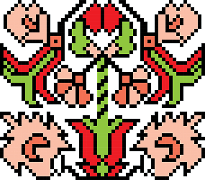
Hamssa

From hand to mind, the art of knowledge transmission

Between Intimate Heritage and Modern Reinvention The transmission of artisanal know-how,

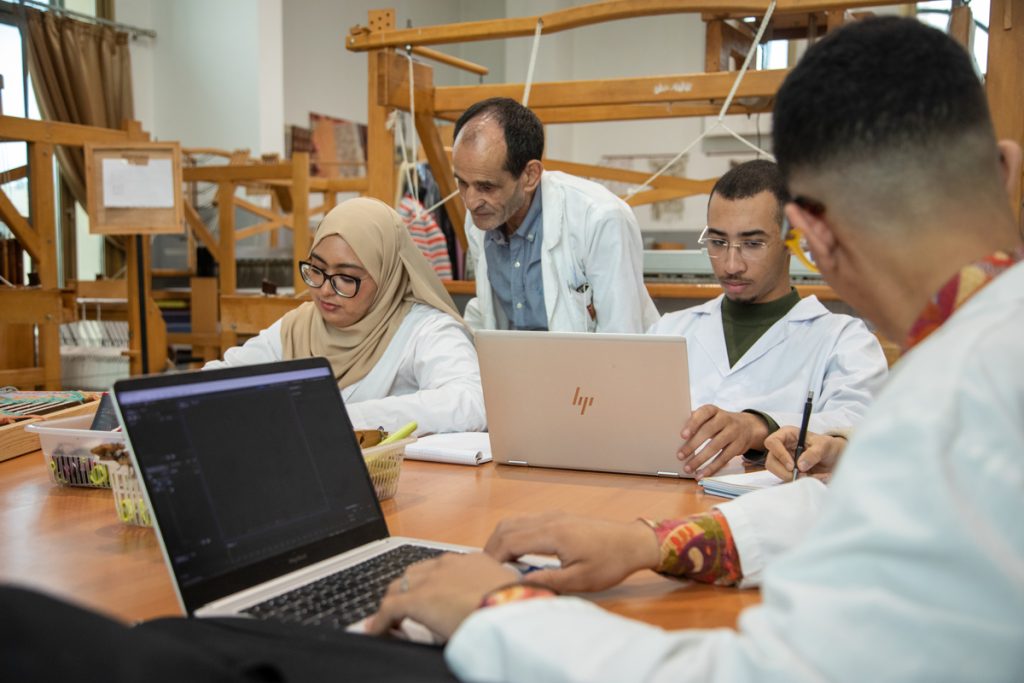
Once passed from mother to daughter, weaving is now taught in institutions like the OFPPT and the Casablanca Academy. But transmission goes beyond technique: it must meet economic, cultural, digital, and ecological challenges. To train is also to pass on a worldview—a living thread connecting past and future, tradition and renewal.

The R’bati Carpet Weavers’ Community: Between Tradition and Modernity

From traditional guilds to modern cooperatives, R’bati carpet weavers preserve an ancestral art. Supported by ODCO, the Ministry of Handicrafts, and the Maison de l’Artisan, they combine transmission, training, and economic empowerment. In Rabat, they embody the continuity of a valuable know-how, balancing living tradition with adaptation to contemporary realities.

My Grandmother's Rug

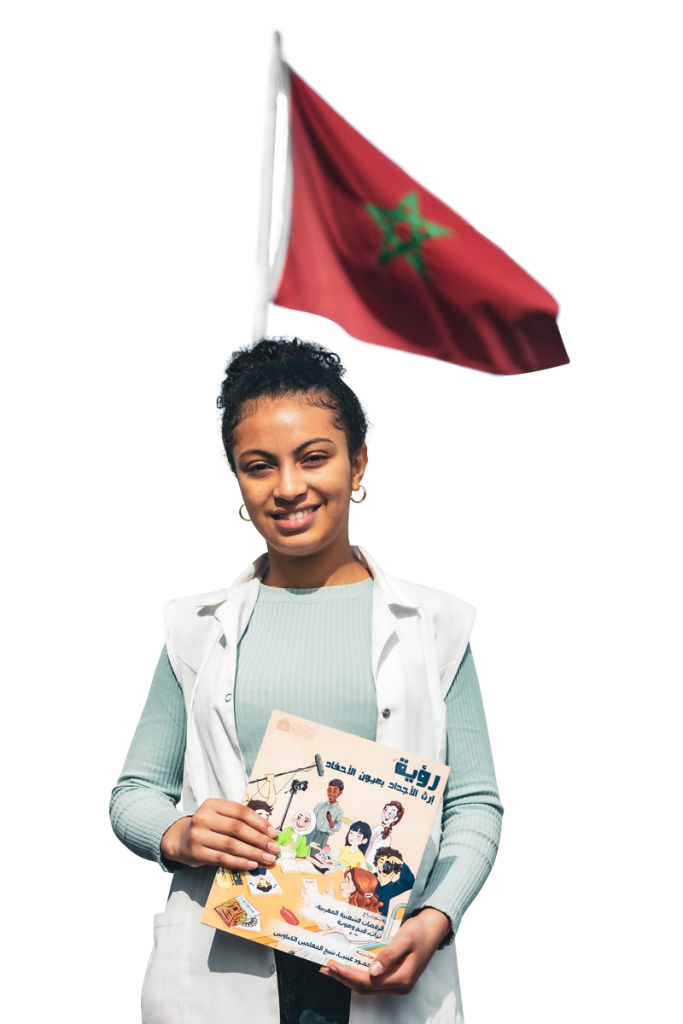
As part of its educational mission, the Foundation raises awareness among younger generations about the importance of safeguarding intangible heritage. To this end, it has created the magazine « Roya » — a platform for artistic, journalistic, and literary expression for middle school students. Here is a story on the R’bati carpet by Malak Razzaq.

One day, I went to the city of Rabat to spend the holiday with my grandmother. As soon as we arrived at her house, her face lit up with joy and she welcomed us warmly. However, I noticed that she often went to a room isolated from the rest of the house, where she would spend many hours. My curiosity led me to ask her what she did there, and she smiled widely before saying, “Then come with me.” She took me to that room, and to my surprise, I discovered that it was a workshop for weaving rugs. I was amazed by the colorful wool, the various weaving tools, and the collection of vibrant rugs that looked like pieces of art. I asked her, in awe, “Where did you get all this, Grandma?” She replied, “All these rugs you see here were made by my own hands, specifically in this workshop, where I would spend many hours, coordinating the colors with my sense of feeling, for each pattern has a story.”

I spent the entire holiday accompanying her to her workshop, watching her weave her rugs with passion and love. When it was time for me to leave, as I was bidding her farewell, she surprised me with a red rug, beautifully patterned with harmonious colors. She handed it to me and said, “This rug is called the free Rabat rug. Keep it safe, for it is part of our heritage and ancient traditional crafts that have been passed down from generation to generation. It holds a special place in my heart. I’ve received many offers, but I never will and never could part with it.”

On my way back, I encountered a foreign tourist who was fascinated by the rug in my hand. He asked if I would sell it to him for a significant amount of money. I understood that it was quite a sum, but I immediately declined, remembering my grandmother’s words to preserve it… For it is a symbol of my authenticity and identity.

By : Student: Malak Razzaq, Age: 14
Supervising Teacher : Fadwa Oulad Ben Ahmad
Imam Al-Bukhari Middle School – Rabat