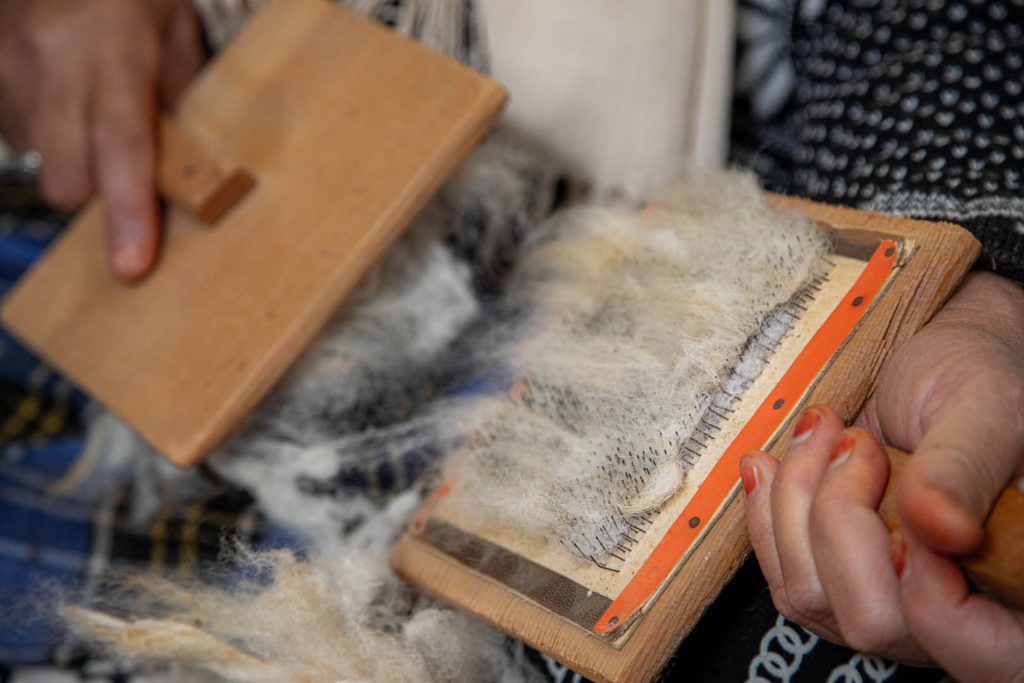
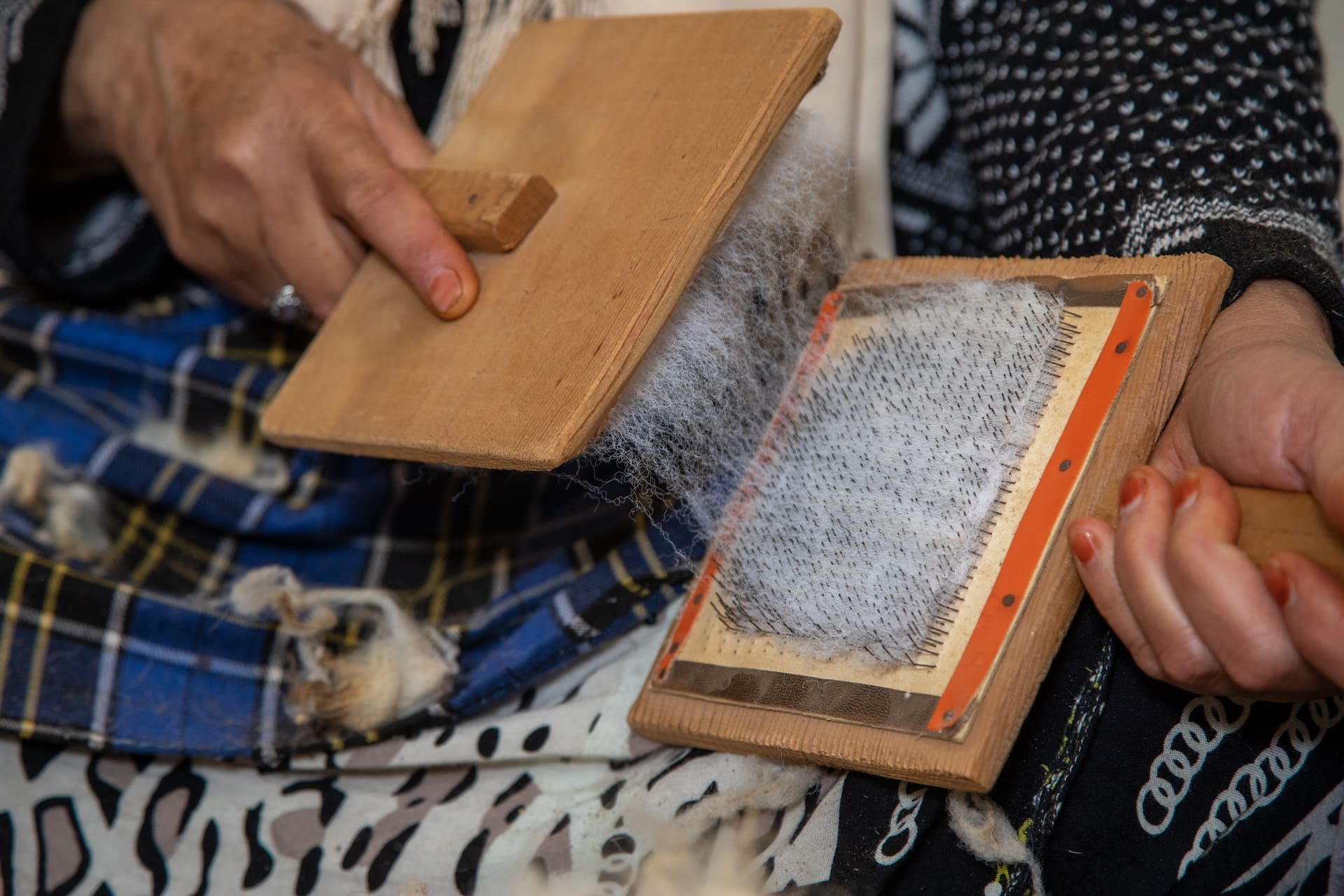
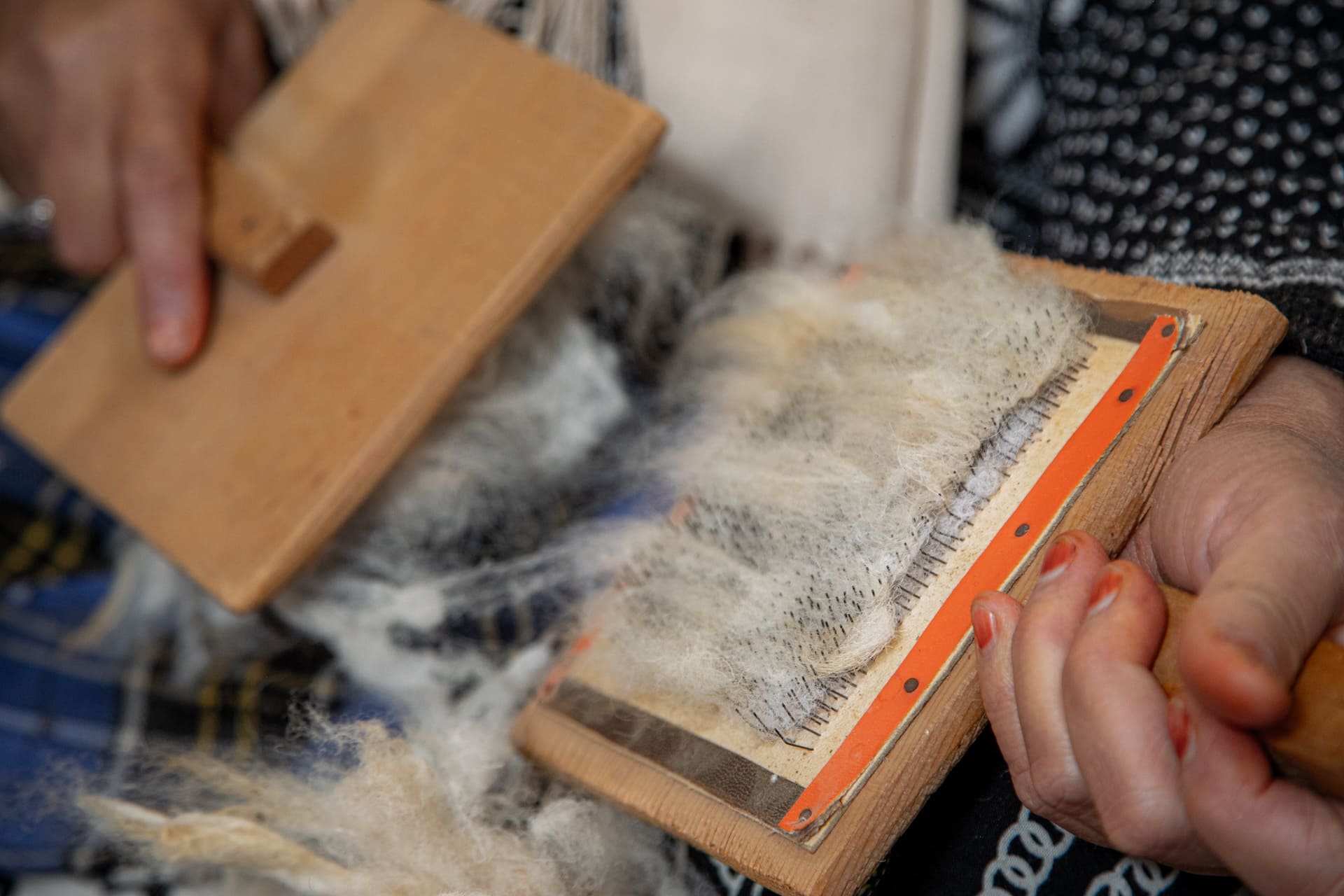
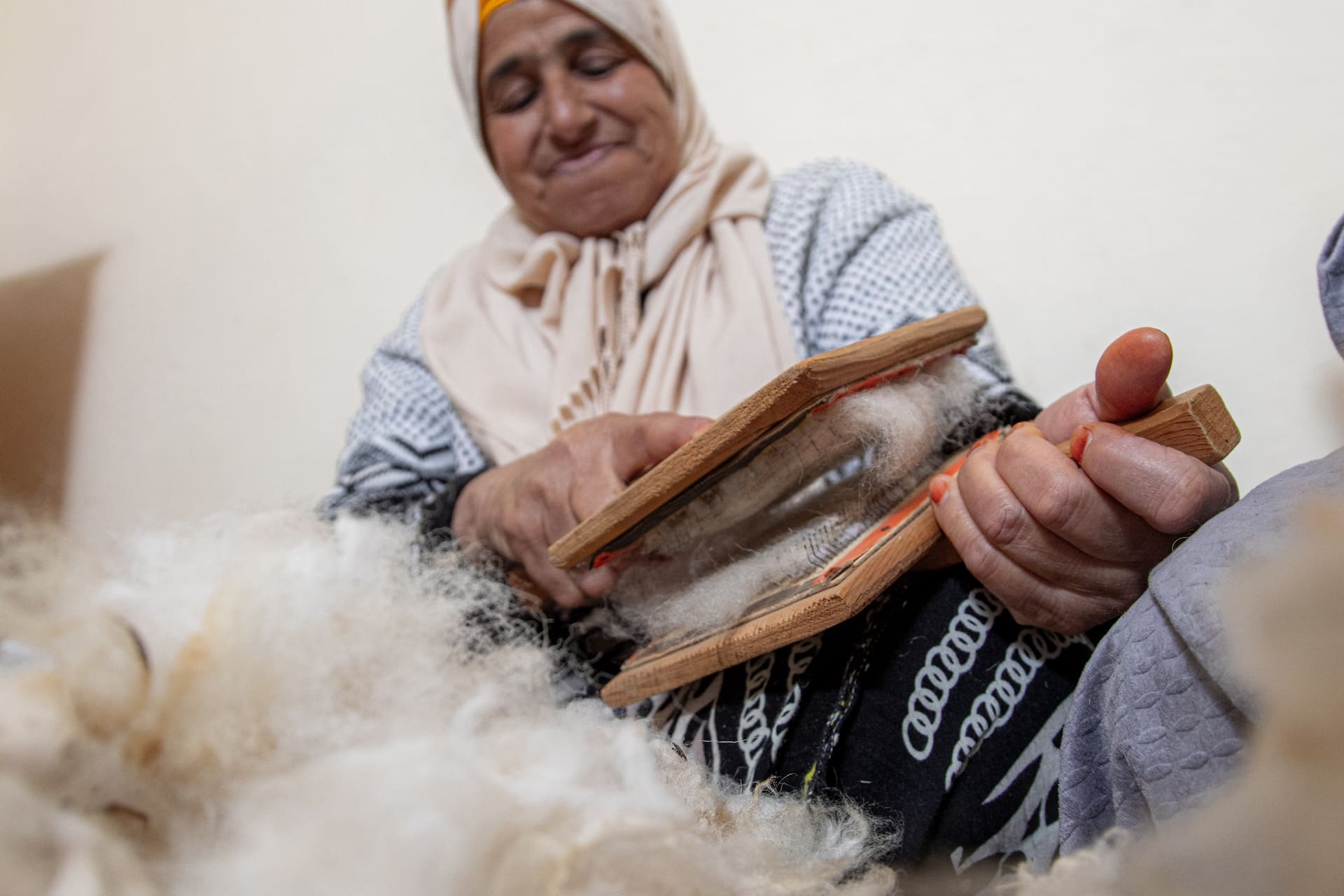
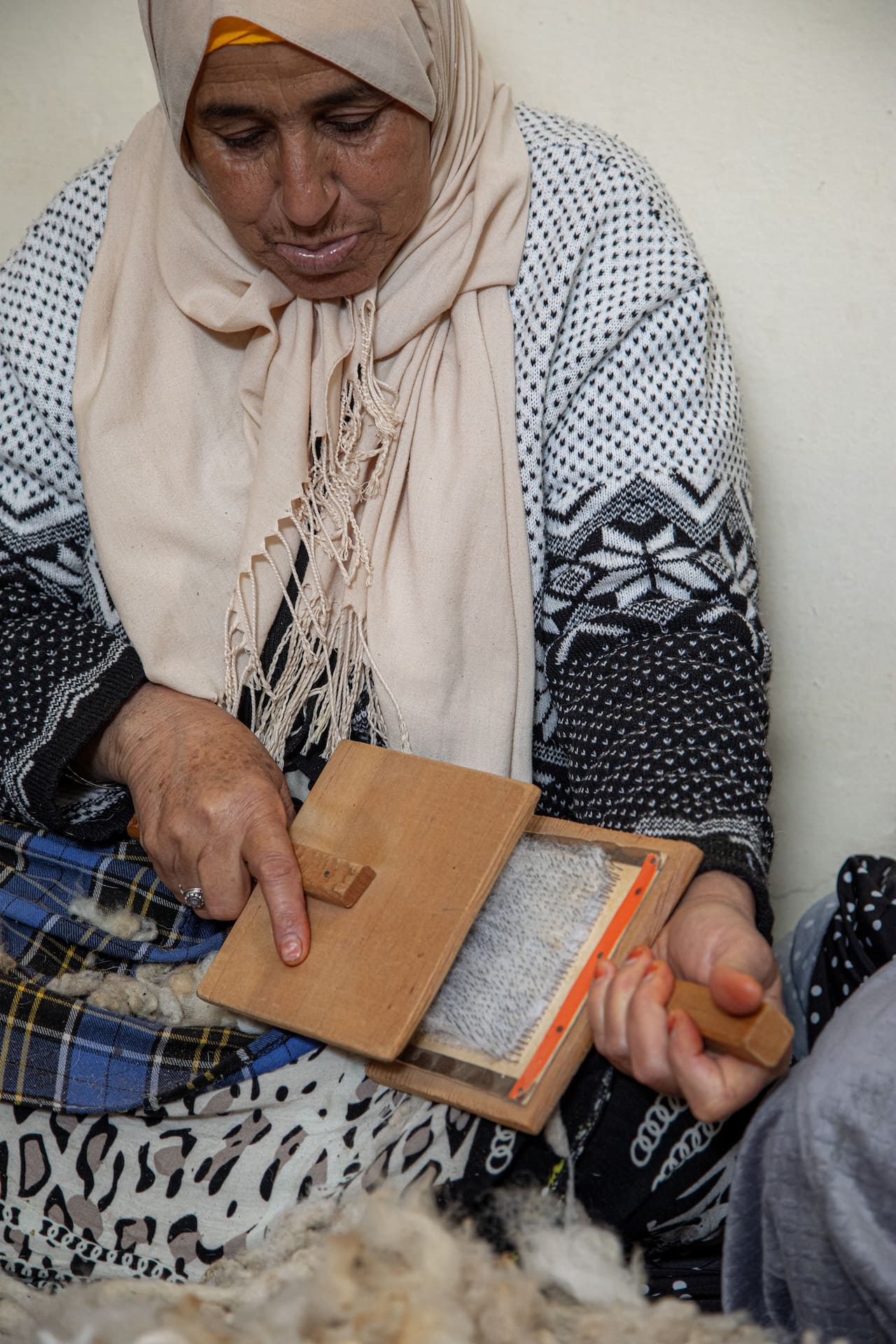
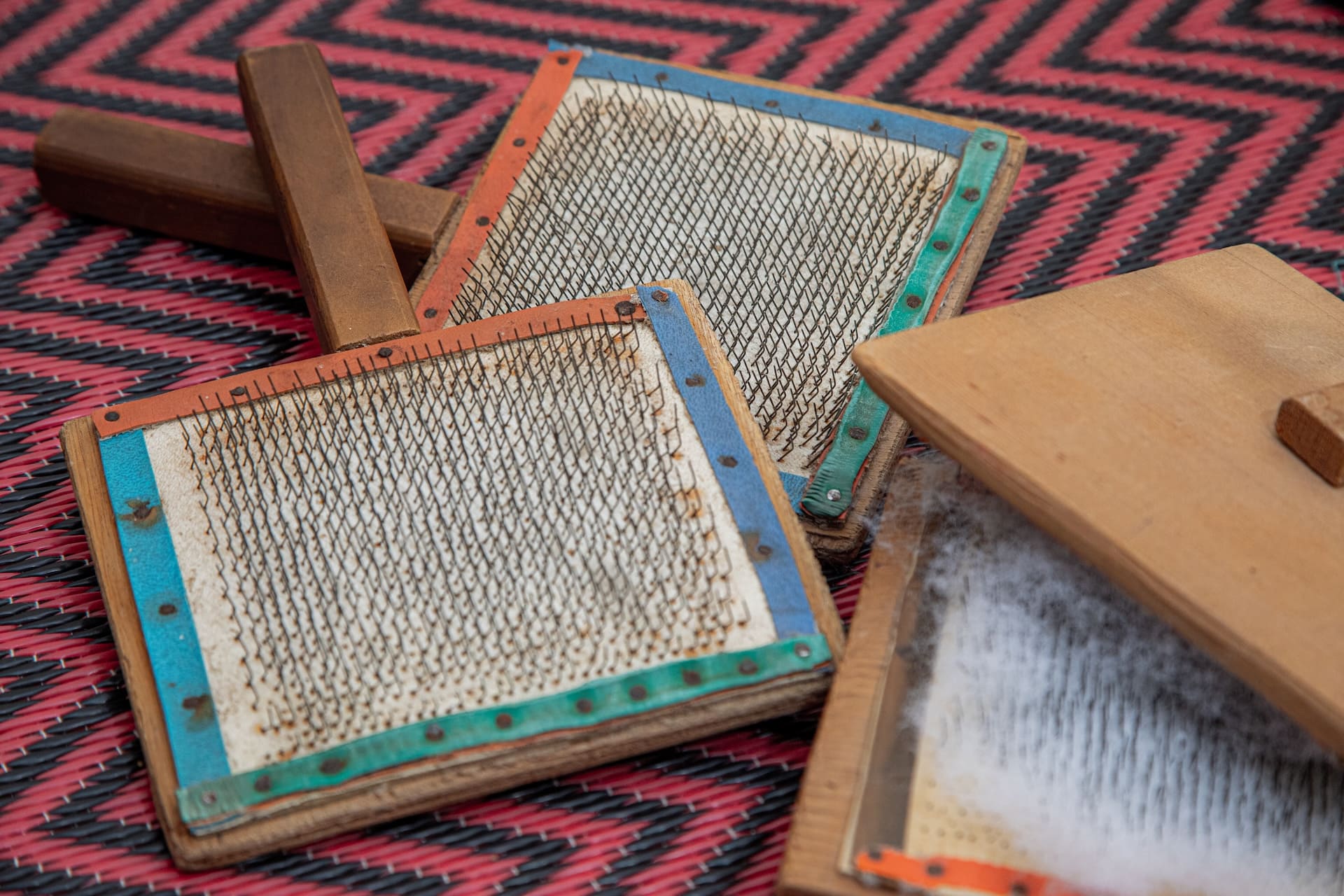
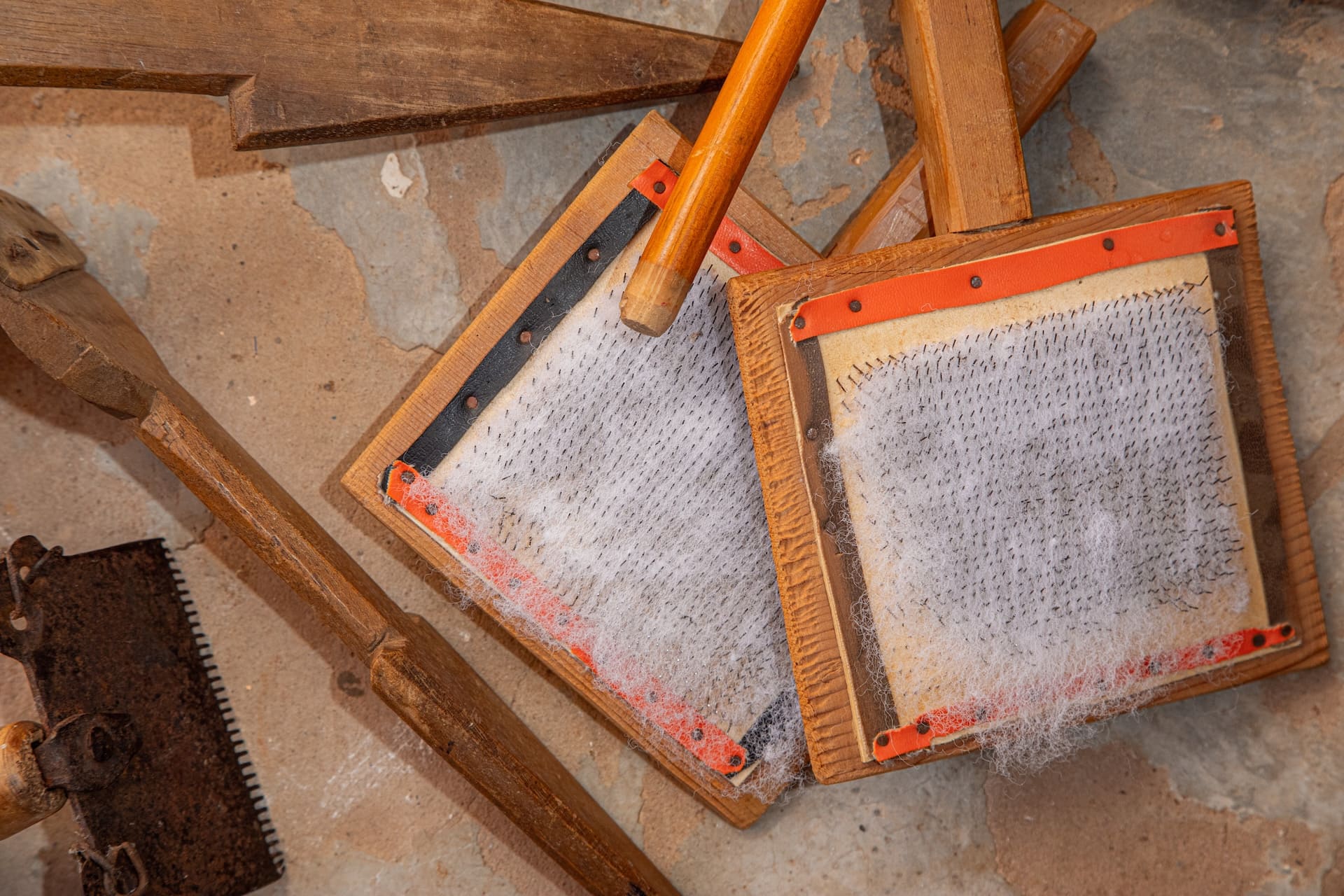
In the soft light of a rural workshop, women prepare for one of the most beautiful symphonies of artisanal gesture: carding. Two square wooden boards, adorned with fine, curved teeth, rest in their hands. These are the carders, inherited tools, often handmade by the men of the village.
The short-fiber wool, which cannot be combed, is placed between the two boards. The hands rub, the fibers cross, untangle, and align. Carding is an act of reconciliation: it gives the wool order, direction, and flexibility.
The locks from the combing process are sometimes mixed with the remnants to create softer, more poetic threads, destined for the weft or colored knots of the rugs. All of this is then gathered into fluffy masses, ready for spinning.
Step 4
Carding is not a brutal gesture. It is a lullaby. It is a caress. It speaks of the softness, the tenderness of the hands preparing the rug, a fabric of Moroccan homes.