Carpets among the inhabitants of Rabat:
A companion for a deep-rooted life
In the interiors of Rabat, carpets don’t just lie on the floor. It rests. It keeps watch. It shrouds the hum of the house in silence, offering a place where feet are anchored and hearts soothed.
In every home, there’s a carpet that’s carefully unrolled, perfumed with incense or rosewater. It’s a carpet that’s not just trodden on. It’s not a decoration, but a presence. The carpet is the invisible threshold of respect, the sacred ground where you lay down your body, your thoughts and sometimes your prayers.
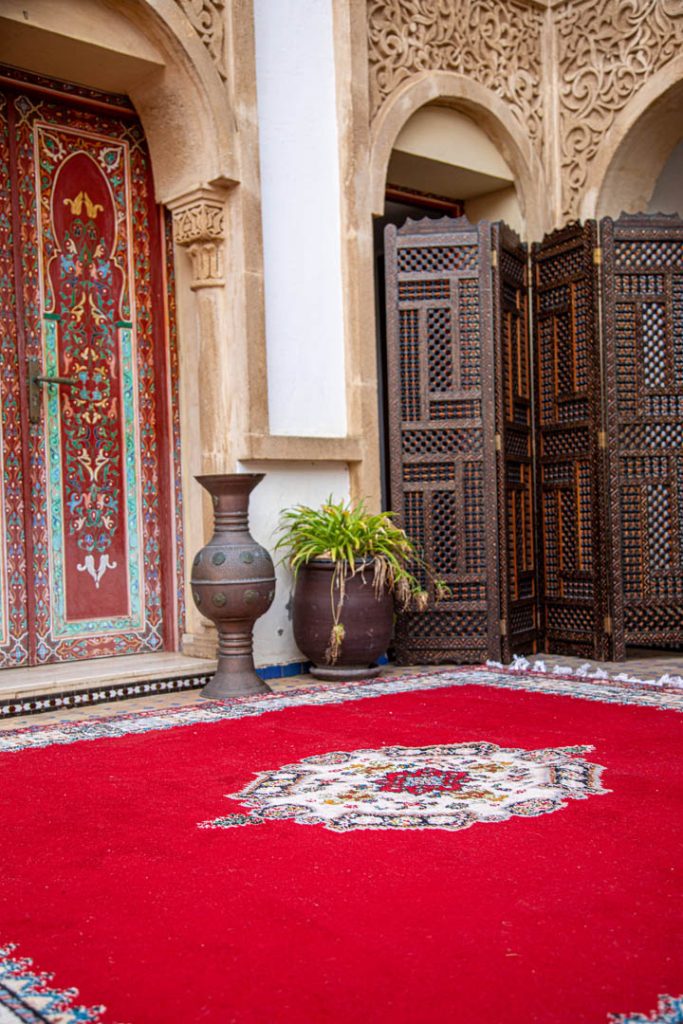
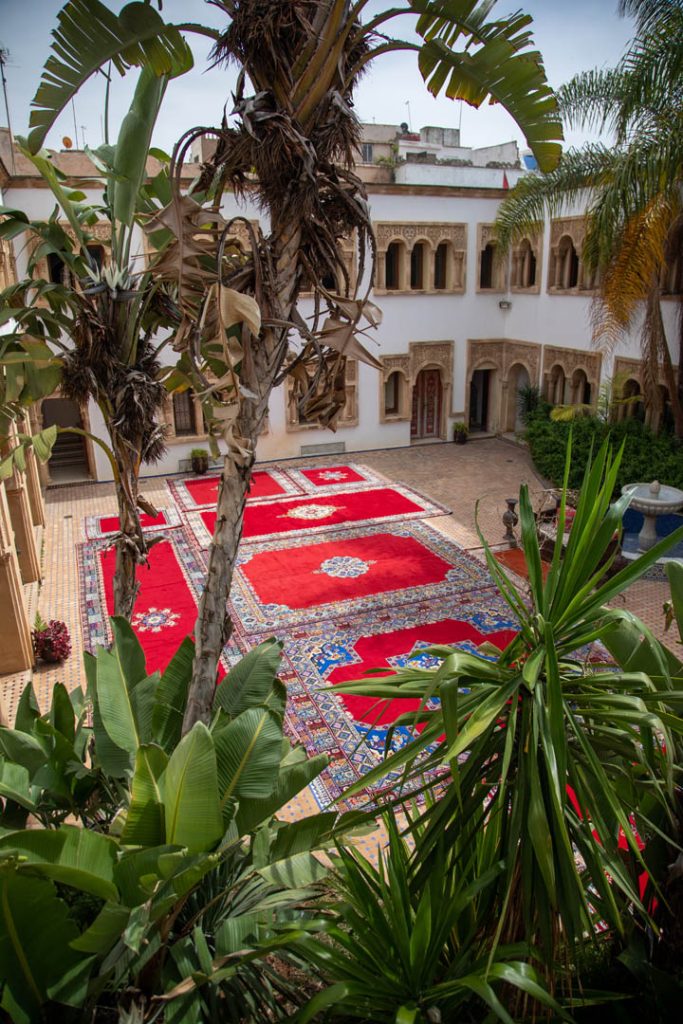
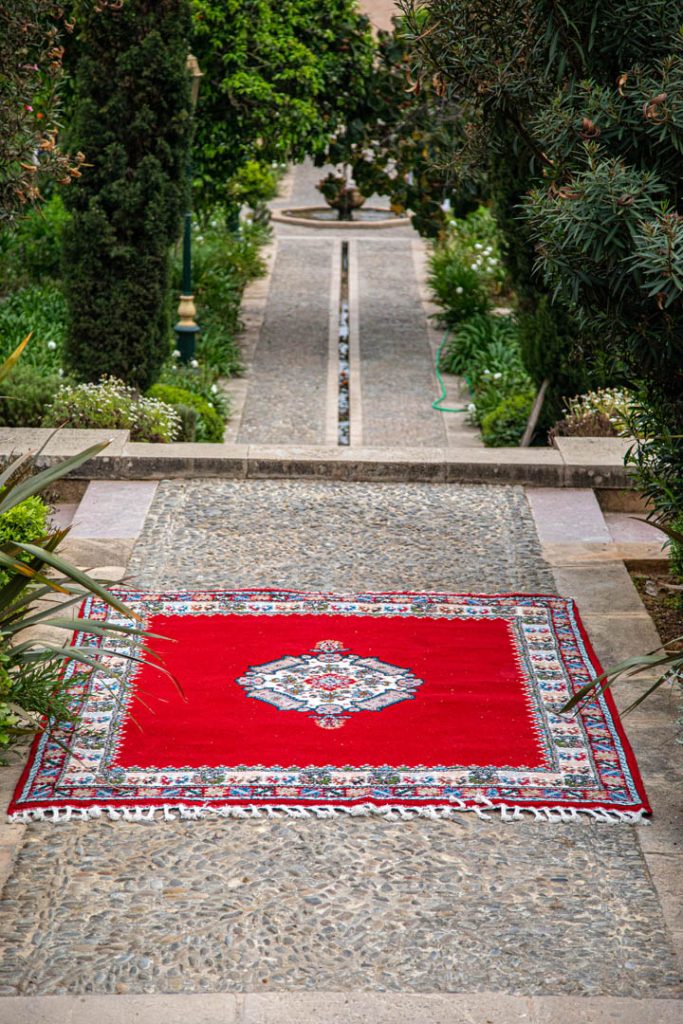
When you enter a home in Rabat, the first thing you notice is the carpet. It sets the tone, telling of the taste of the master of the house, the sensibility of the mistress. Some are thick, luxuriant, deep red, framed by plant motifs. Others are more modest, worn by time, but always carefully aligned. No matter how simple, a carpet is upright and dignified. Because it reflects the person who lives on it.
The carpet is at the center of the Moroccan living room, the majlis where cousins, friends and generations sit together. Children play there, elders sleep there, mothers sew there, fathers drink tea there. The carpet absorbs it all, keeping secrets, laughter and tears. It is the floor of intimacy.
On Ramadan evenings, it becomes an invisible table. Plates are laid, dates and milk are poured, and prayers are whispered between the fibers. At wedding feasts, the women sit on it, singing and chatting. At funeral wakes, it’s still on this carpet that people sit in a circle, in shared silence. The carpet accompanies all the seasons of life.
In Rabat, a carpet is never really an object. It’s a living trace. It crosses ages and interiors. Carpets are not bought lightly: they are chosen. Its motifs must appeal, its colors must speak to the eye and the heart. Once installed, it becomes a member of the home, a silent companion to be cared for. As it ages, we don’t throw it away. We fold it, we put it away, we keep it “just in case”, like we keep photos of a loved one.
In many families, carpets are handed down. It has been offered for a wedding, unrolled for a birth, installed for a homecoming. It follows in the footsteps of those it shelters. It bears the invisible imprints of life. It is the textile memory of what has been lived in this house.
The women of Rabat often have a particular eye for carpets. They know how to read knots, assess density, recognize the delicacy of an edge or the balance of a motif. They speak of carpets as they do of fabrics or jewelry, with tenderness and pride. Some know how to fold them with art, others perfume them with amber or lavender. There’s an art to living in carpets, a discreet refinement that you don’t shout about, but feel.
And in modern apartments the rug has remained often enhanced by light-colored cushions or white walls, it holds its ground. It connects. It soothes. It gives these spaces a warm soul, a reminder of the living rooms of yesteryear, an extension of childhood. Even when it’s no longer at the center of the room, it remains at the center of our gaze.
In Rabat, we don’t always talk about carpets. It’s just there. We live with it as with a beloved silence. It interrupts nothing, but holds everything. It links voices, gestures and bodies. It provides a common ground for the intimate and the collective, a space of quiet beauty.
For the inhabitants of Rabat, the carpet is neither accessory nor secondary. It is a full presence, a link between the visible and the invisible, between use and memory. It is discreet and essential, like those precious things we don’t always notice, but whose absence upsets the balance.