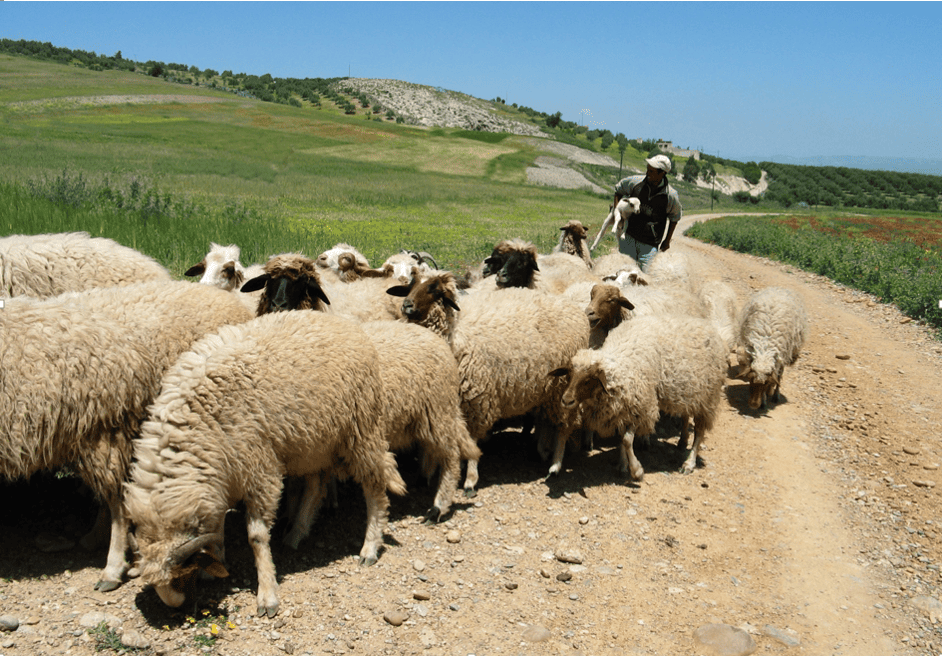
As the days lengthen and spring nears its end, the Moroccan countryside echoes with an ancient call: it’s shearing time. Under a clear and benevolent sky, the men of the douar, united in “Twiza”, a solidarity alliance born from the land and human connection, gather at the sheepfolds. The sheep are aligned in the pen, peaceful, as if they know their winter coats will soon be lightened.
The tool used is the “maqass”, sturdy iron shears that the experienced shearer’s hand skillfully wields. Each movement is precise, rhythmically like a dance. As the wool falls, it is carefully collected and piled. The older generations recall the songs of wool shearers, sung to encourage the motion, coordinate the effort, and accompany the sheep.
Step 1
The herd’s owner, as a gesture of honor and gratitude, organizes a feast under the erected tent. Steamed lamb couscous, mint tea infused with measured gestures, and warm bread shared around a bowl of salt and memory.
The wool obtained that day is more than just a textile material. It is an offering. It symbolizes the soft wealth of the home, the warmth of the mattress, the fabric of a carpet that will last for generations.