When the last row of knots is tied, when the upper chief is woven, when the warp is completed in a final braided twist, the carpet is not yet fully born. It still needs one final adornment, a moving border, a free breath at the end of its fabric: the fringes. These fringes are not just decorations. They are the culmination of the cycle, the echo of the beginning, the braided eyelashes of a textile gaze ready to face the world.
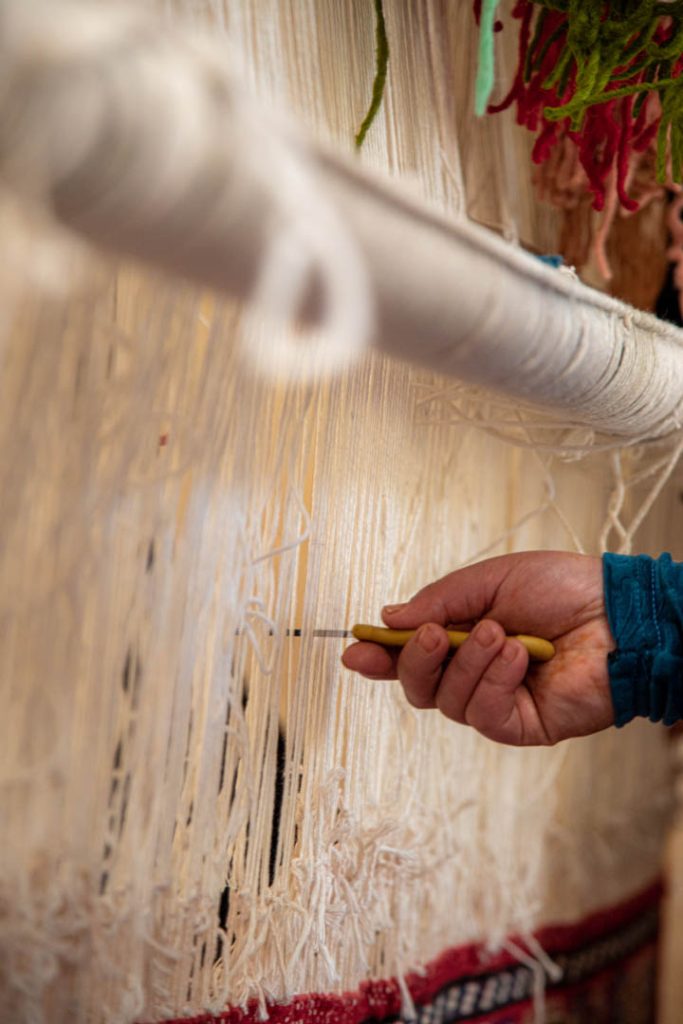
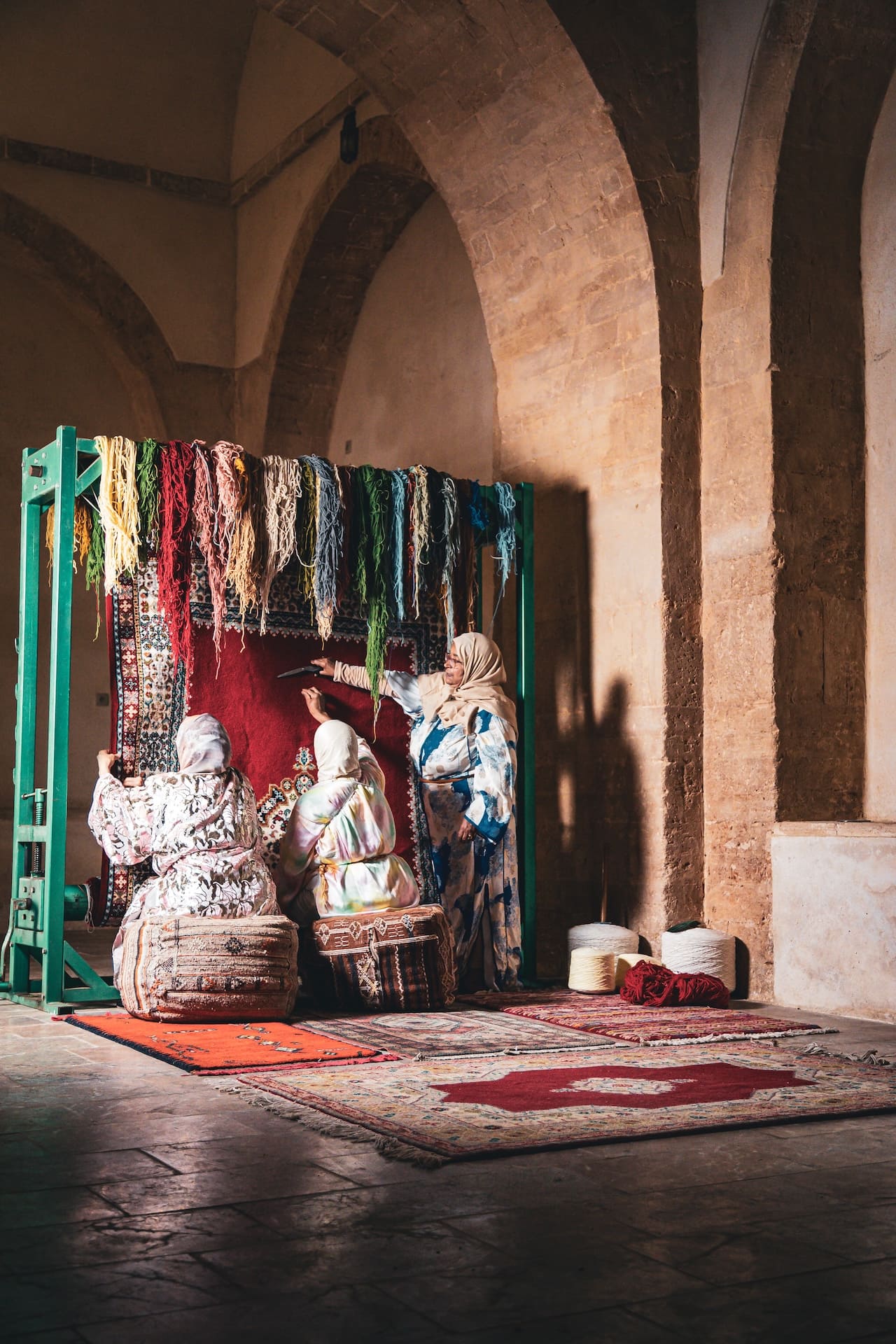
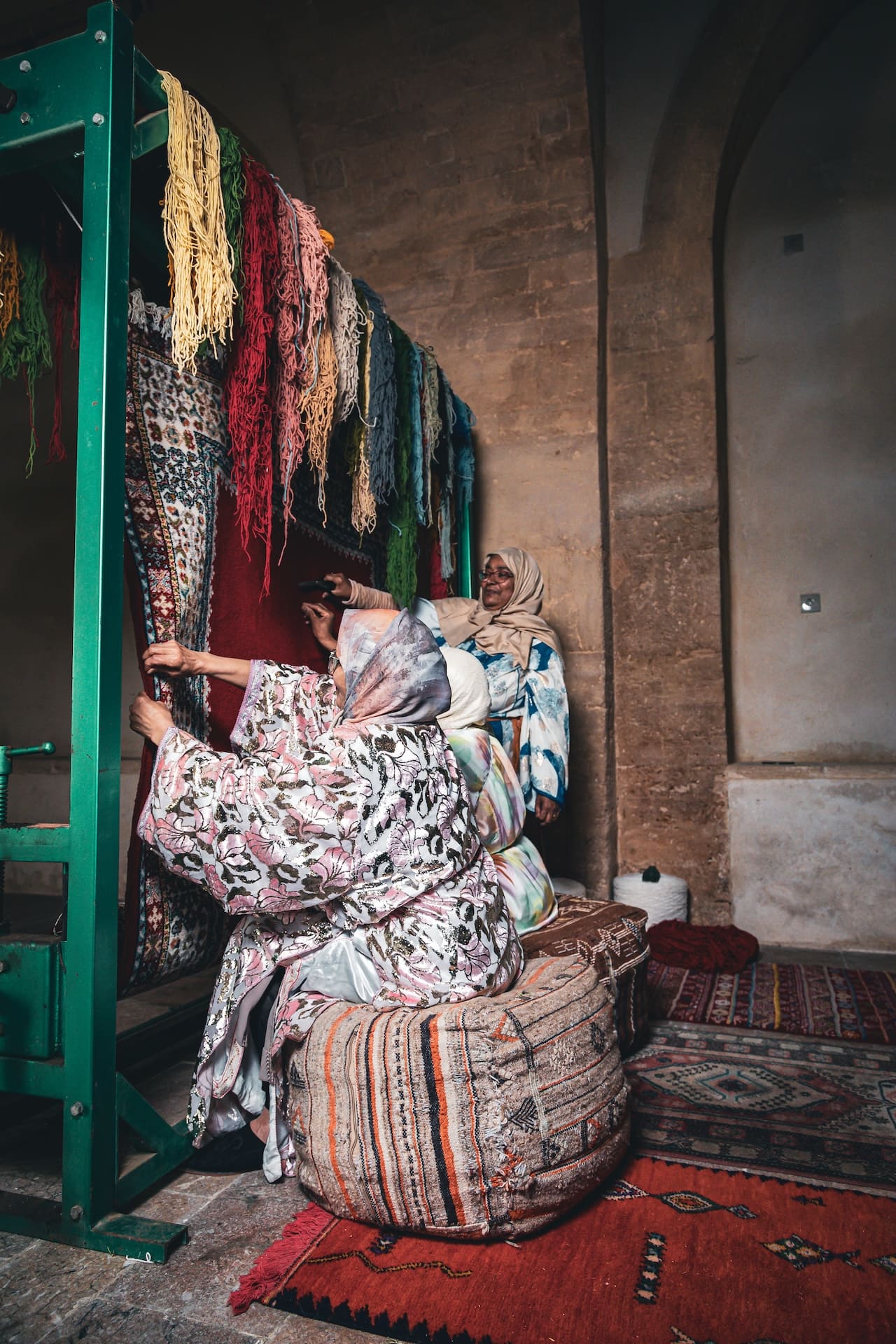
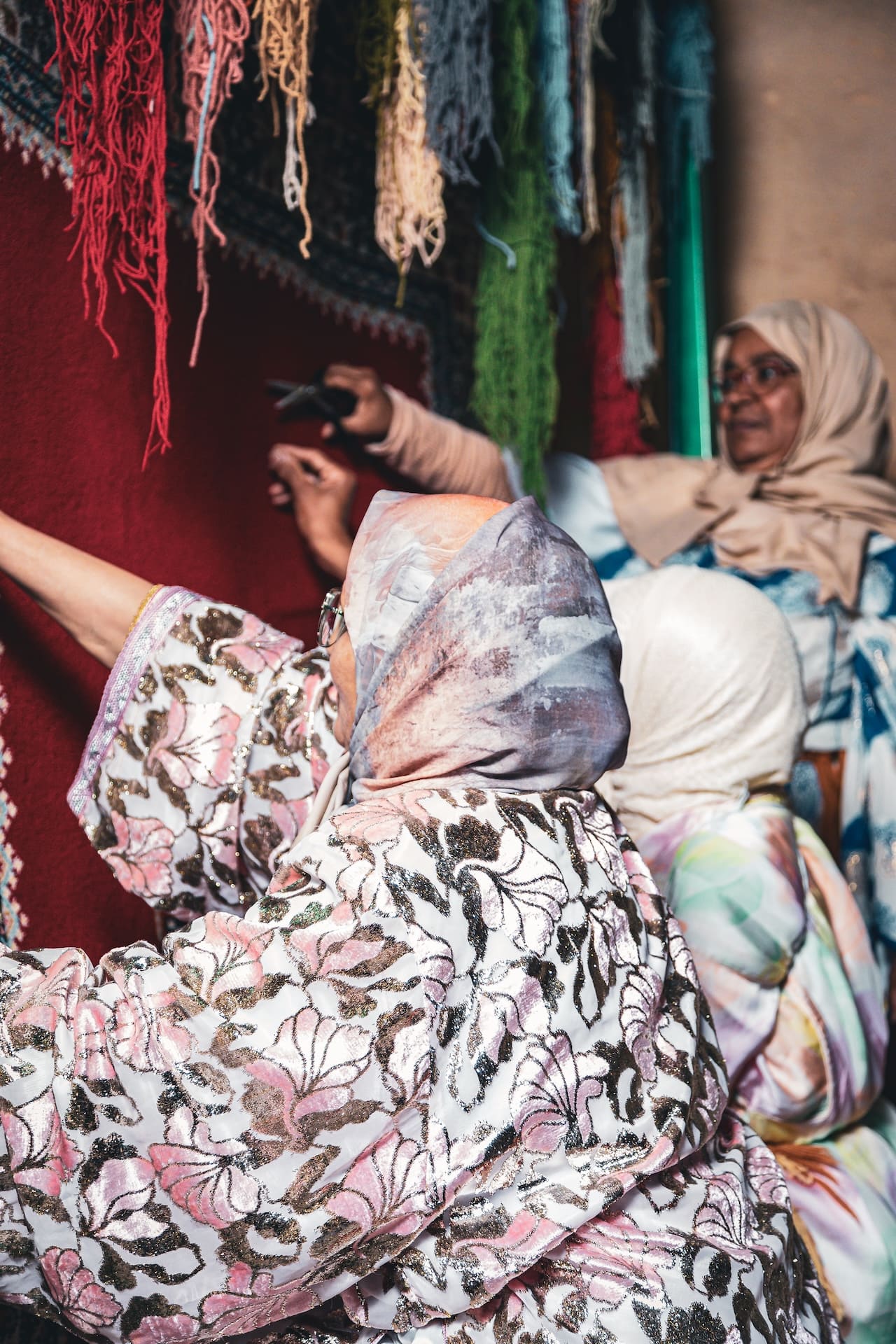
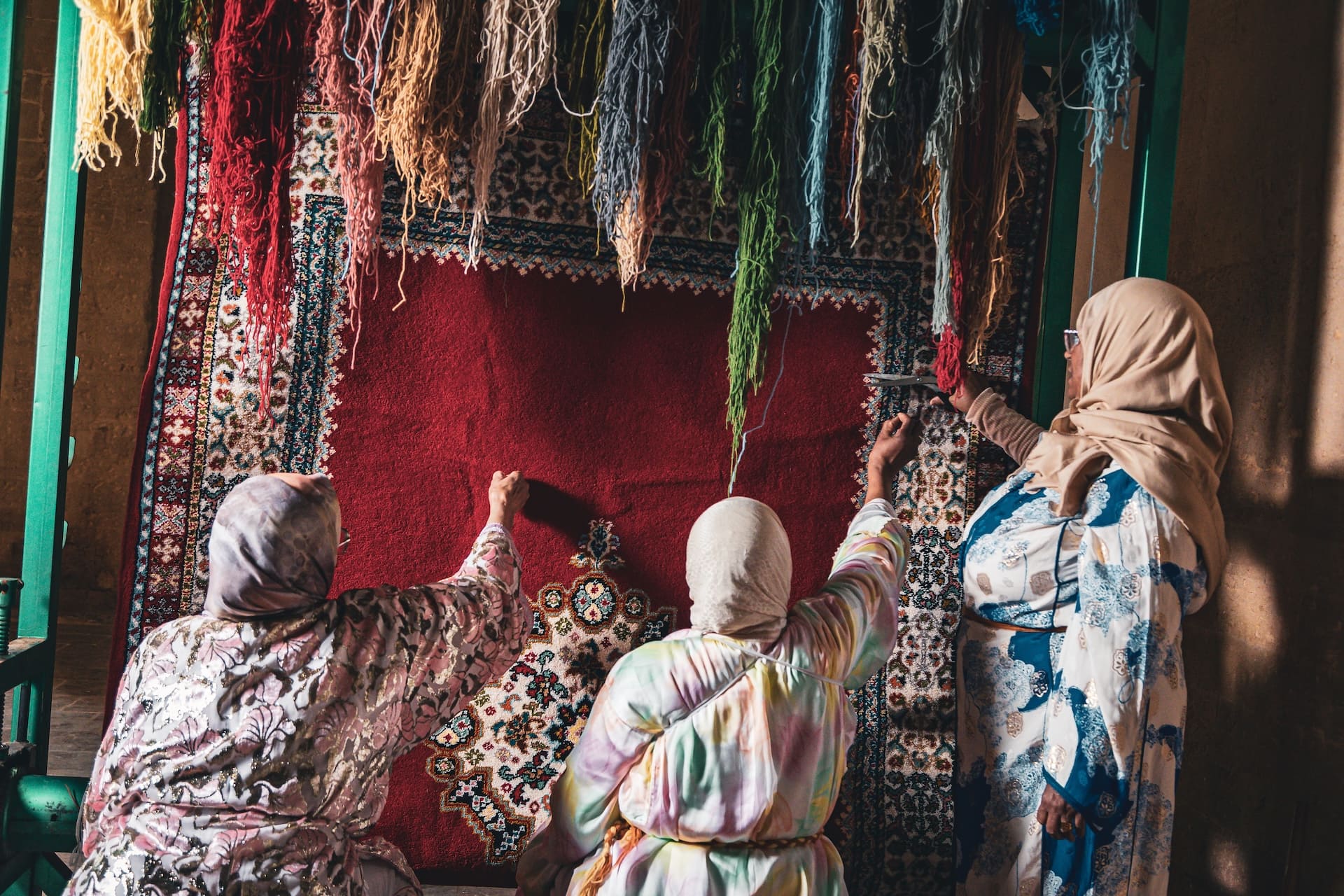
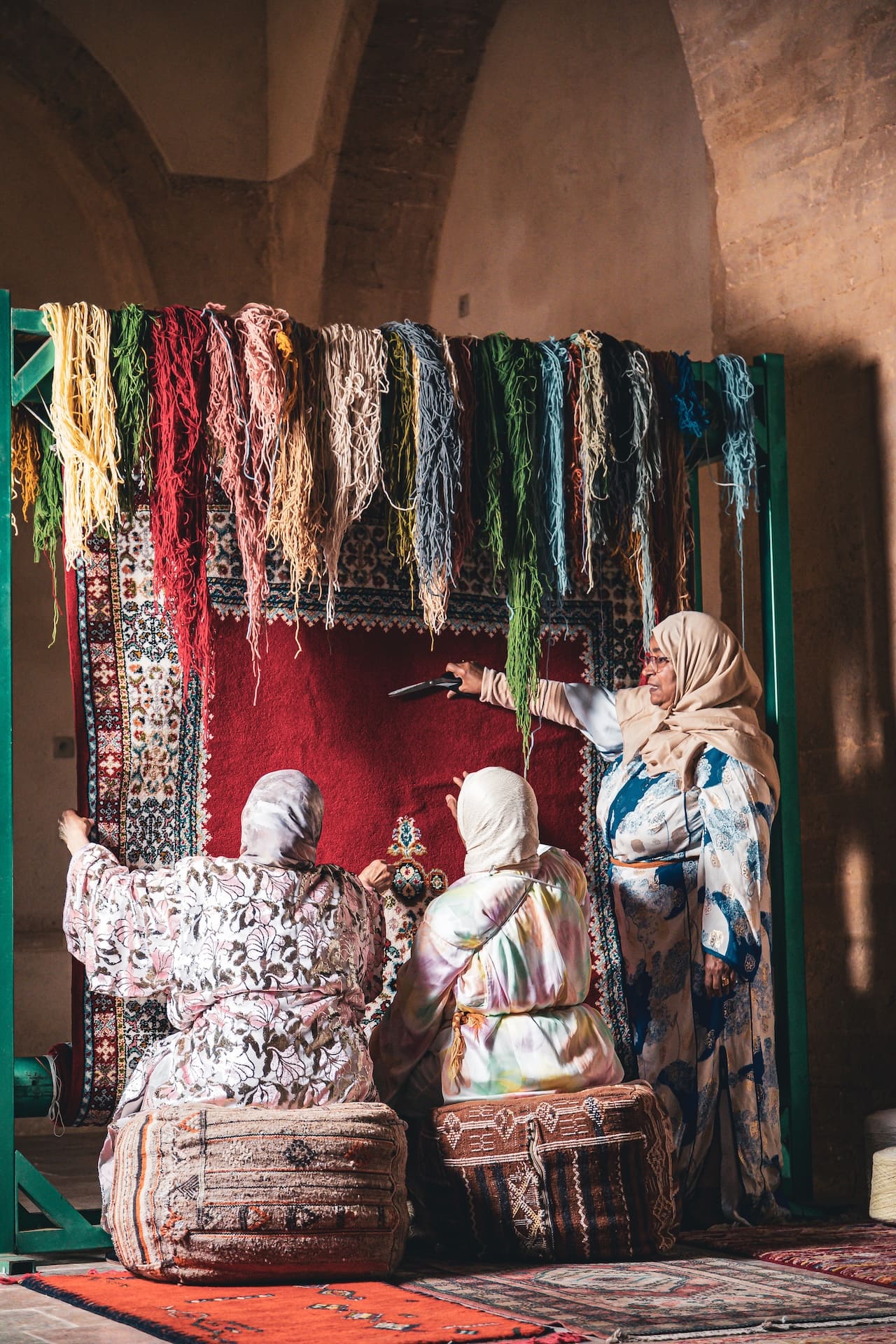
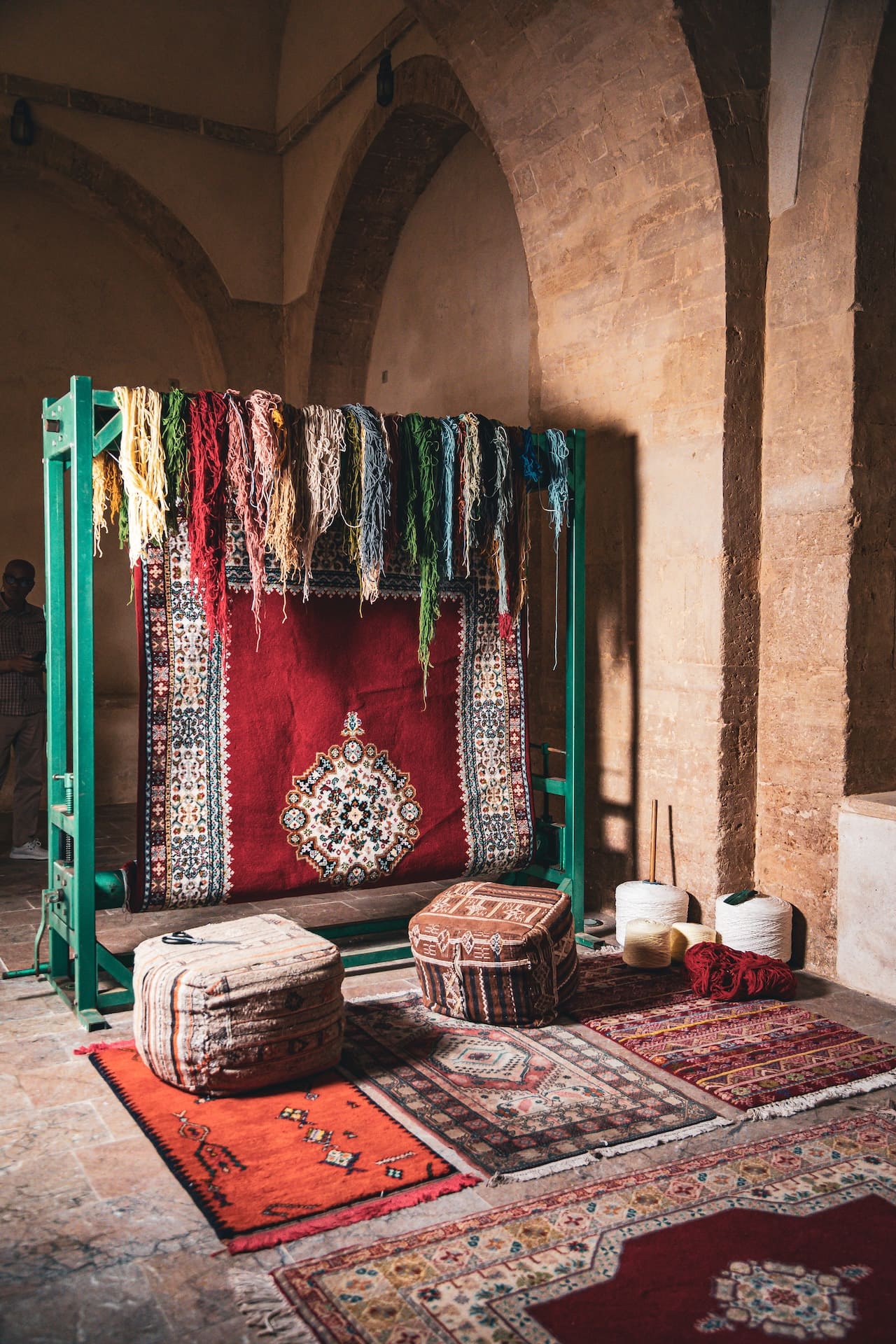
It all begins like in the beginning. About twenty centimeters from the last D’fira—this braided twist that frames the chief—the weavers cut the warp threads, right at the level of the ensouple-fils. This precise and slow gesture is almost solemn: it detaches the carpet from the loom, it releases the work, and gives it its final shape. The loom no longer holds the carpet. It lets it fall gently, like releasing a bird into the sky.
Then begins another ritual, equally noble: the making of the fringes. From one end to the other, the weavers gather the warp threads, three, four, sometimes up to six threads together, and tie them to the base of the upper braid. Each knot is solid, regular, and resistant. It prevents loosening, it blocks tension, and anchors the carpet in its structure.
But sometimes, instead of simply tying, the weavers go further. They braid. They braid these warp threads like one would braid hair before a celebration. These braided fringes, aligned like delicate stems along the width of the carpet, create a visual rhythm, a play of shadows and light. They speak of the elegance of the finishes, the pride of the completed work.