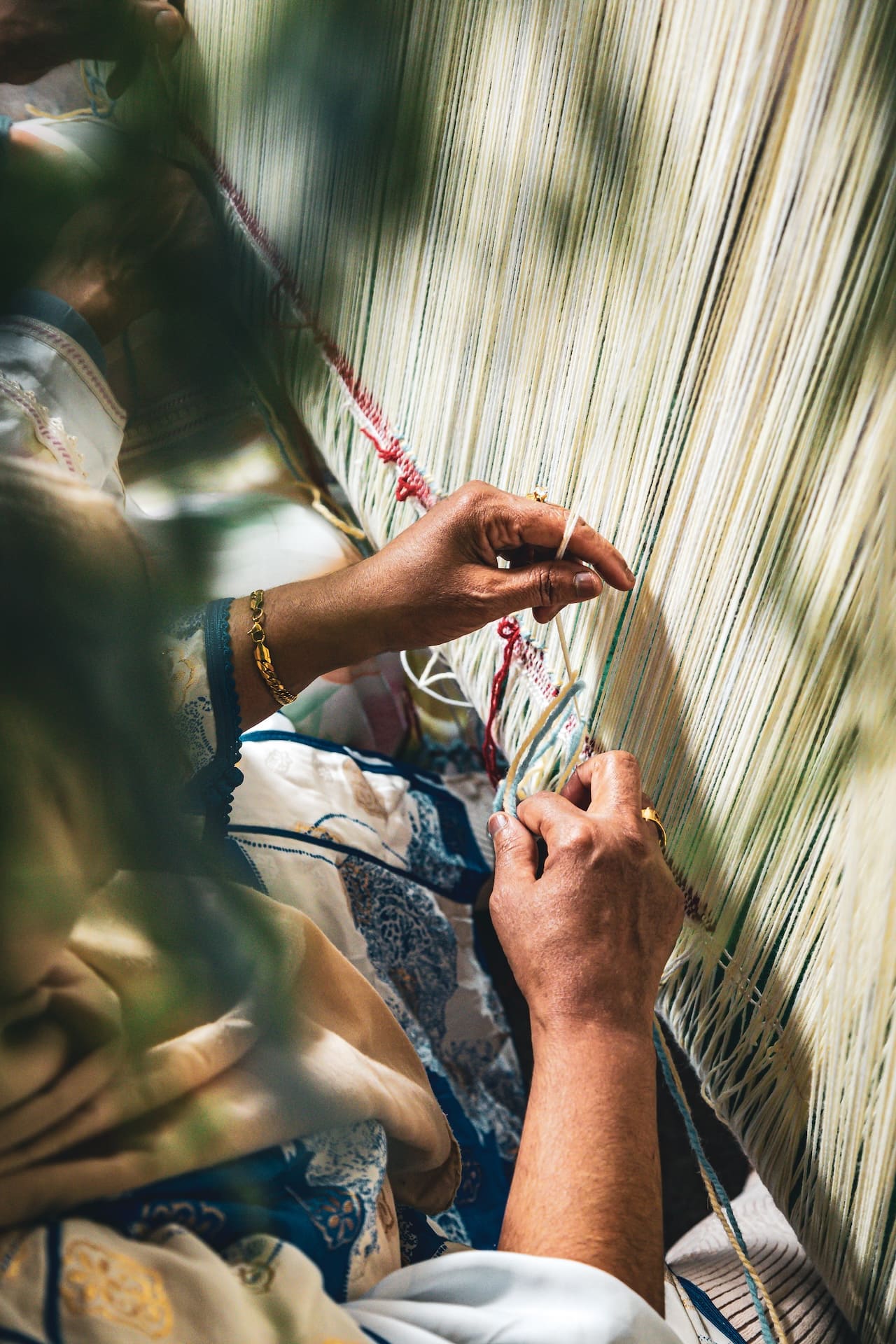
The heart of carpet art lies in an ancient gesture: the knot. Tiny, almost invisible individually, yet essential. It is through this knot that the carpet’s pile, its density, texture, and relief are born. In Rabat, this gesture takes on a special meaning, for here, the knot has a name, an origin, and a soul: “Aouqda R’batya.”
This knot is, in reality, the famous symmetrical knot, known throughout the East as the Ghiordès knot. Originally Turkish, it found a form of renaissance in Moroccan soil, acquiring a special grace between the fingers of Rabat’s weavers.
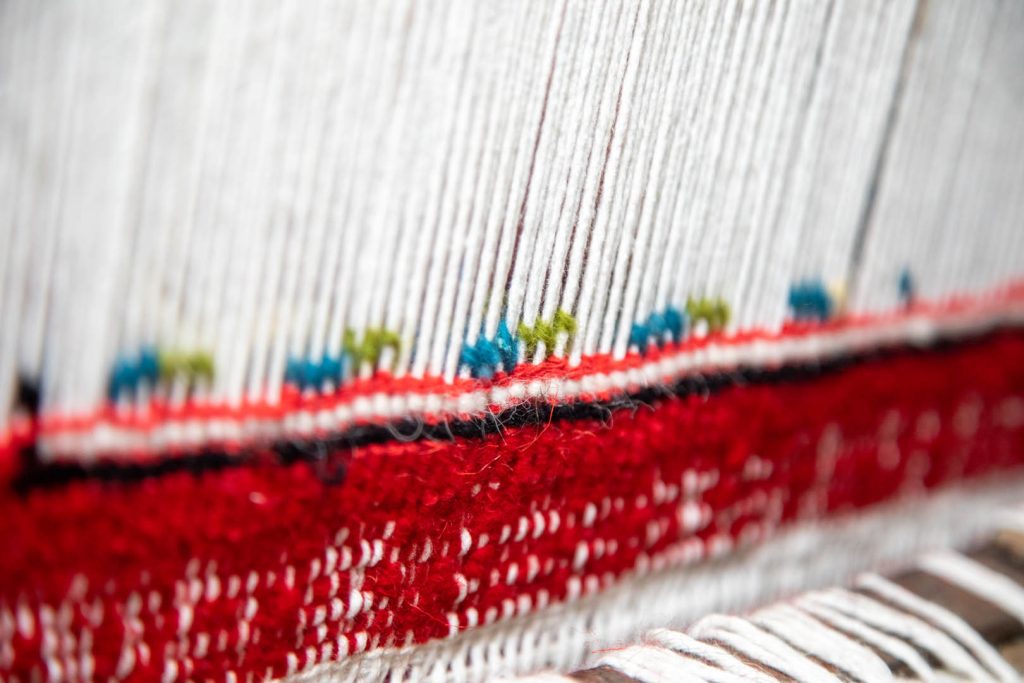
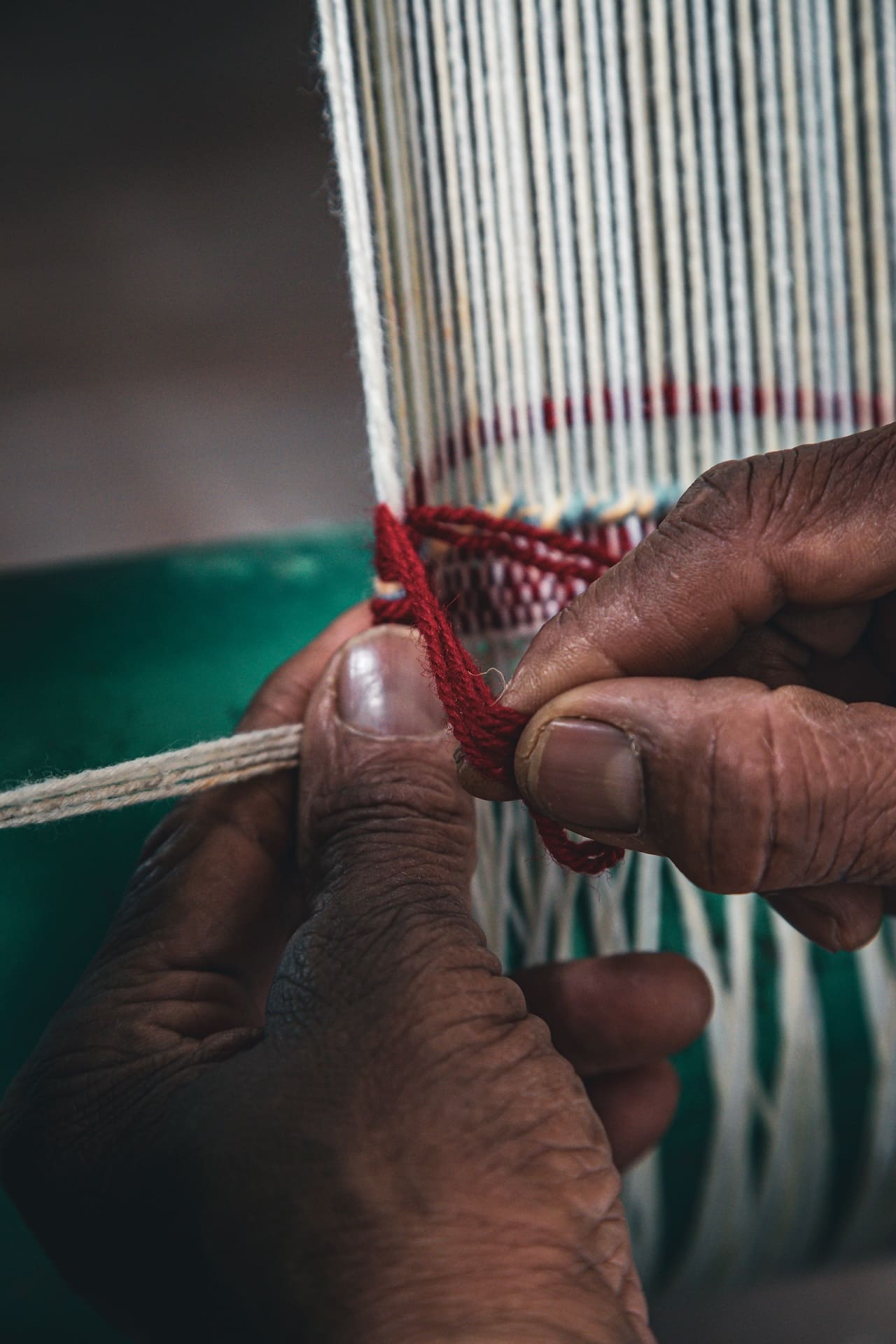
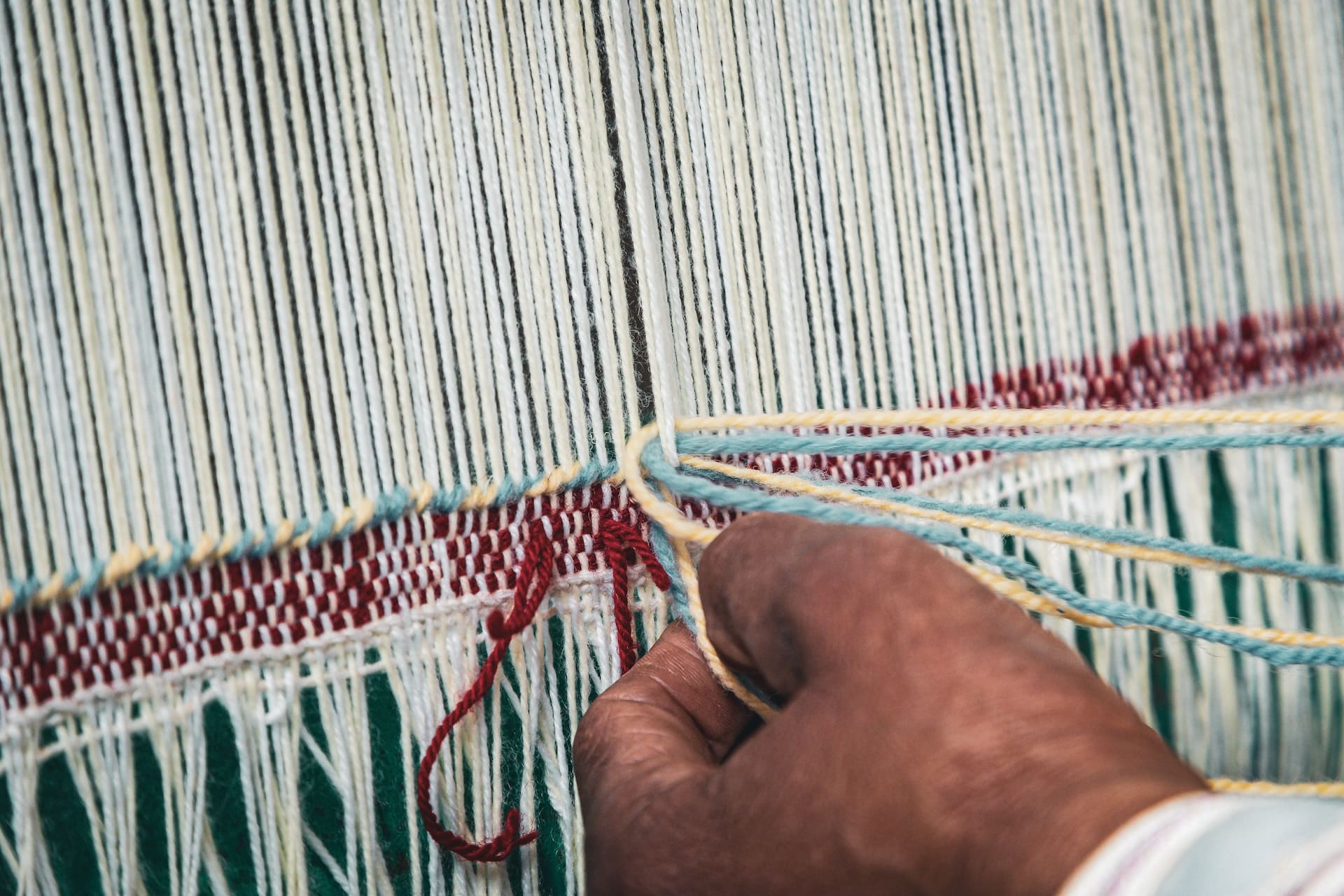
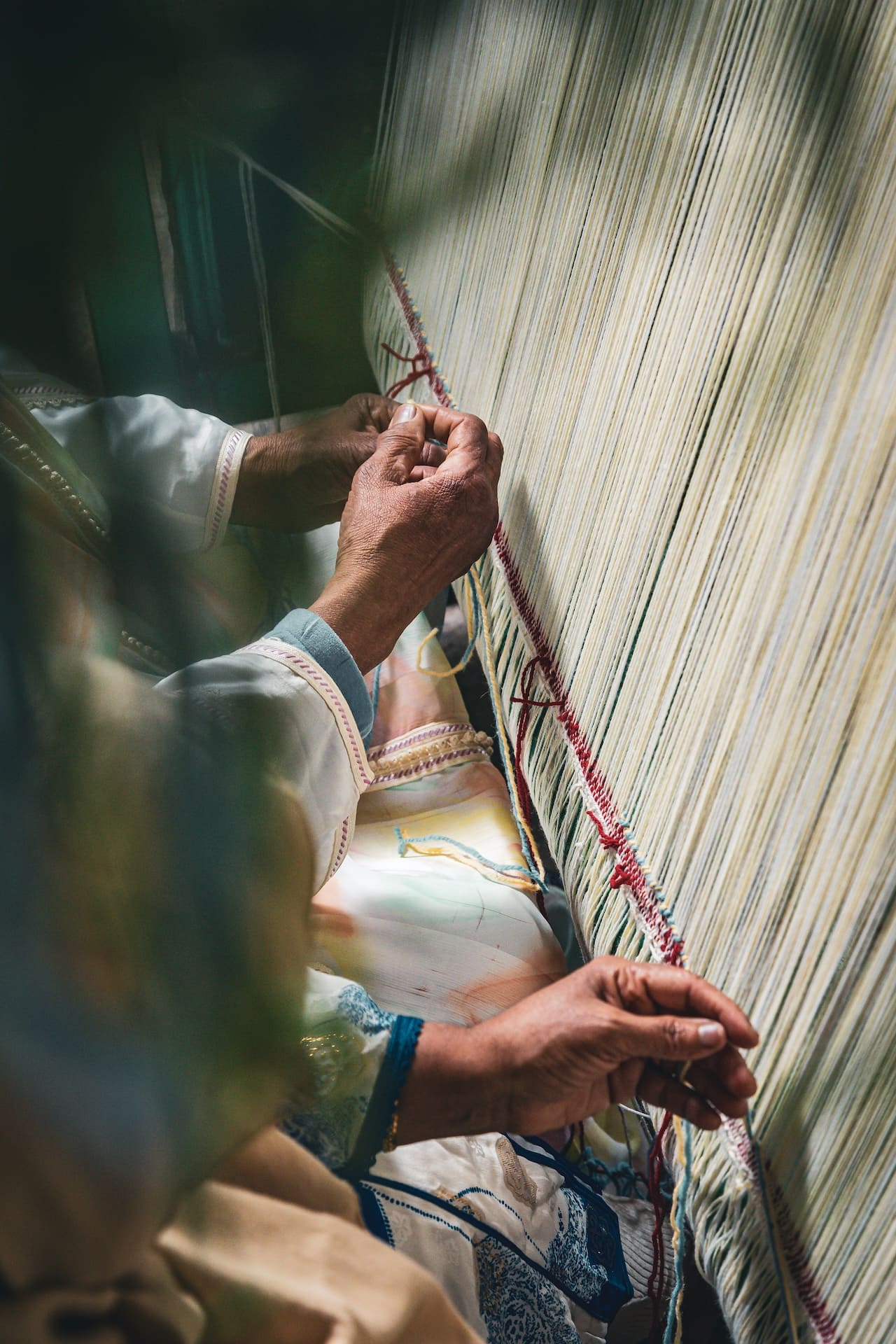
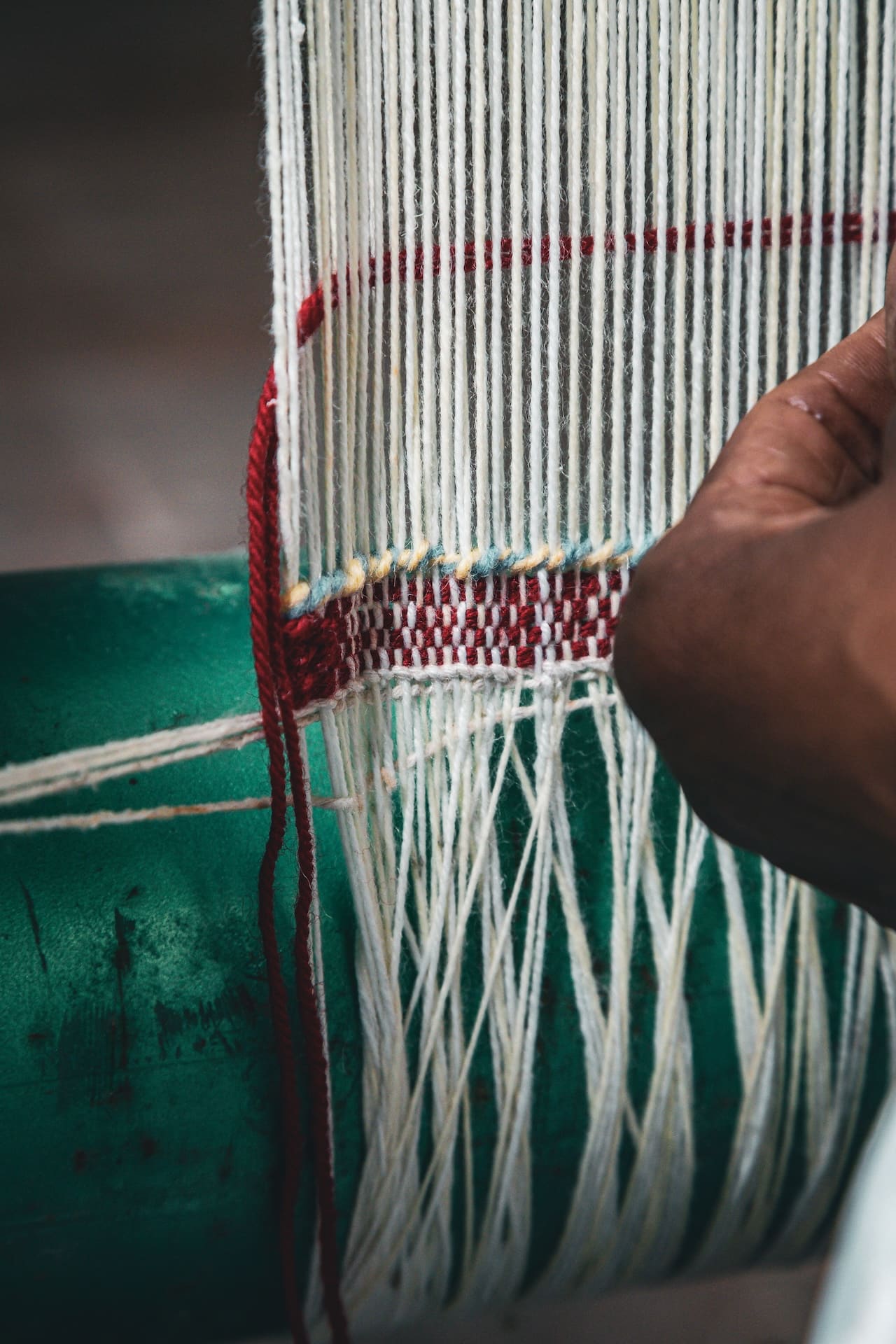
The “Aouqda R’batya” is formed around two neighboring warp threads: one called “Hayir,” the other “Nayir.” Between these two tensioned lines, the wool is nestled, fixed, and tied. With a precise, almost choreographic movement, the weaver wraps the velvet thread, pulls it toward her, ties it firmly, and then cuts the excess. This thread then becomes a knot, a strand of the carpet, a point in the design, a vibration on the surface.
Once a row of knots is completed—a row called “J’di” by the artisans—another action follows immediately: the pressing. Using a heavy metal comb, called Almadra, the weavers press the knots with vigor. Each strike of the comb pushes down the weft, stabilizing the entire structure and densifying the surface. Then, in the “foule”—that magical space between the even and odd threads—they place the first duite, pile it up, then a second, and so on. Repetition becomes rhythm, and rhythm becomes song.
And this song leaves nothing to chance. In Rabat, the knots are never placed in a staggered fashion. They are stacked vertically, row after row, always separated by a double duite. This method creates geometric precision, a verticality in the pattern, and clarity in the design. Each strand of wool is in its place, like a letter in a poem.
In ancient carpets, weavers used single-strand threads, finer and softer. Today, they have adopted twisted two-ply threads, stronger and more durable. But still, it is pure virgin wool, carefully spun by hand, washed, carded, and dyed with natural pigments. The color of the weft thread never changes: it is the same as the dominant color of the carpet field, blending in with the whole, not disturbing the readability of the pattern.
Thus, row after row, knot after knot, the carpet rises, grows, thickens. It is not just a textile creation: it is an elevation. A silent text woven under the fingers. Each knot is a syllable, each row a sentence. And in the end, the carpet becomes a song.