The Stretching of the Chain: Symphony of Threads and Ancestral Gestures
The Stretching of the Chain: Symphony of Threads and Ancestral Gestures
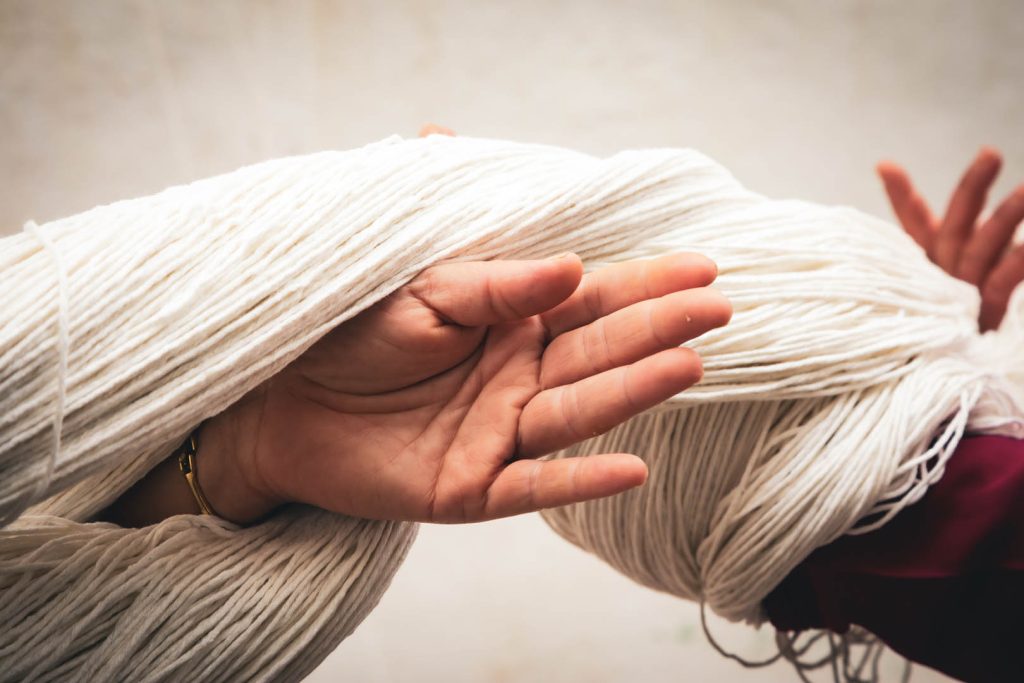
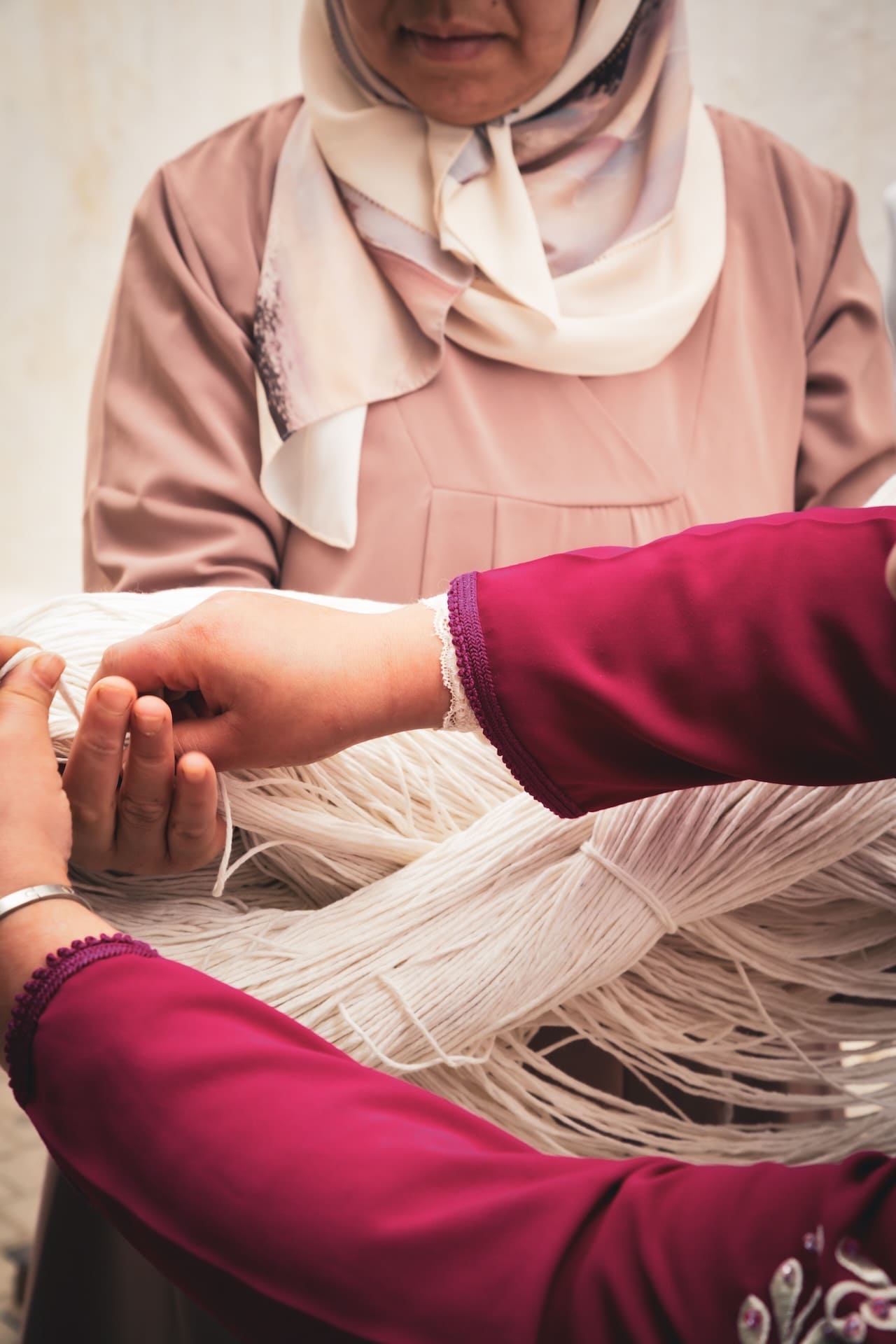
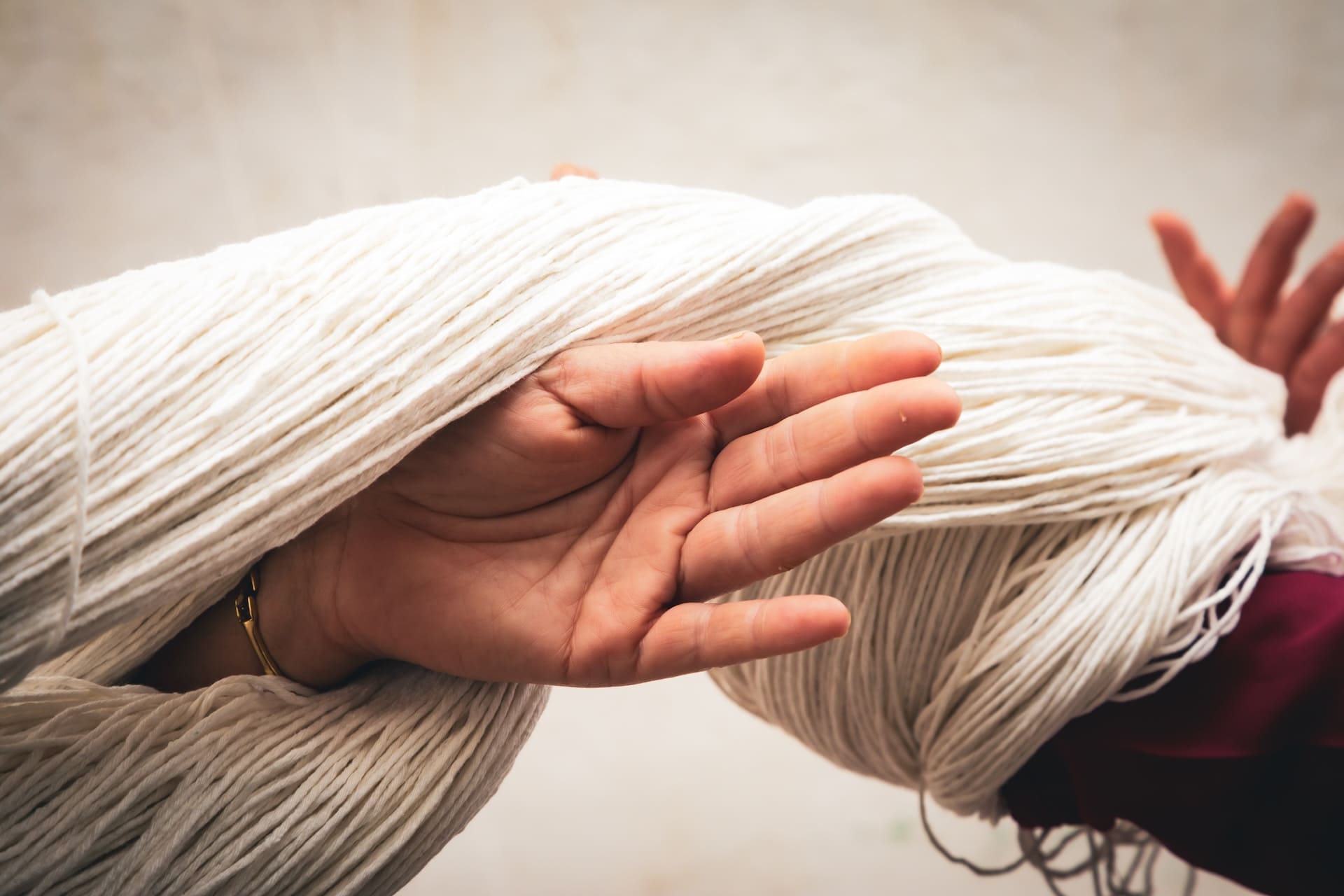
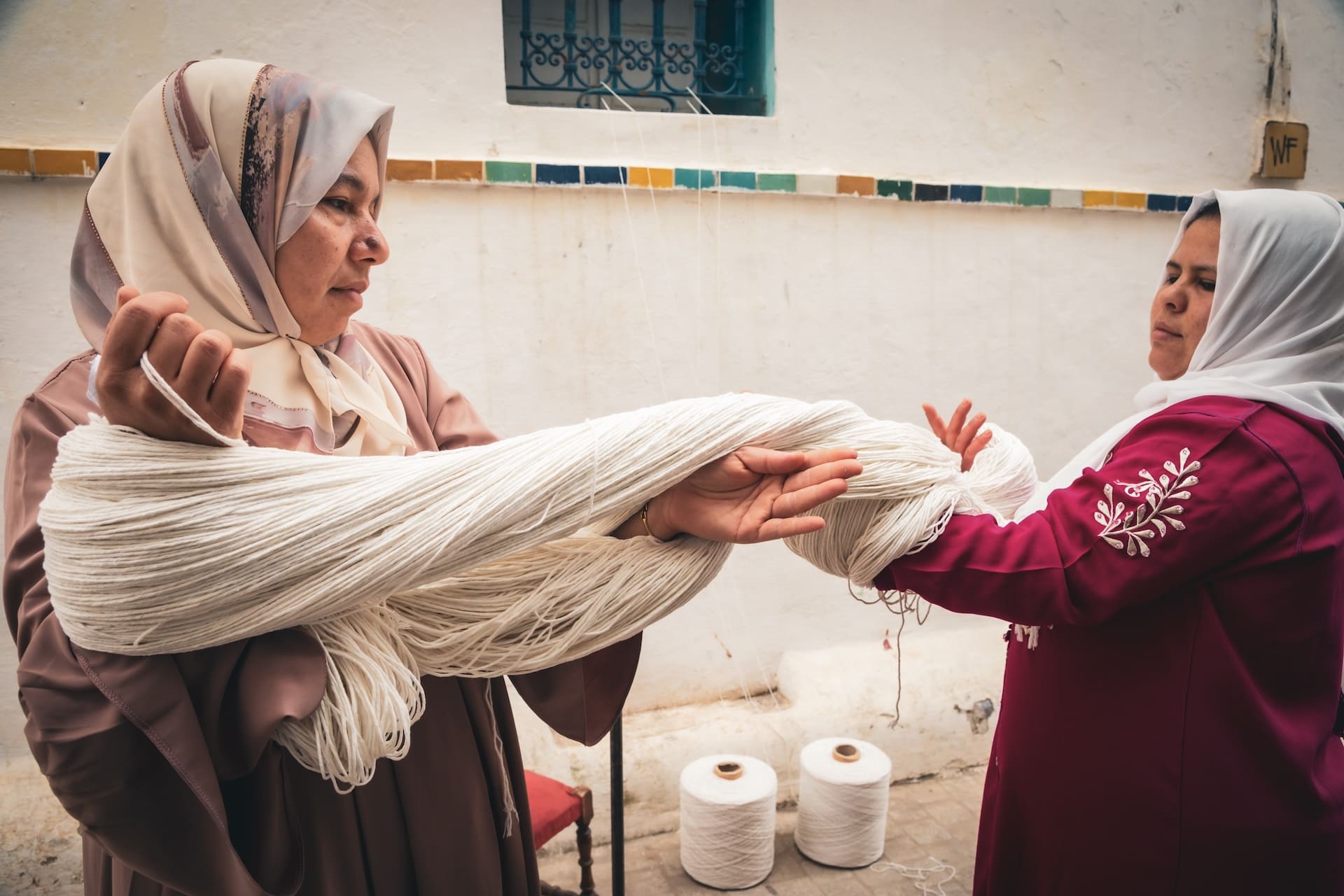
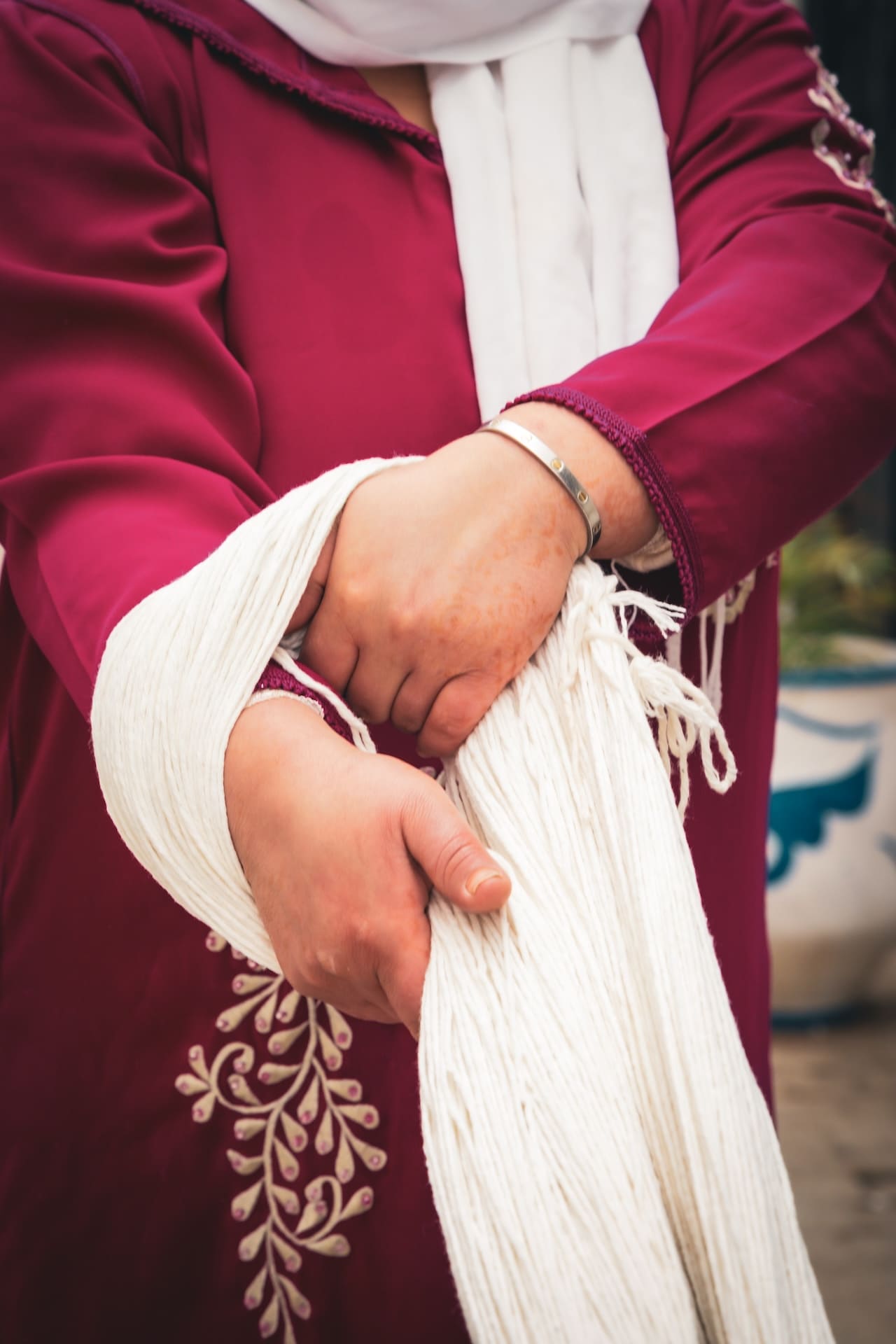
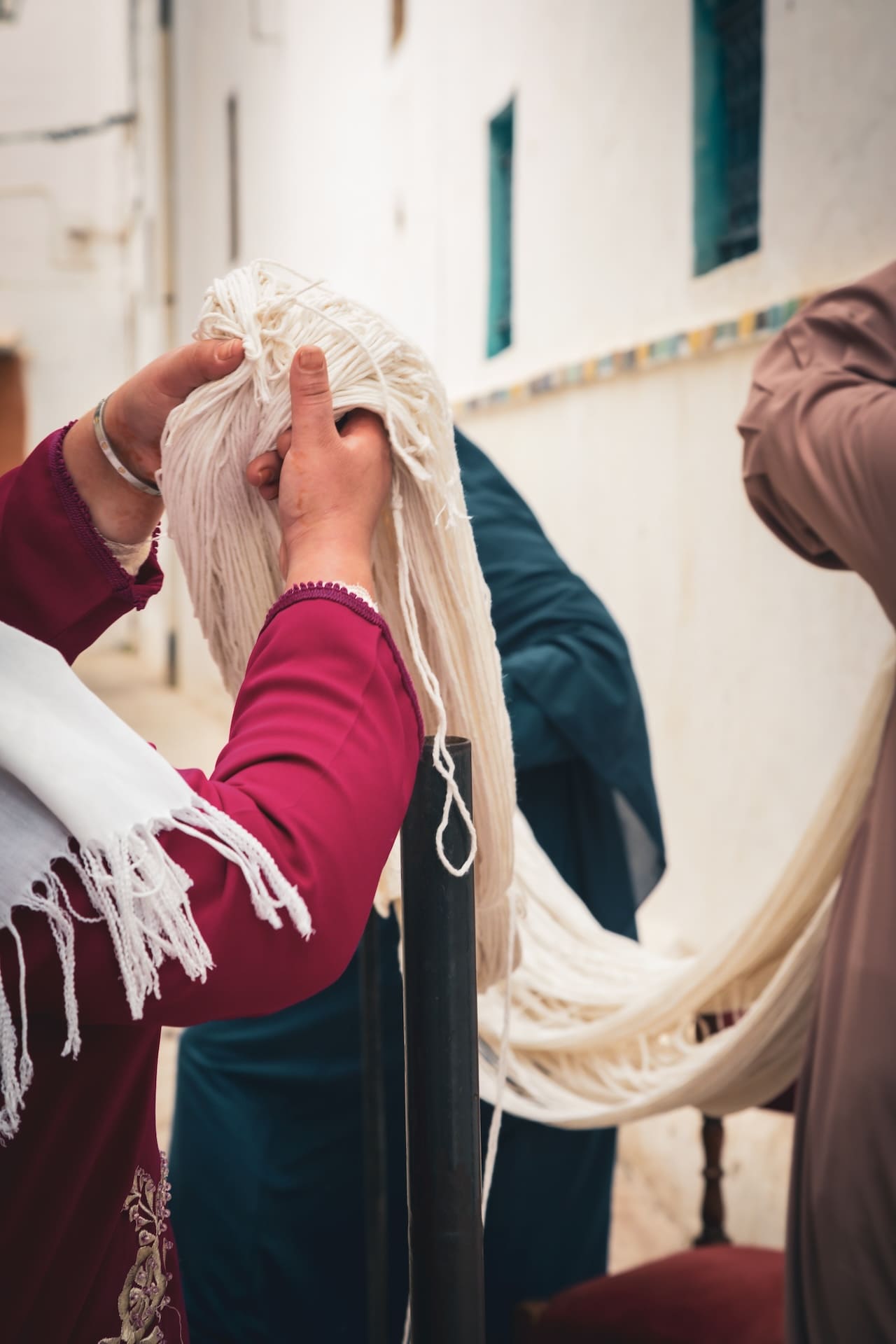
After the warping, comes the moment of stretching. Stretching a chain is not simply unrolling it; it is to open it, to offer it to the light, to adjust it with care and reverence. This is where the true transformation of thread into text, of matter into dream, begins.
Step 2
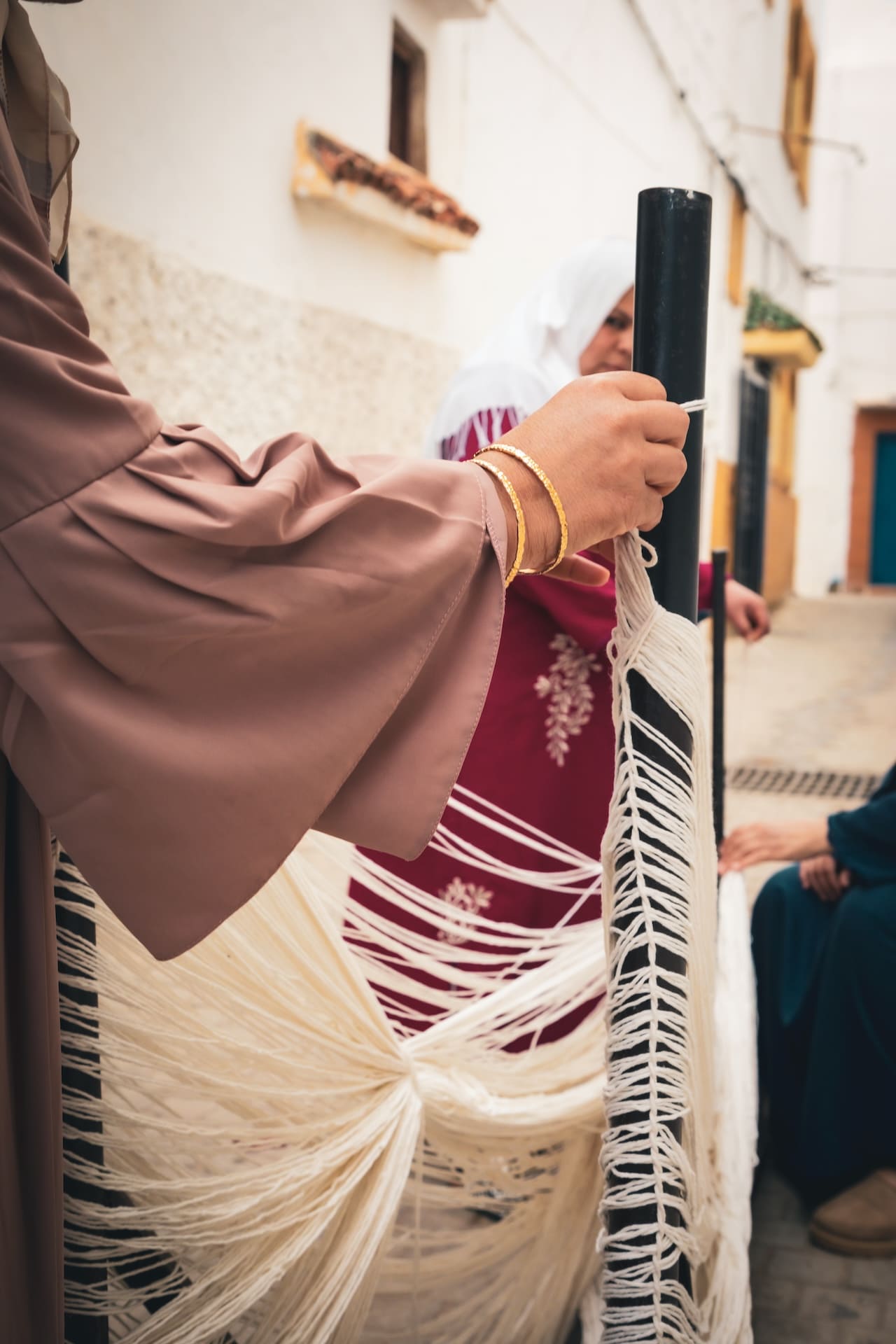
Long ago, before metal took over the weaving looms, all the equipment was made of wood: living wood, sometimes rough, but complicit with the hand. The warp-beam and the weft-beam were then made of cedar or thuja planks, called “M’nioula,” pierced with small equidistant holes, like a tuning instrument. This seemingly simple device was a precious key in the art of weaving. The weavers, with assured and ancient gestures, fixed the warp sheet by delicately threading fine strings through each hole. One by one, they tied the edges of the veil to the loom’s frame.
The operation itself required a whole human choreography. At least six people were needed: four to stretch the two beams with the precision of a celestial surveyor, and two to untangle, smooth, and readjust the threads, ensuring their perfect distribution. Because a misaligned veil, a single crooked thread, could cause the entire symmetry of the carpet to waver. This precise, meticulous work already carried the rigor of the forms to come.
But over time, things changed. Metal weaving looms made their appearance. Stronger, more practical, more durable. With them, stretching the chain became simpler and more mechanized. It was no longer done directly on the wooden “M’nioulates,” which gave way to steel rods. Now, two weavers are enough to stretch the sheet on these rigid rods, on the floor or in the courtyard of a house. The gesture remains, but the scene has changed. Yet, in this economy of means, the essential survives: precision, attention, and the beauty of the exposed thread.