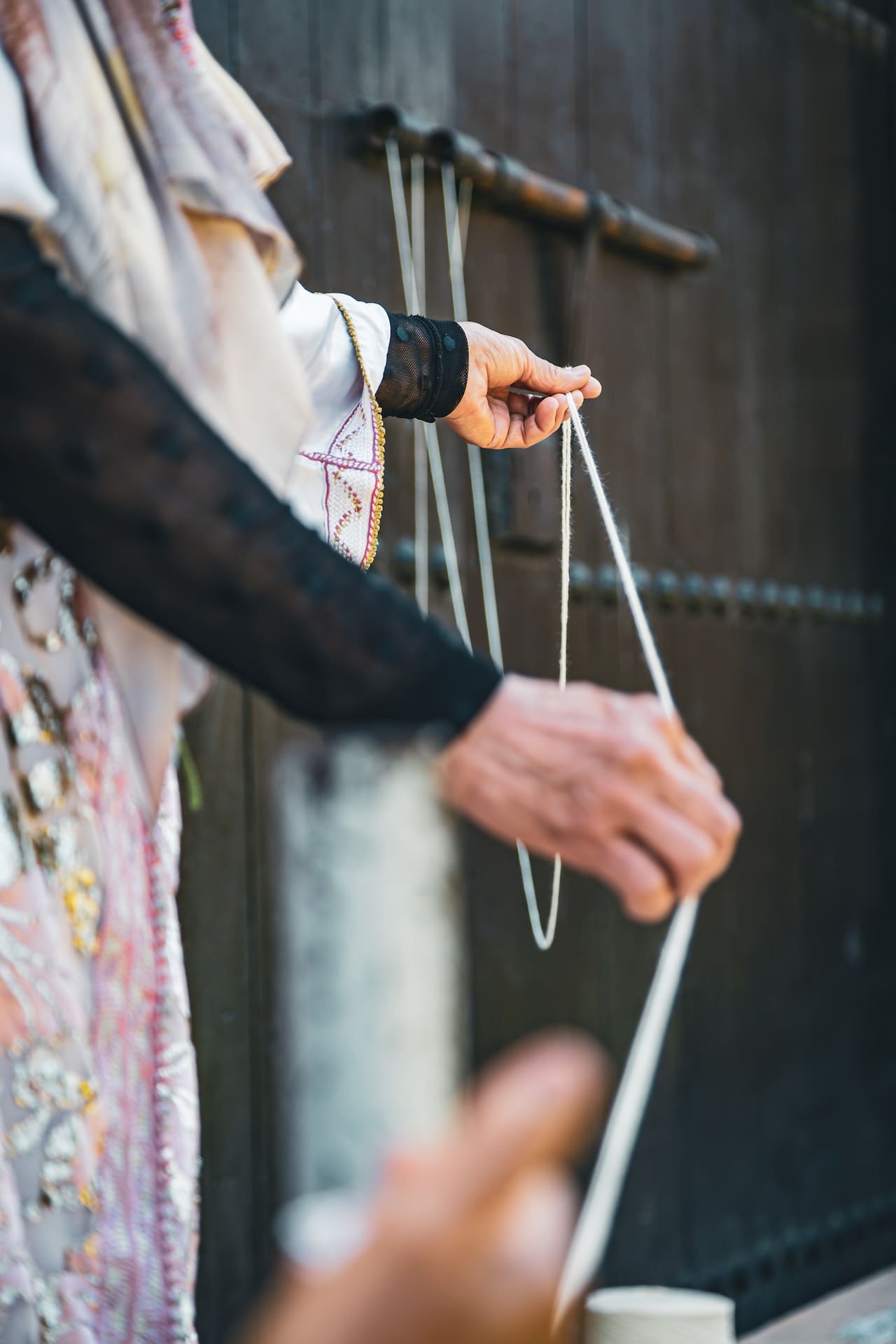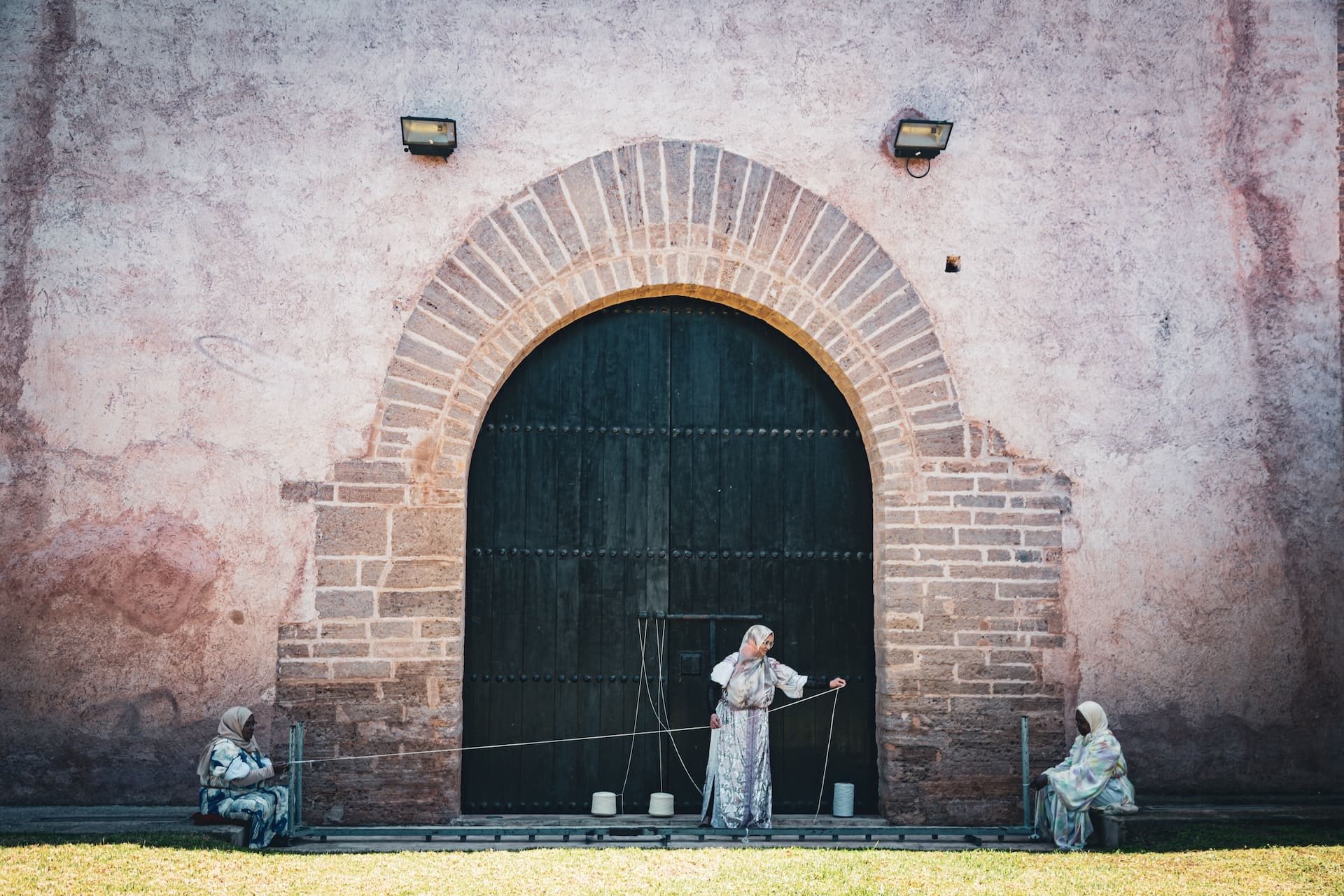
At dawn, when the light gently caresses the ochre walls of the medinas or the undulating fields of the rural outskirts, the sacred ritual of warping begins. In the still-cool morning shadows, the women step out of their homes, carrying in their hands the precious spools of thread, fruits of the patient spinning of wool. They are not alone: the earth, a faithful accomplice, offers its ground as a temporary canvas. Warping is not just a technical task; it is a ceremony—the first stone laid in the foundation of an art.
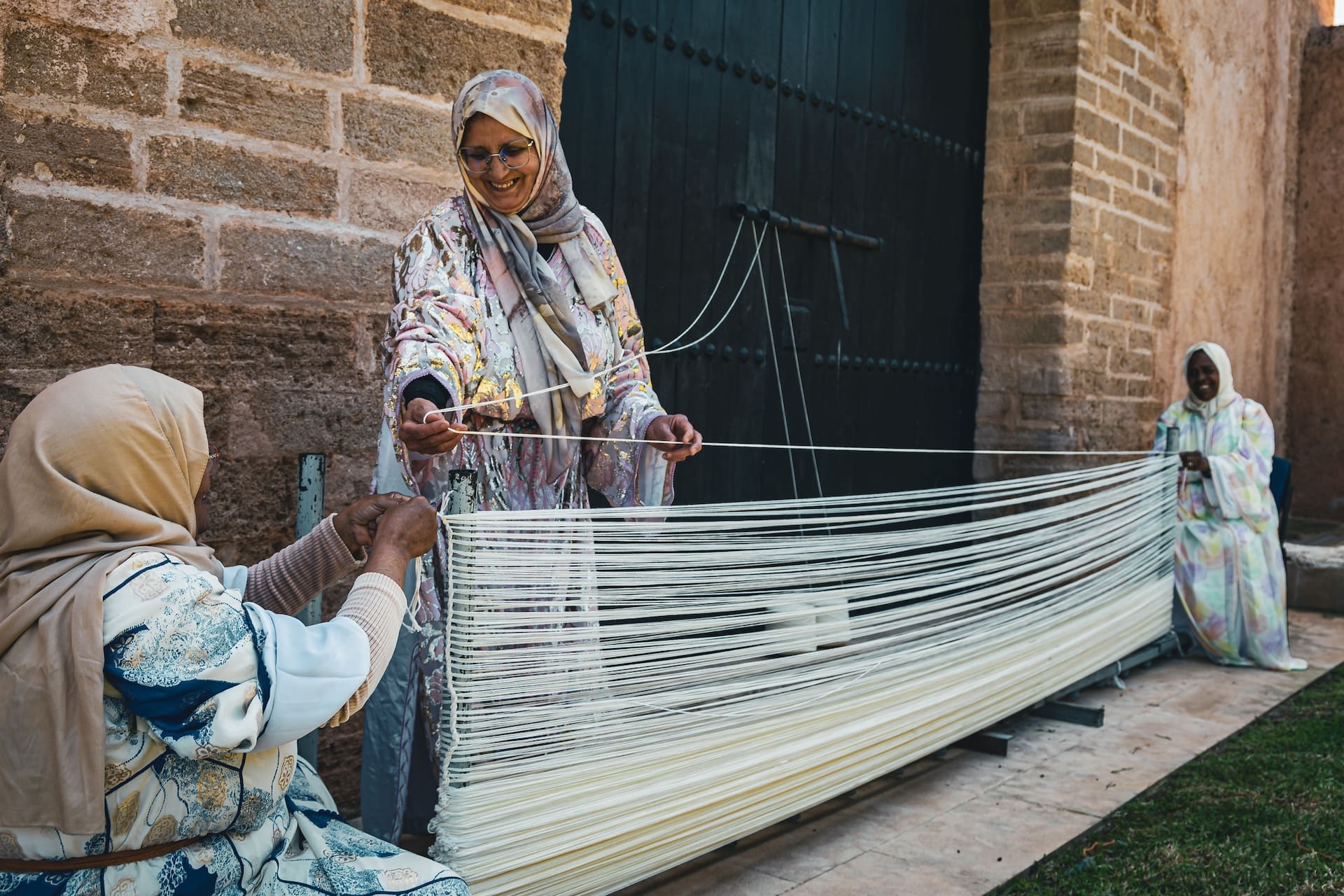
This preliminary operation to weaving involves preparing the warp, these taut threads that will form the skeleton of the carpet. The density of the velvet, the precision of the patterns, and the nobility of the finished product all depend on this meticulous setup. To do so, the weavers plant robust stakes or metal bars, more than a meter long, into the ground. They sink deeply into the earth, as if to engage in a dialogue with it, ensuring that no tension will distort the progress of the work.
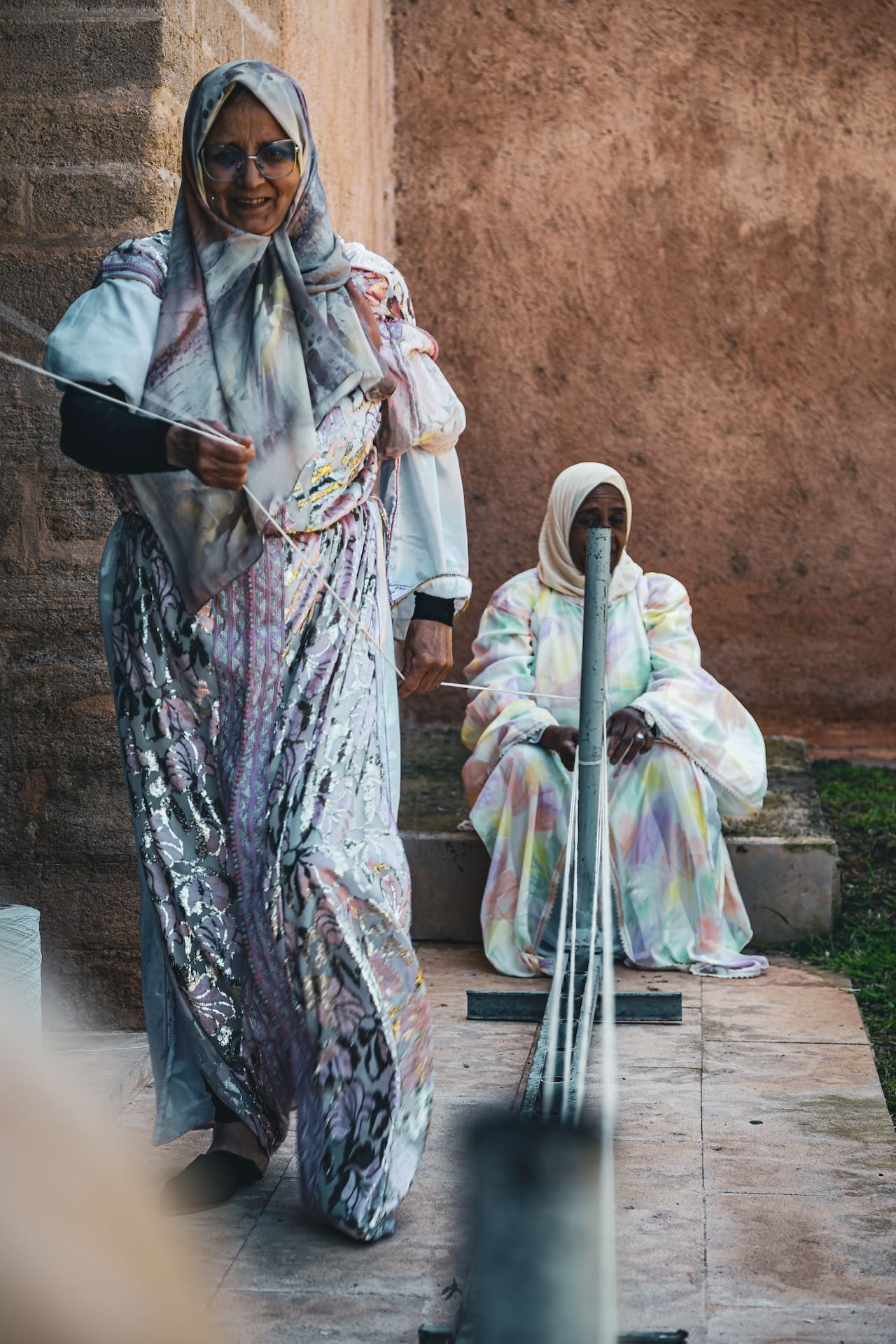
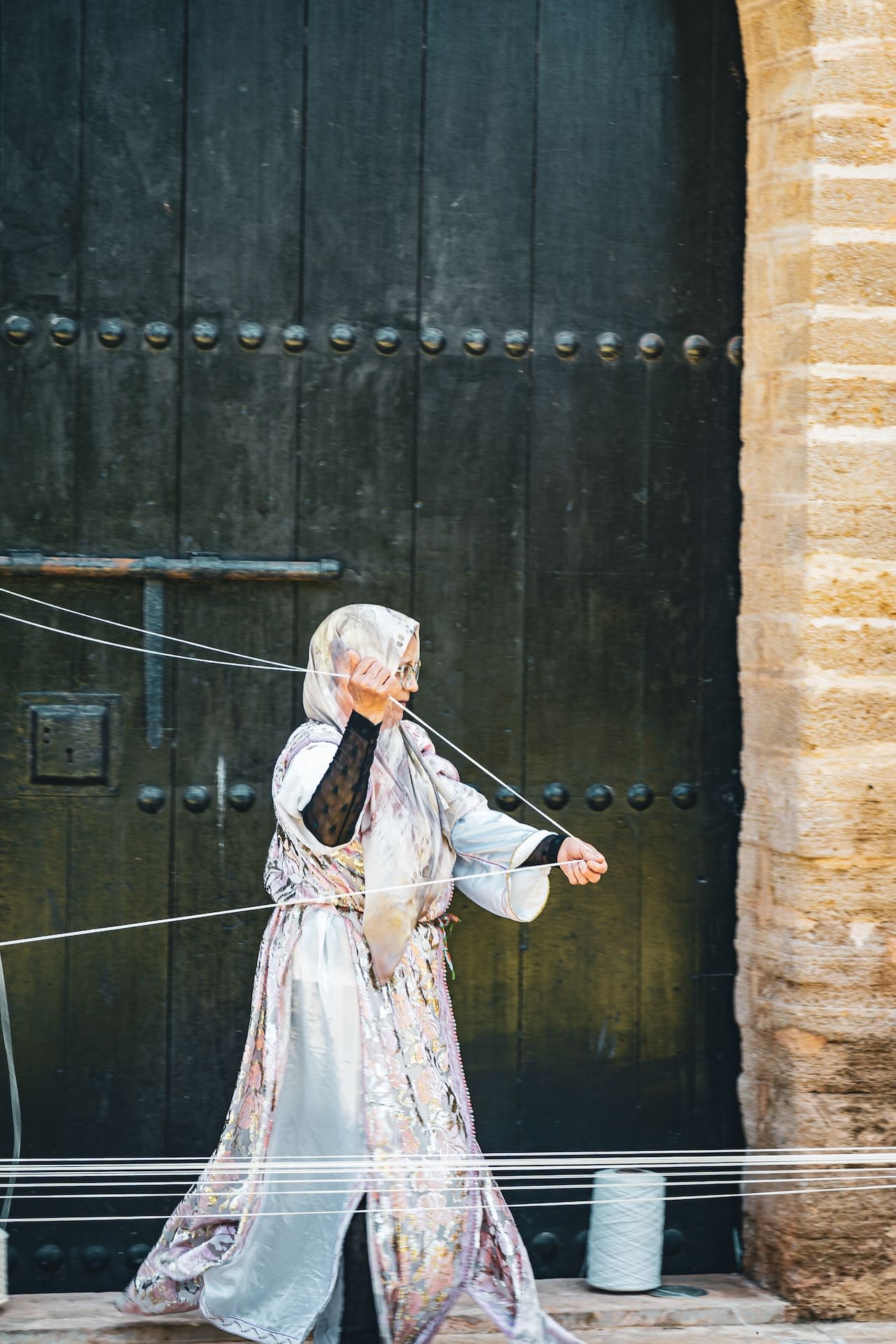
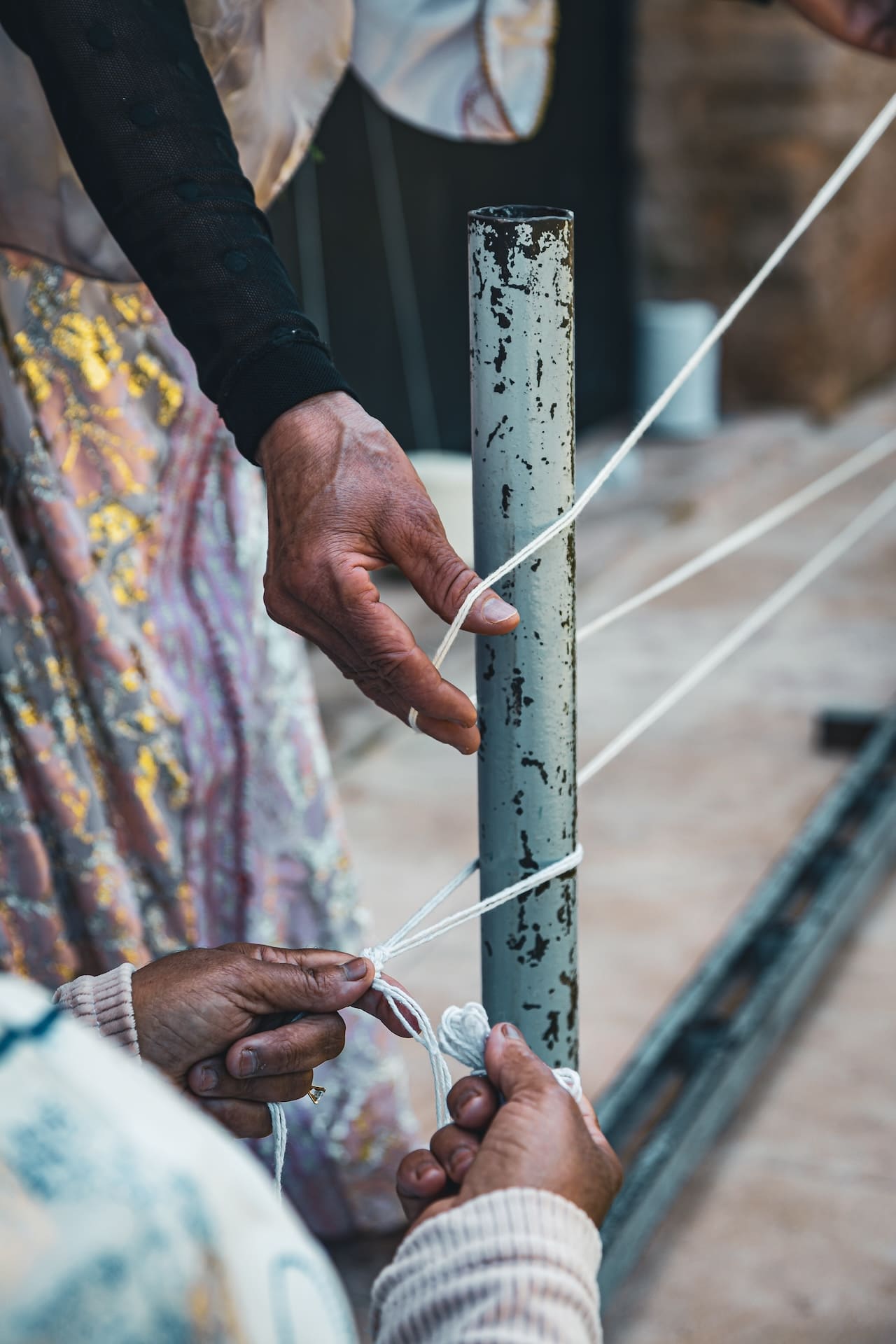
Three women are enough for this ancestral dance: two sit facing each other, each behind one of the aligned stakes, while the third becomes the messenger. This mobile weaver holds a ball of warp thread, and it is her honor to weave the first link. She moves toward one of the seated women, offering the thread as one would offer a secret, a silent wish. The recipient delicately wraps it around the stake, secures it firmly, and then crosses the ends with a binding thread, enclosing the loop in a protective stitch.
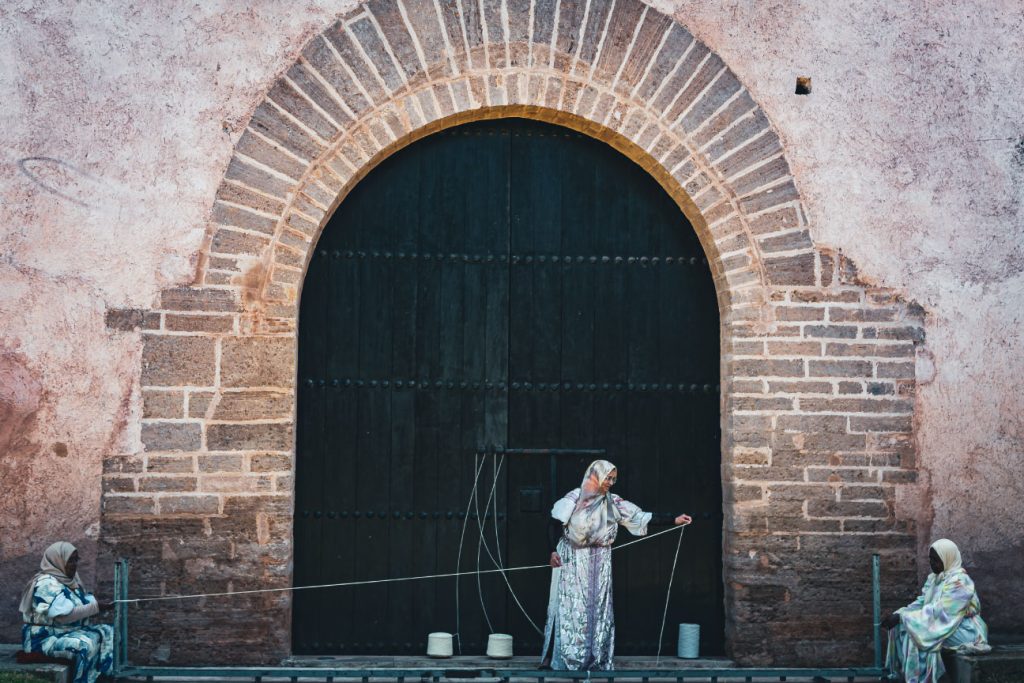
Then, the mobile weaver moves to the other stake, the spool unwinding in her hand. She again offers the thread to the second seated weaver, and the gesture is repeated tirelessly. Spool after spool, back and forth, the warp slowly begins to take shape — a fluid, living veil, full of textile promises.
The movements are slow, harmonious, almost meditative. There is no rush. In warping, time is not counted; it is given. It dissolves in the movements of arms, in exchanged glances, in shared silences. It is in this slowness that the beauty and rigor of the future work are rooted. For if weaving is music, warping is its first note, the purest.
Once the last spool is unwound, one final precaution remains: before removing the warp from the stakes, the weavers insert a finely-tuned string between the two rows of threads. This simple, discreet string will keep the two components of the veil separated, like a breath held between two exhales. It is the first thread of the width — this magical opening between the even and odd threads, which will later allow the passage of the weft and the song of the loom.
But beyond its technical aspect, warping is a celebration. A communion between women, between generations, between art and nature. In these moments, the alleys become workshops, and the sky becomes a witness. The weavers sometimes sing, often tell stories, and always laugh.
Thus, even before the rug itself, the soul of the craft is woven. Warping, with its humility, its rigor, and its discreet beauty, embodies the invisible link between the ancestral gesture and the work of art. It is the memory of the thread, the introduction to the textile poem, the silent promise that soon, under the skilled hands of the weavers, a world will be born.