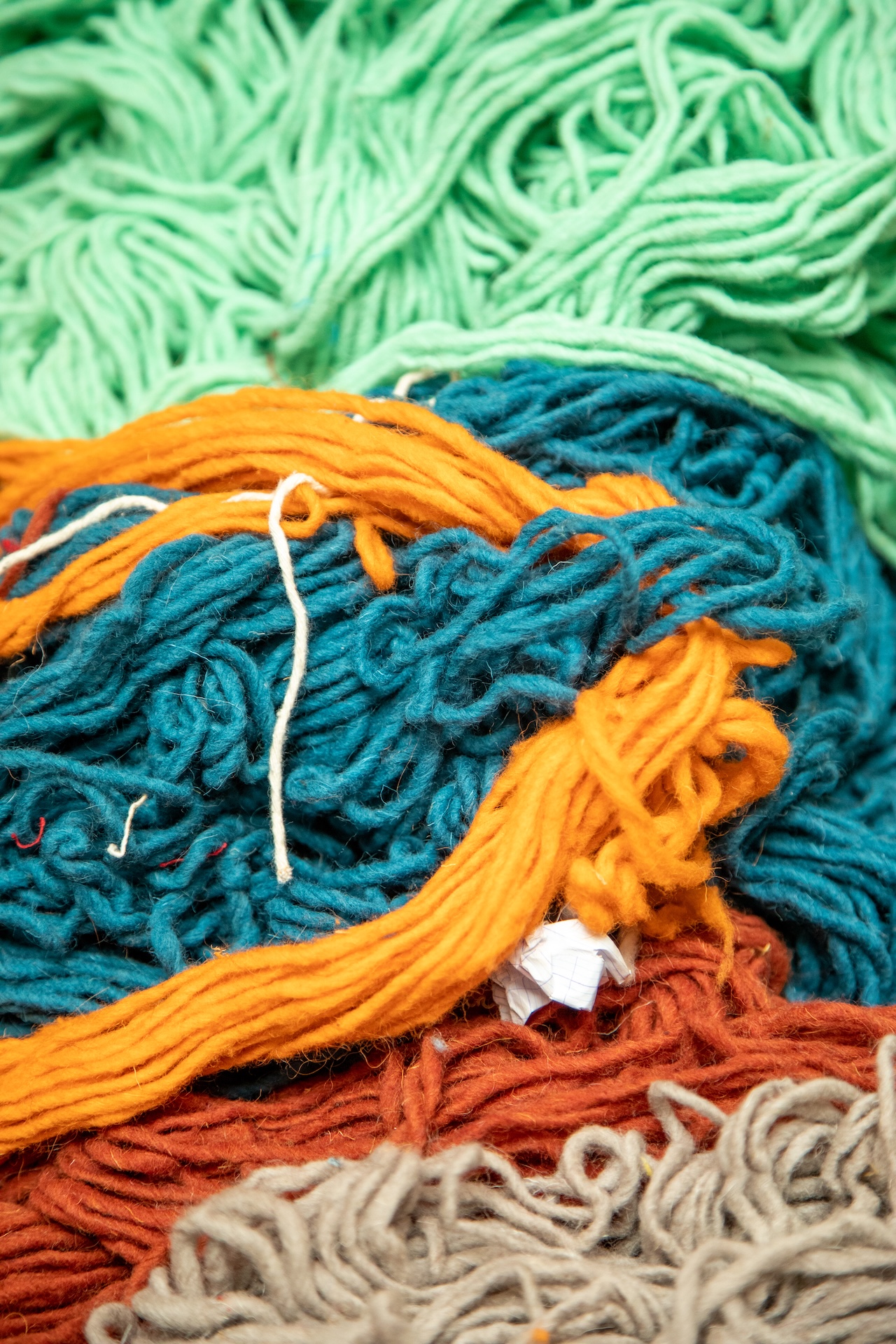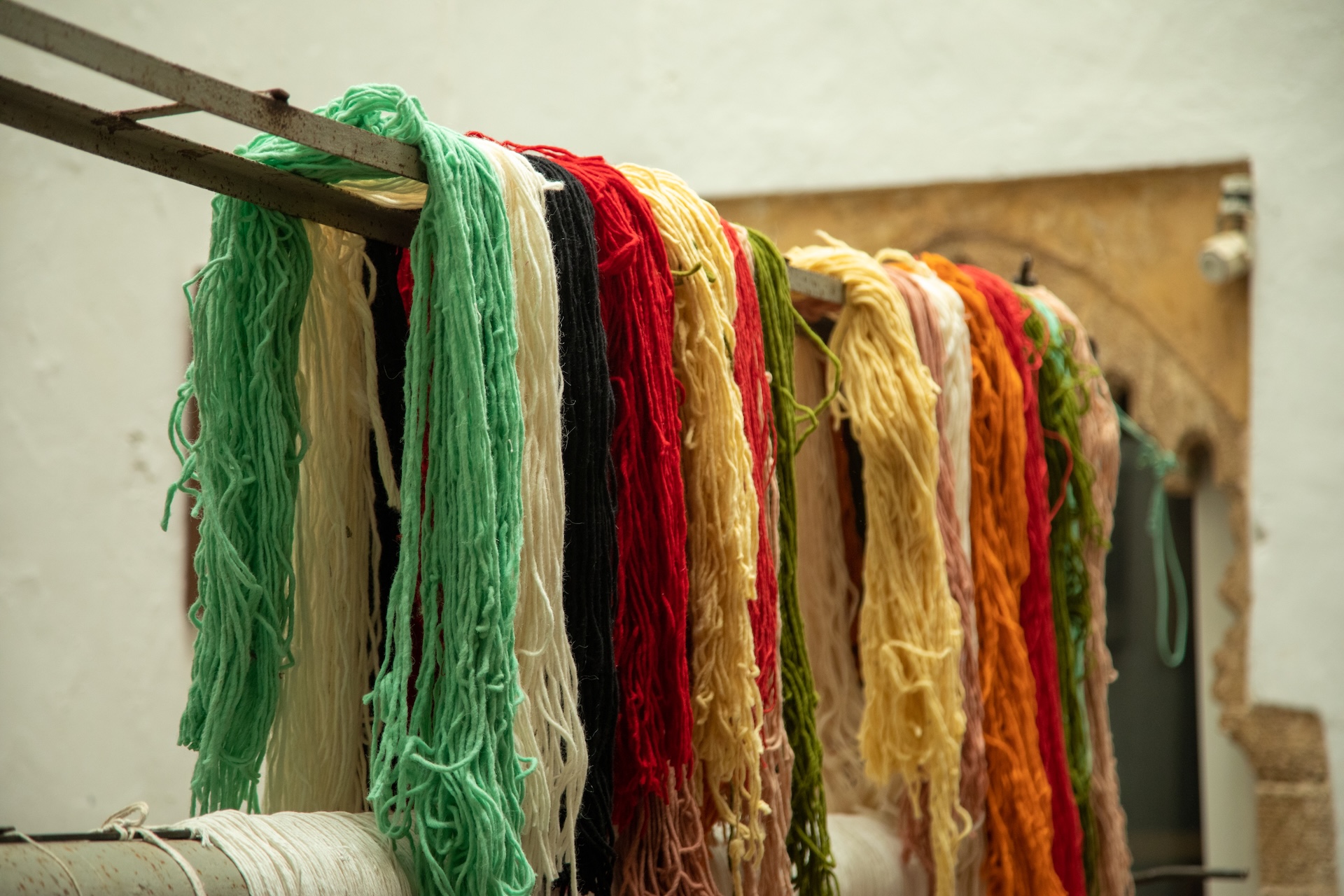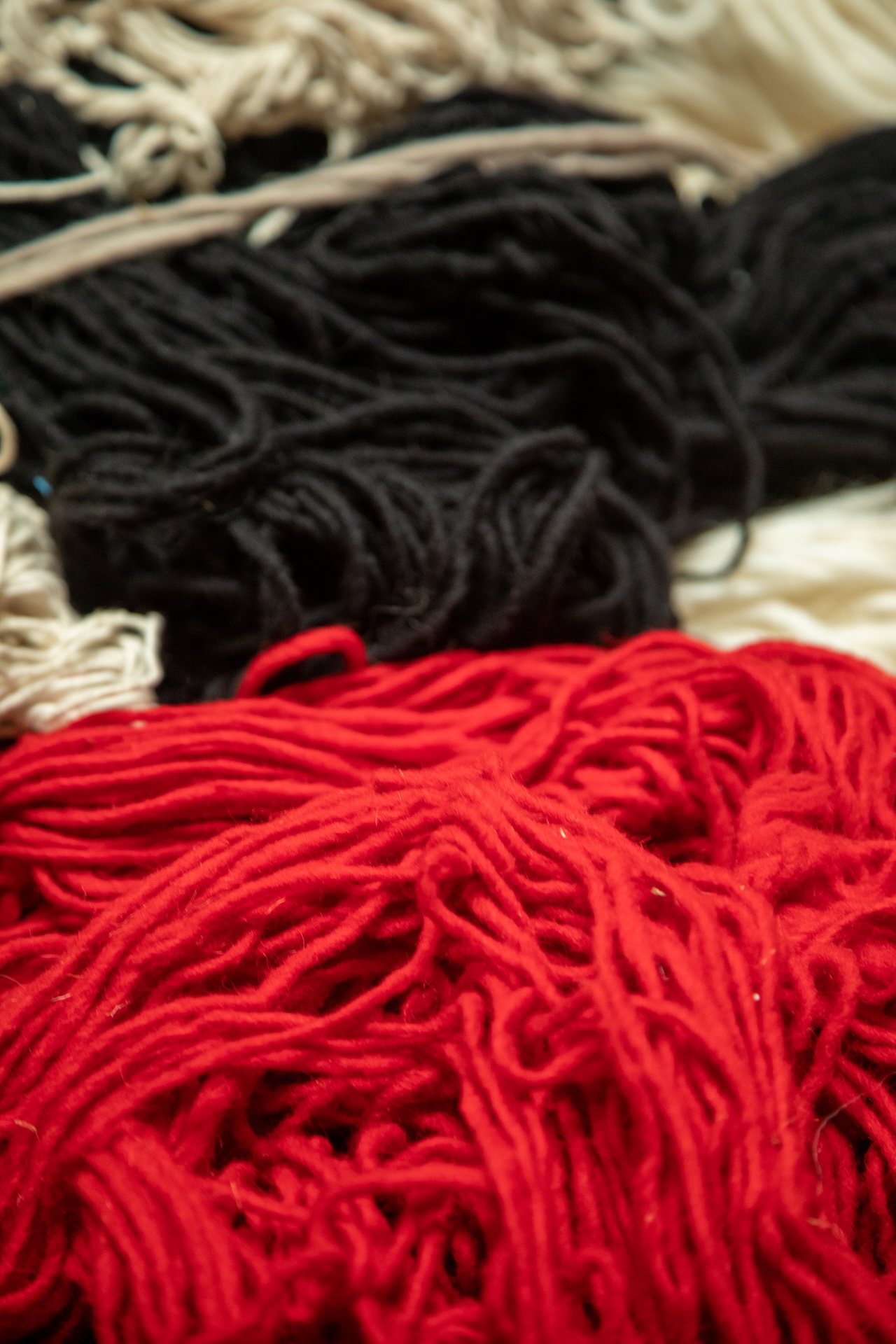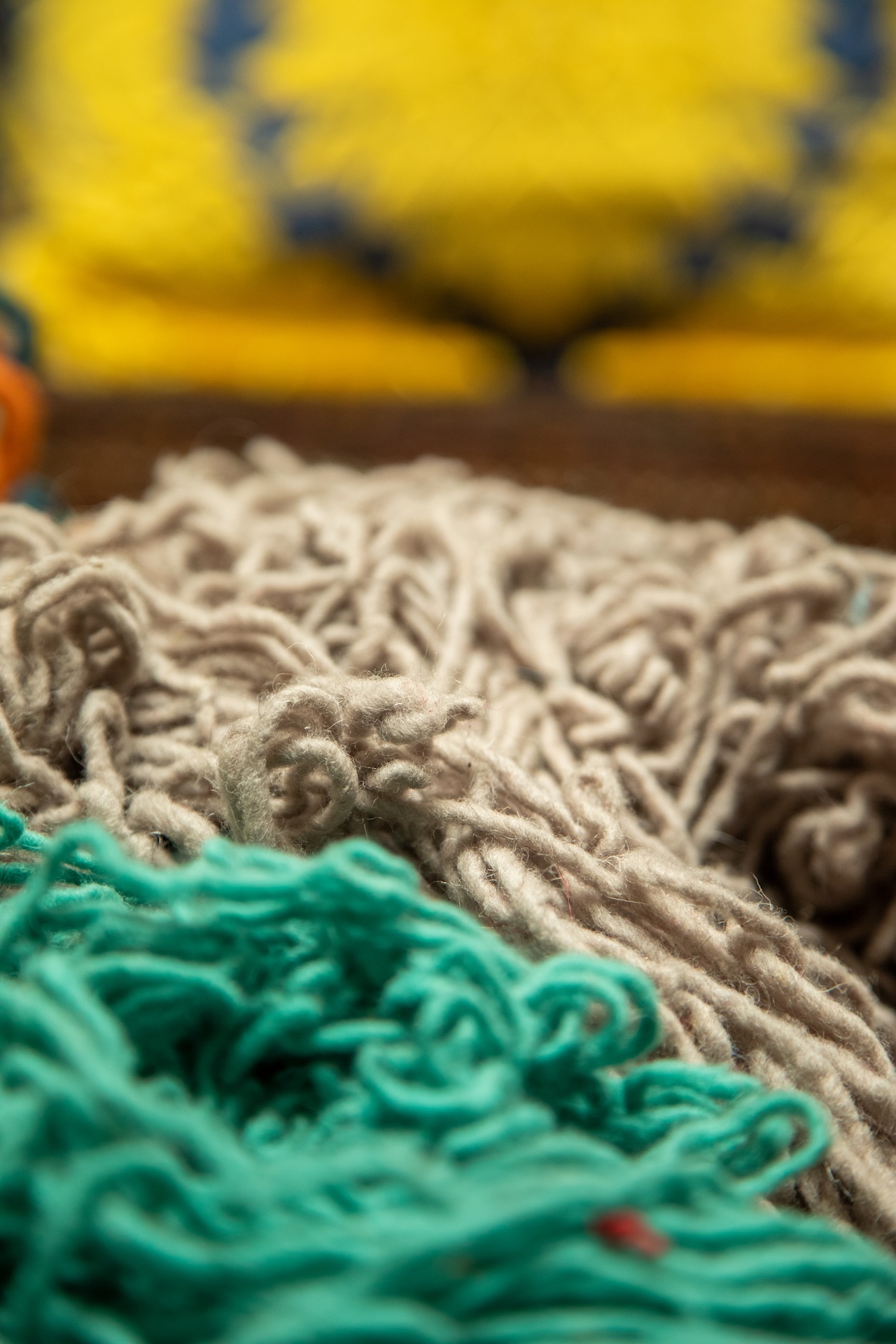
In the living heart of the Rabat medina, where the alleys snake between the lime-washed walls, there once stood a special souk, vibrant with smells and colors: the dyers’ souk. It was a world apart, a sanctuary where wool came to life under the expert hands of dyers, in a silent ballet orchestrated by tradition.
Before the introduction of chemical dyes, natural dyes were the norm, exclusively derived from the plant world. Each shade carried the memory of a plant, a terroir, and a knowledge passed down from master to apprentice. Freshly spun or carded wool was prepared with mordants, essential for fixing the pigments. Artisans used materials such as alum, iron sulfate, vinegar, or wood ash, depending on the desired color. This preparation, often invisible, was the key to achieving a deep and lasting color.
The warm and powerful red came from the roots of madder, boiled in large copper cauldrons. The yellow, as bright as the Atlas sun, came from yellow chamomile, weld, pomegranate bark, turmeric, or broom. The deep, soft, enveloping brown was created from a careful mixture of henna, walnut husks, or fig leaves.
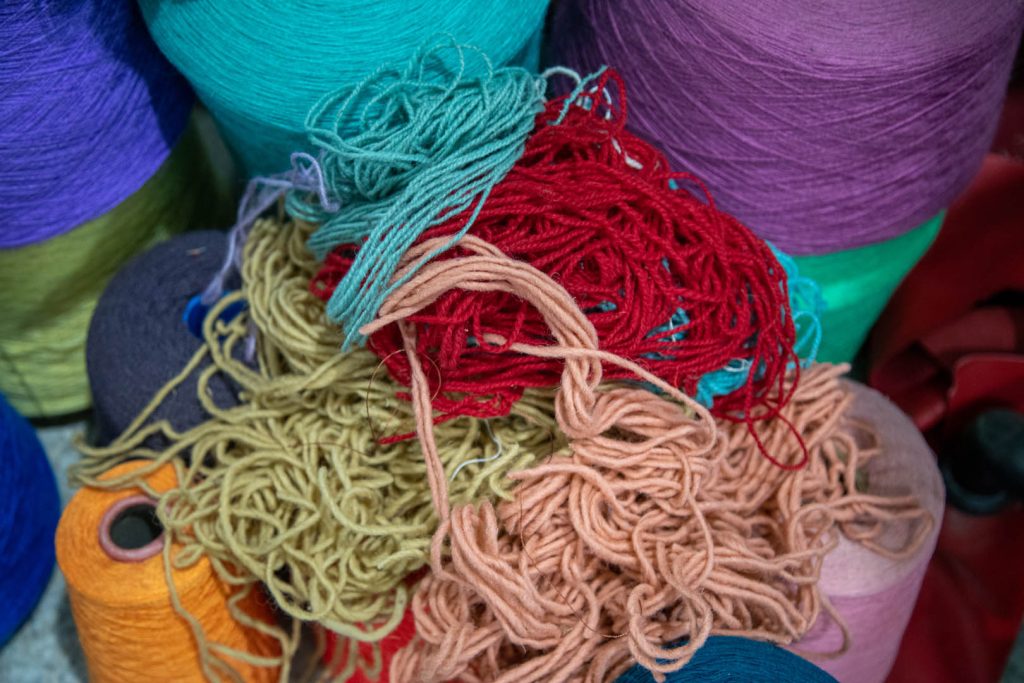
Blue, the color of the sky and the sea, was obtained with natural indigo, derived from the “indigofera tinctoria” plant. This dye required great dexterity. The dye bath had to be prepared in an oxygen-free environment, in a clay vat covered, and the skeins were dipped several times until the desired shade was achieved. This alchemical process, fascinating to observe, transformed the green of the liquid into a brilliant blue the moment the wool was exposed to air.
The color green was not obtained directly from one plant but through layering: first an indigo bath, then a second bath with madder or chamomile. The combination of these two plant worlds created an endless range of greens, from soft jade to the deep green of cedars.
The raw wool, on the other hand, was left as it was for natural white tones, while black was sometimes obtained by soaking the wool in a bath of oak bark or walnut husks, combined with oxidized iron.
The large, soot-blackened cauldrons were placed on stone or clay hearths. The water slowly heated, infusing the plants for hours, releasing powerful aromas and colored vapors. Nearby, wicker baskets were filled with skeins ready to be dipped into the bath. Wooden spoons, oak sticks, and iron hooks were used to stir, dip, and extract.
The process was not just artisanal. It was ritualistic. Every gesture had a meaning, each color a message. Dyeing was not just about soaking a material; it was about embedding in the wool the cycles of nature, ancestral knowledge, and the soul of a people.
Even today, a few workshops in Rabat continue this knowledge. Their natural dyes, vibrant and durable, testify to the richness of an endangered yet living artisanal heritage. Each dyed thread is not just a material: it is a fragment of history, an ode to the earth, patience, and art.