The Beginning of Weaving: the Ad’fira and the Chef
The Beginning of Weaving: the Ad’fira and the Chef
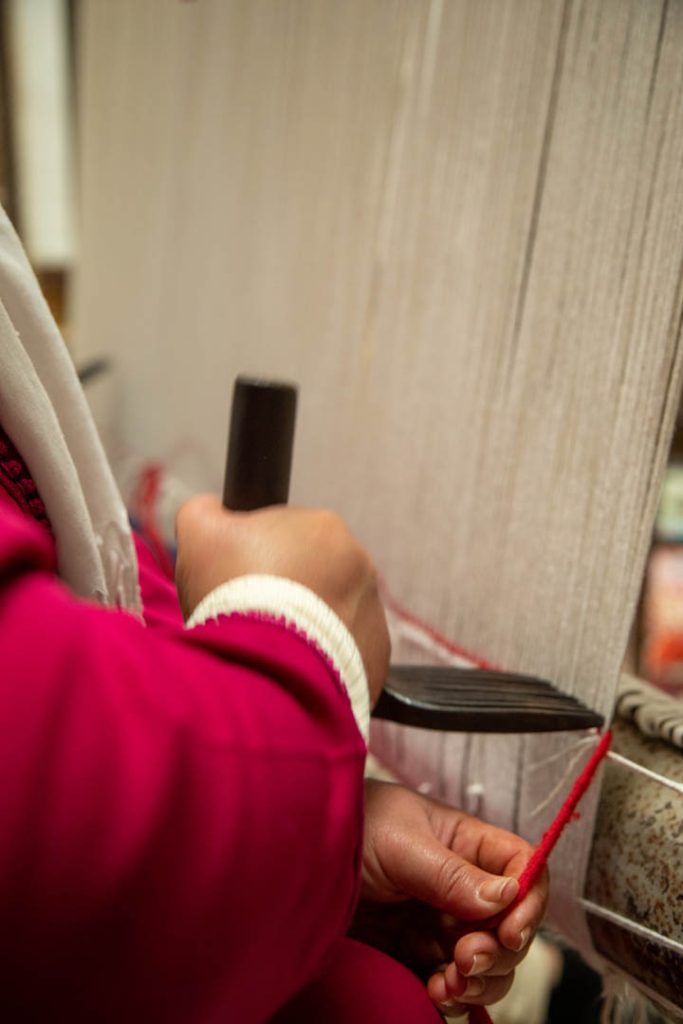
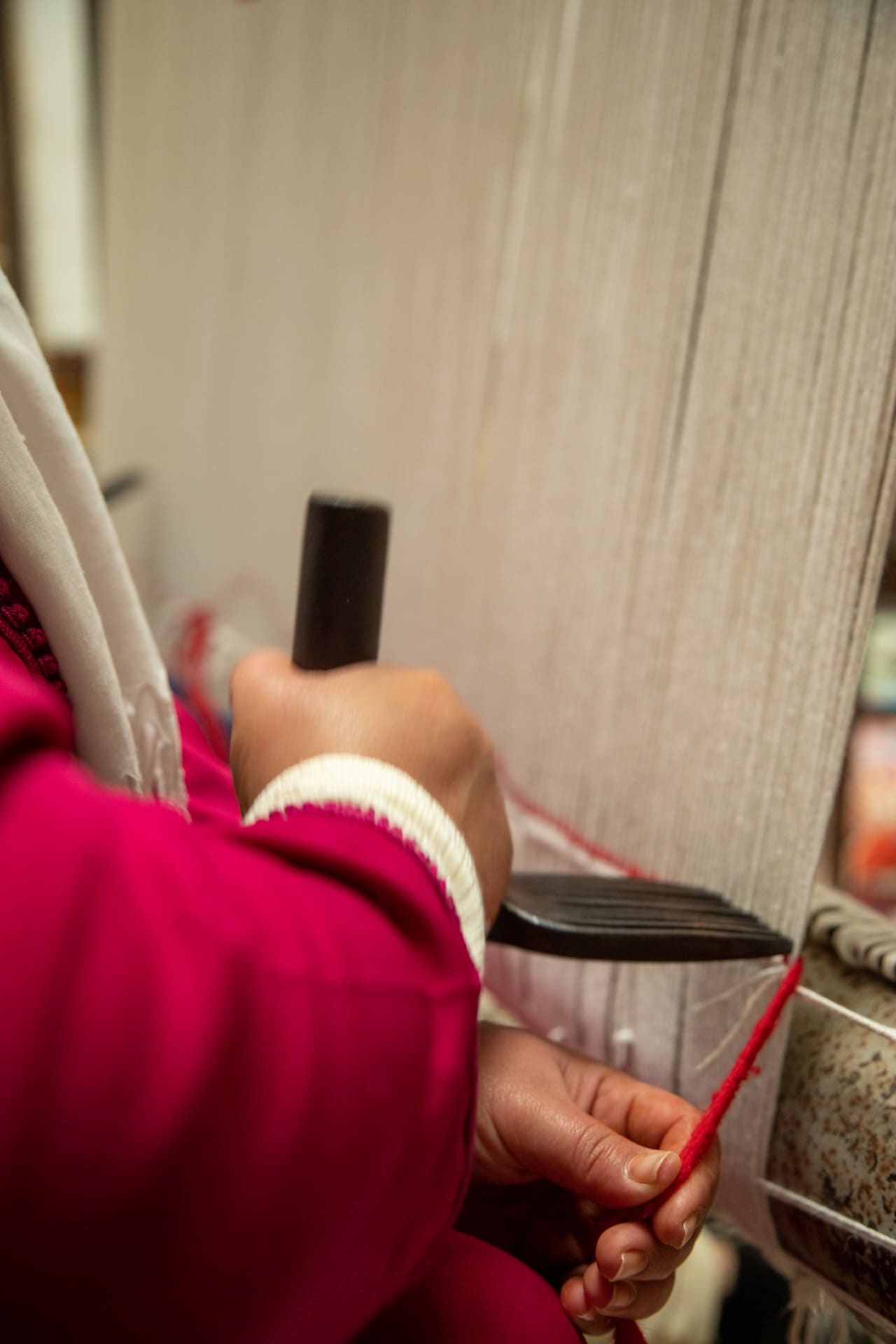
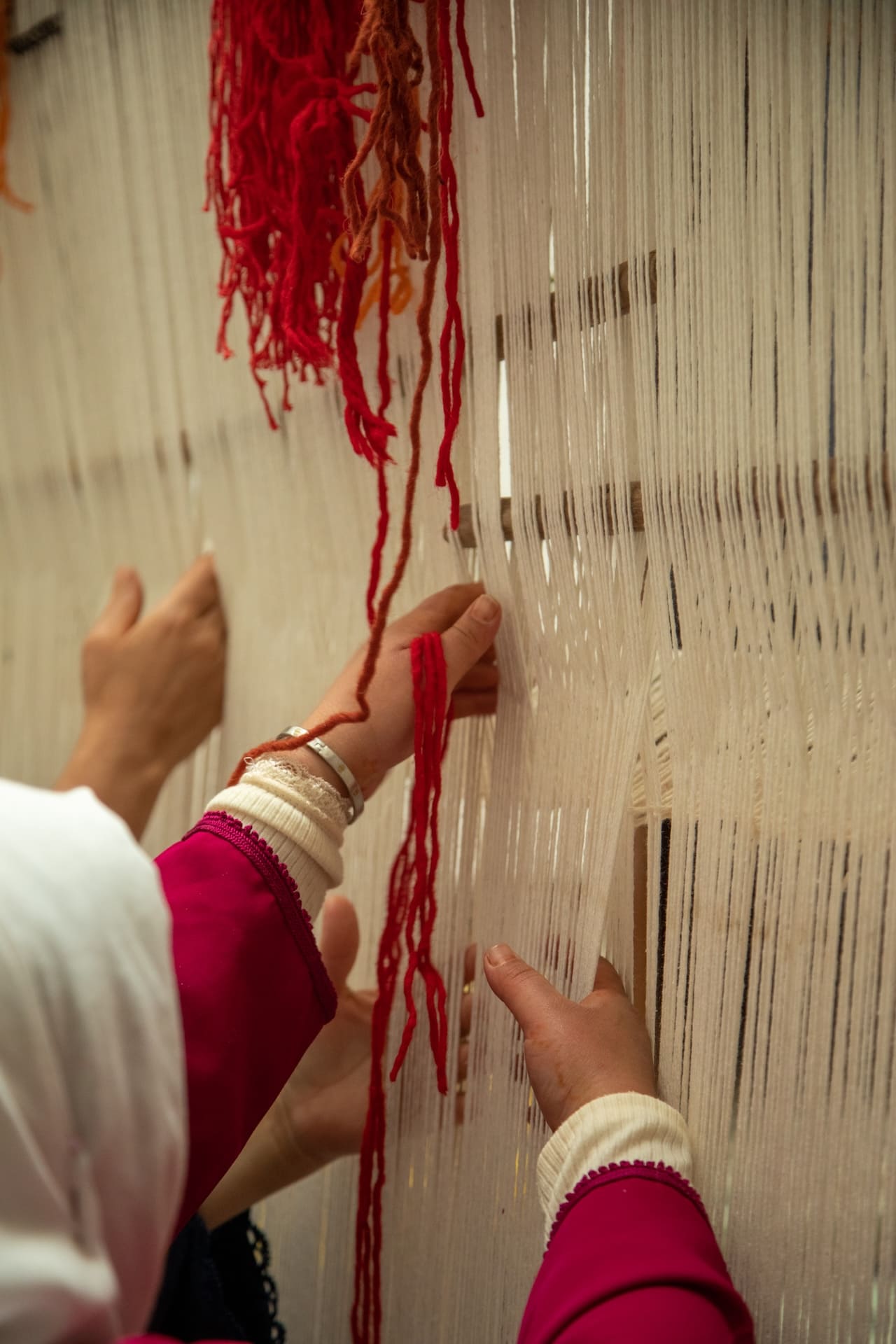
When the chain is mounted and properly stretched, everything is in place for the sacred act: the actual beginning of the weaving. It’s the moment when the weaver’s hand no longer just prepares, but begins to create. She no longer just guides the threads; she orchestrates them.
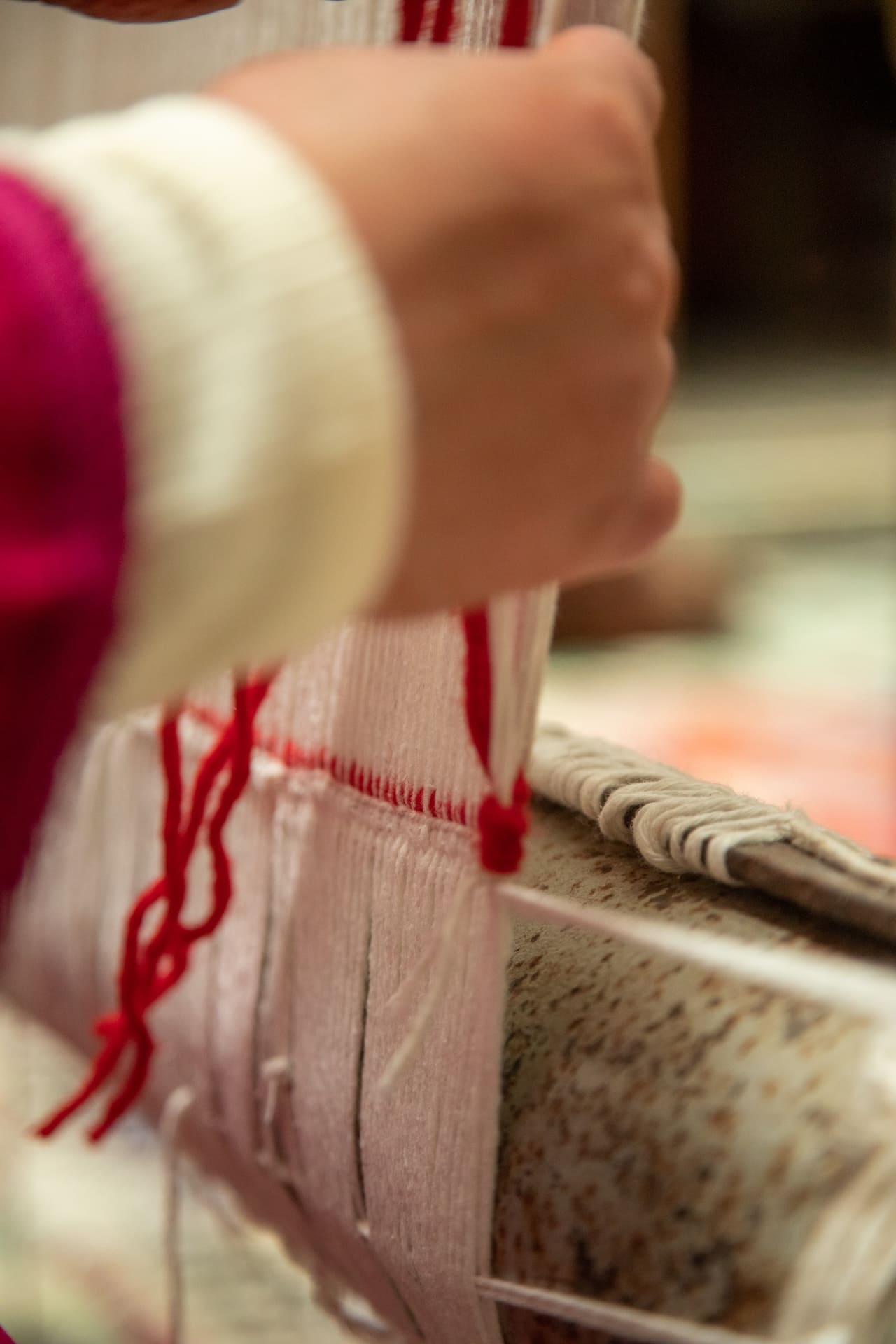
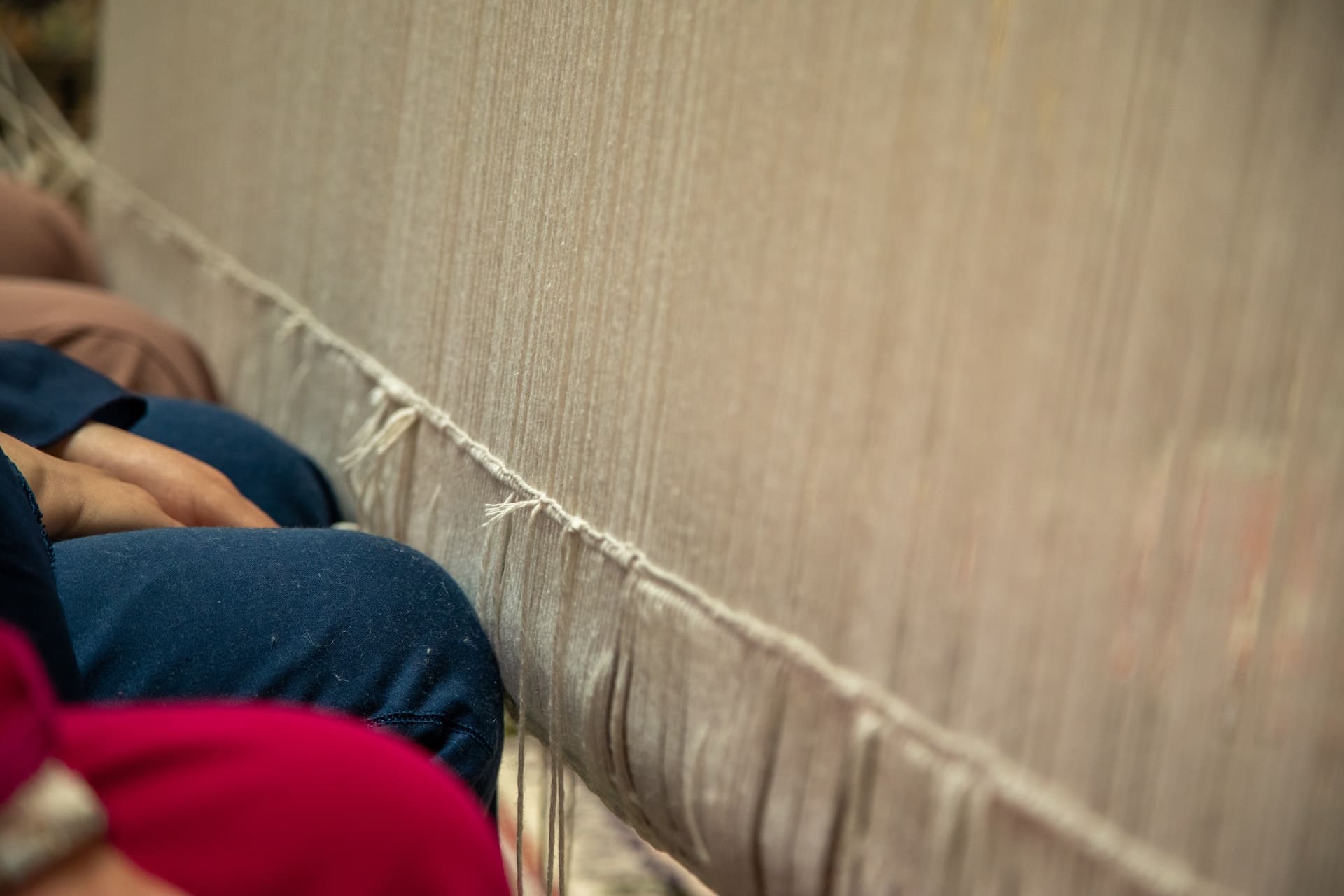
This beginning is rooted in tradition, in beauty, and in the carefulness of the gesture. And everything begins with a braid: “Ad’fira.” This precious braid, created by interlacing two simple strands, wraps around the base of the rug with subtle grace. The two strands are tied into an elegant spiral. And when the weavers choose two different colors for the weft threads, “Ad’fira” becomes not only functional but ornamental. It plays a double role: preserving the weave from any fraying of the chief threads.
Then comes the creation of the “chef” or, according to the old tradition, the creation of the “Laalam,” now called “Attakhtita.” This strip, woven without knots, rises just above the initial “Ad’fira” braid. It’s a simple, dense area, entirely woven in the dominant color of the rug. Like a curtain rise, it prepares the eye, stabilizes the base, and lays the first stones of the textile narrative. The chef is not meant to shine, but to anchor. It is the foundation of the rug, the inaugural word.
In the past, this chef measured up to six centimeters in height, proudly asserting its presence. Today, it has become more discreet, perhaps shyer, limited to two or three centimeters.