The Moroccan Carpet: A Central Component of the Intangible Cultural Heritage
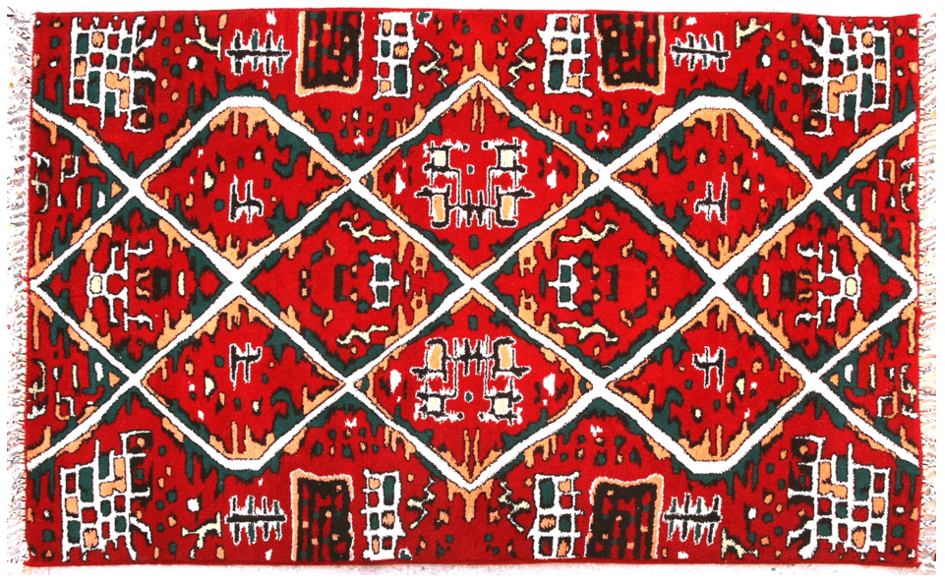
The Moroccan carpet is much more than a simple decorative or domestic object. It represents an essential component of Morocco’s intangible cultural heritage. Its richness lies in the diversity of its know-how, symbolism, techniques and uses, which vary according to region, tribe and social context. Moroccan carpets embody a collective memory, a living tradition carried largely by women, who perpetuate ancient gestures while reinterpreting them creatively.
Moroccan hand-woven carpets carry multiple identities. They tell stories, territories, myths and allegiances. Whether through geometric motifs, chromatic palettes or knotting techniques, each carpet bears witness to a local culture and a particular appeal that seduces any observer or prospector. In this sense, they constitute a visual and symbolic language specific to the various Moroccan communities.
Renowned for their beauty and originality, Moroccan carpets have acquired international renown. It is sought after by collectors, designers and craft enthusiasts. But beyond its aesthetic value, its social, economic and symbolic role must be emphasized. It provides thousands of rural women with a stable source of income, enhances their heritage and makes an active contribution to local development.
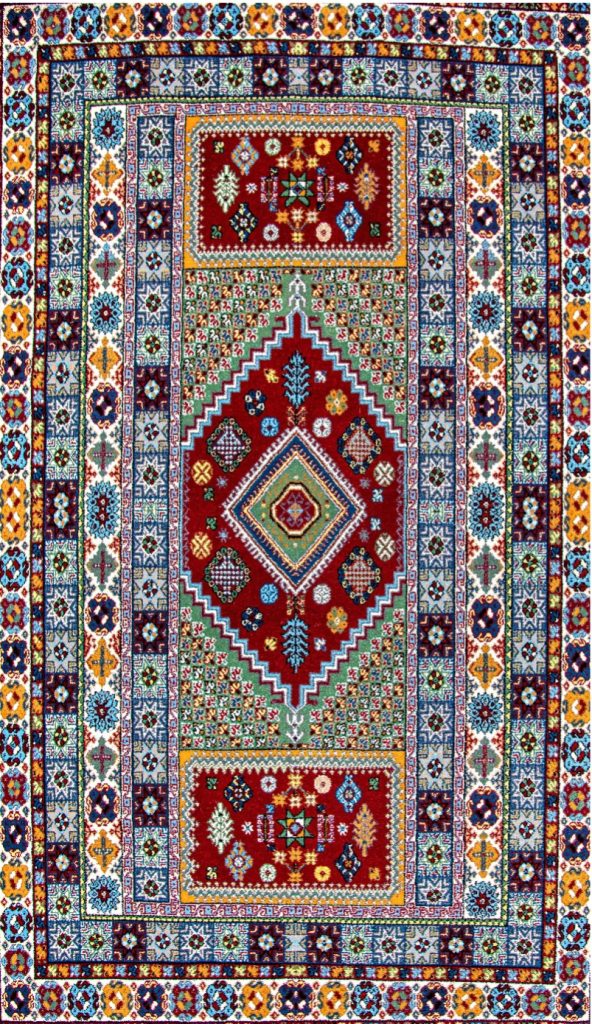
Tapis de Rabat ancienne composition artistique
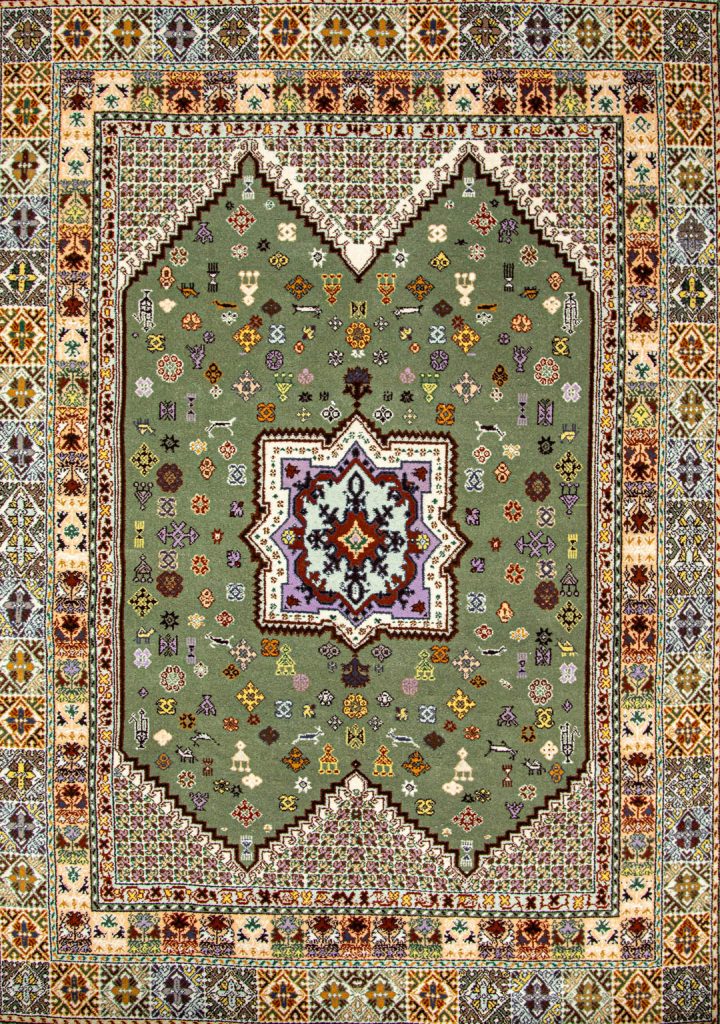
Tapis de Rabat moderne
The recognition of carpets as part of intangible cultural heritage, both nationally and internationally, opens up important prospects for their safeguarding and transmission. The aim is to document techniques, support cooperatives, train new generations and promote responsible, ethical consumption.
This rich heritage is divided into several carpet classes, corresponding to specific geographical and cultural contexts: city carpets, rural carpets, Haouz carpets and oriental carpets. Each of these categories presents distinct characteristics that deserve to be better known and promoted.
Moroccan city carpets, mainly produced in Rabat, Salé or Fez, are distinguished by their fine craftsmanship, precise floral motifs and strong Andalusian and Oriental influences.
In Rabat in particular, carpets developed within the medina, often under the protection of guilds and artisanal guilds. Rabat carpets use high-quality wool, fine knotting and rigorous framing of the composition. The central medallion, spandrels and borders decorated with “listels” or arabesques are structuring elements of this tradition. These carpets, intended for a diversified or institutional clientele, were sometimes made to order, in bright colors (carmine red, cobalt blue, ivory, etc.).
The Moroccan rural carpet, in the rural and tribal world, particularly in the mountainous regions of the Middle Atlas (Aït Oumalou, Aït Seghrouchen, Aït Bouguemmaz…), and the High Atlas (mainly among the Aït Ouaouzguites), carpets are produced by women in their homes.
In the Middle Atlas, these are dense, often long-haired carpets (like Beni Ouarain carpets) in natural colors, woven to meet domestic needs (bedding, protection against the cold…).
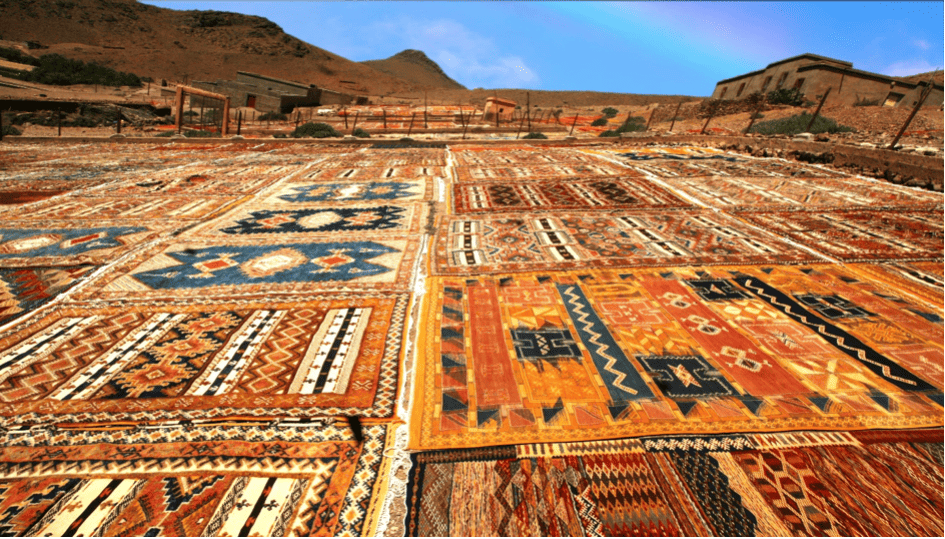
Tapis du Haut Atlas des tribus des Aït Ouaouzguite
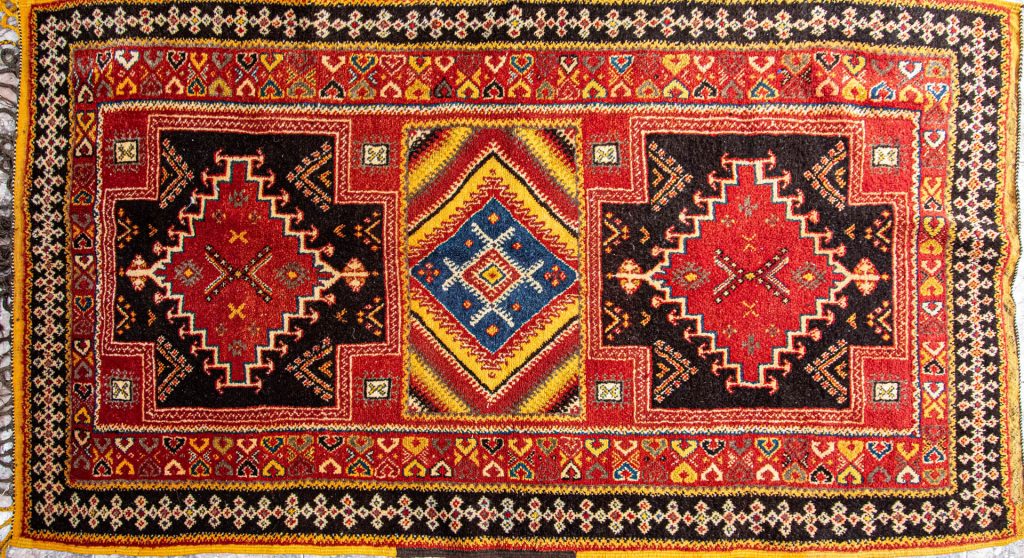
Tapis du Haut Atlas sous tribu des Aït Tamassine
In the High Atlas, on the other hand, carpets are rather light and suitable for all domestic uses. The ornamentation is marked by great formal freedom and ancient symbolism, made up of lozenges, chevrons, Berber crosses and feminine symbols. These carpets are bearers of spirituality and memory, beliefs and rites linked to fertility, nature and invisible forces.
The Haouz region, particularly around Marrakech, has given rise to a category of hybrid carpets, borrowing from both rural tradition and the decorative concerns of city carpets. These carpets (like those of Oulad Bousébâa, Rehamna, Seraghna, H’mar or Chiadma) combine several techniques (knotted-stitch carpets, flat-weave carpets, sometimes with embroidery).
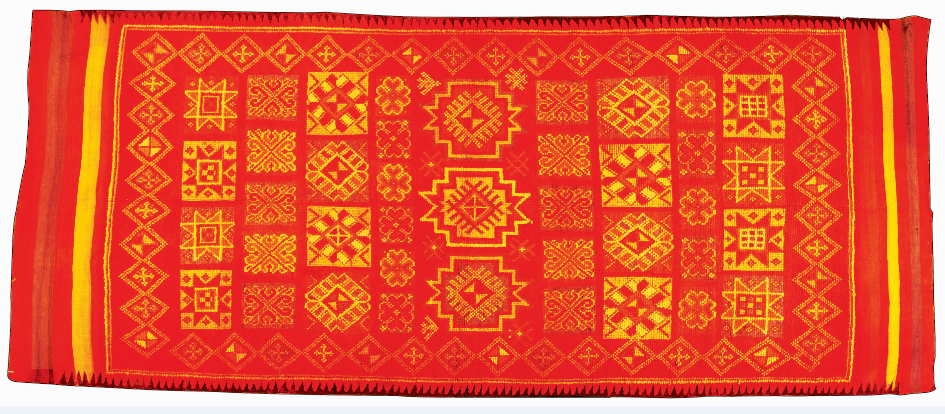
Tapis du Haouz de Marrakech, tribu des Oulad Chennane
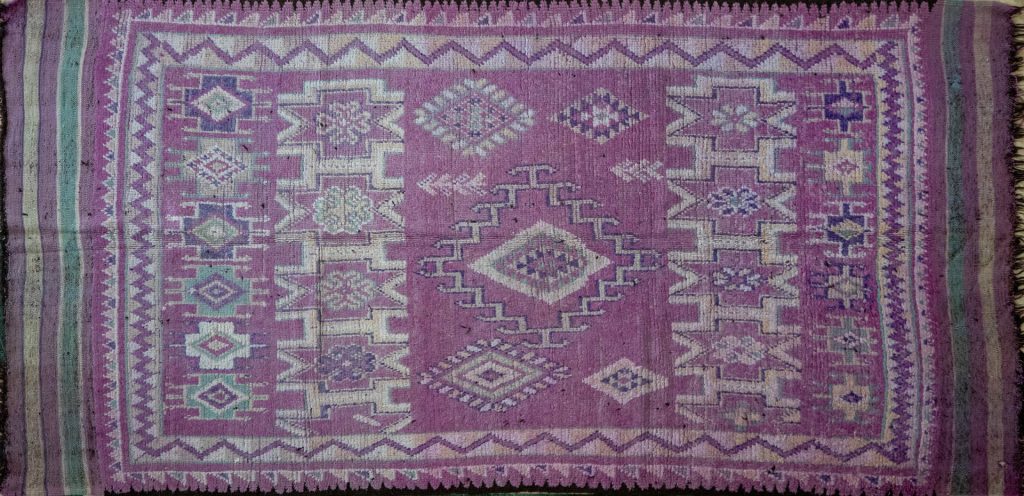
Tapis du Haouz de Marrakech, tribu des Oulad Bousébâa
The colors are more bold, with madder red still dominant, and the compositions very graphic, with decorative bands reading vertically or horizontally. They reflect the evolution of local aesthetic tastes, influenced by trade, regional fairs and the arrival of designers who reconsidered traditional motifs.
In the Oriental regions, particularly in towns such as Oujda and Berkane, carpets display a finesse inspired by the Persian or Turkish styles. The knotting of Beni BouYahyi and Beni Isnassen carpets is tighter, the motifs often symmetrical, and the decorations feature stylized plant elements.
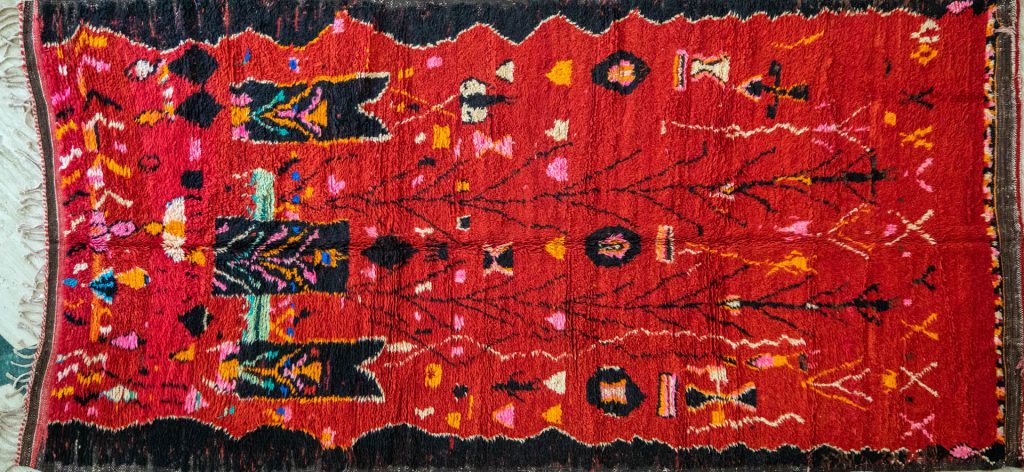
Tapis du Maroc Oriental, tribu Aït Bouchaouen
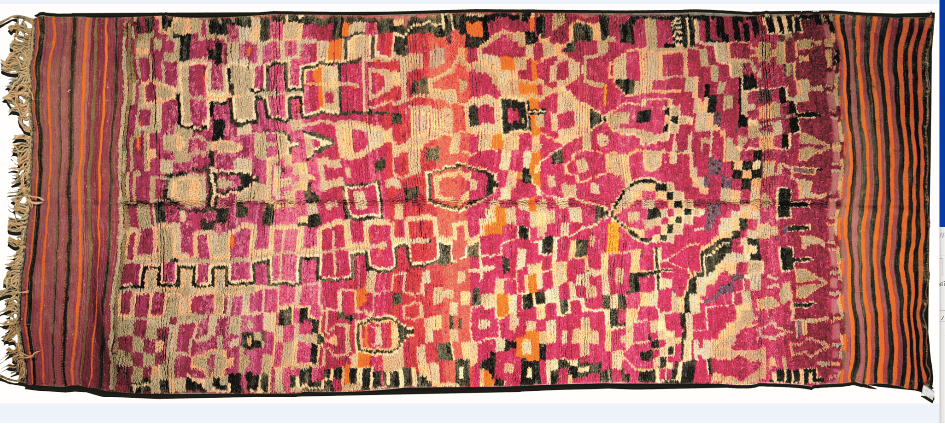
Tapis du Maroc Oriental, tribu Aït Bouchaouen
Eastern Moroccan carpets are generally less well known internationally than those of the Middle Atlas, but they represent a specific heritage that deserves to be rediscovered. Their manufacture relies on a workforce whose know-how is an innate mystical gift.
Moroccan carpets not only fulfill an aesthetic or economic function: they are also a means of expression, recognition and social valorization. Offered as a dowry at a wedding, handed down as an heirloom, exhibited at festivals or rituals, it is a sacred object charged with memory. It is also a means of integration for women, particularly in rural areas, where women’s cooperatives have enabled thousands of them to escape isolation, earn a stable income and forge bonds of solidarity around a common trade.
The recognition of Moroccan carpets as an intangible heritage by national and international institutions (Maison de l’Artisan, Label STEP, UNESCO safeguarding projects, etc.) has given new visibility to this know-how. Festivals, masterclasses, museums and training centers have been set up to document, transmit and promote this textile culture.