From hand to mind, the art of knowledge transmission
The transmission of know-how in carpet weaving has historically been rooted in family structures: mothers passed down gestures, secrets, and techniques to their daughters within the intimacy of the home. This unwritten yet deeply embodied knowledge formed a precious chain of feminine wisdom. During the Protectorate, this transmission was partially institutionalized through the creation of craft schools aimed at preserving and promoting traditional trades.
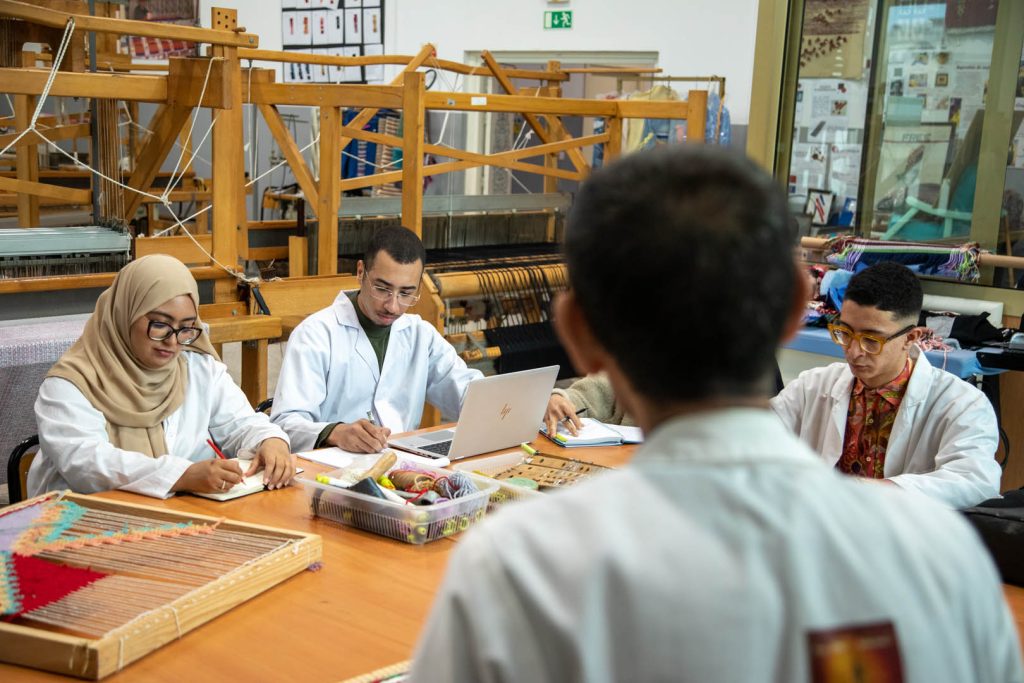
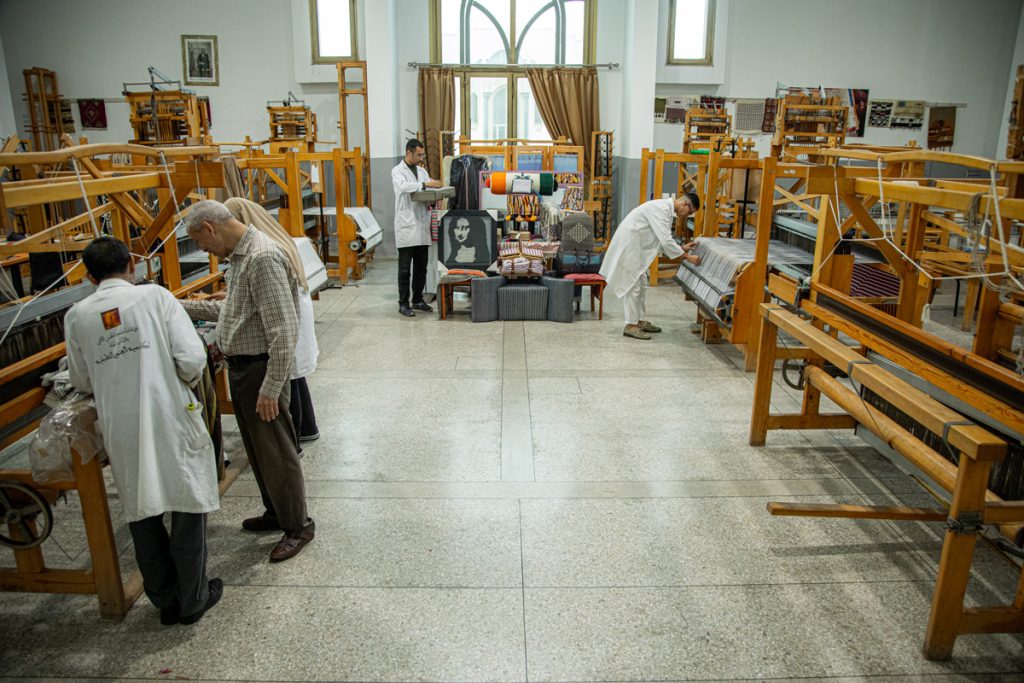
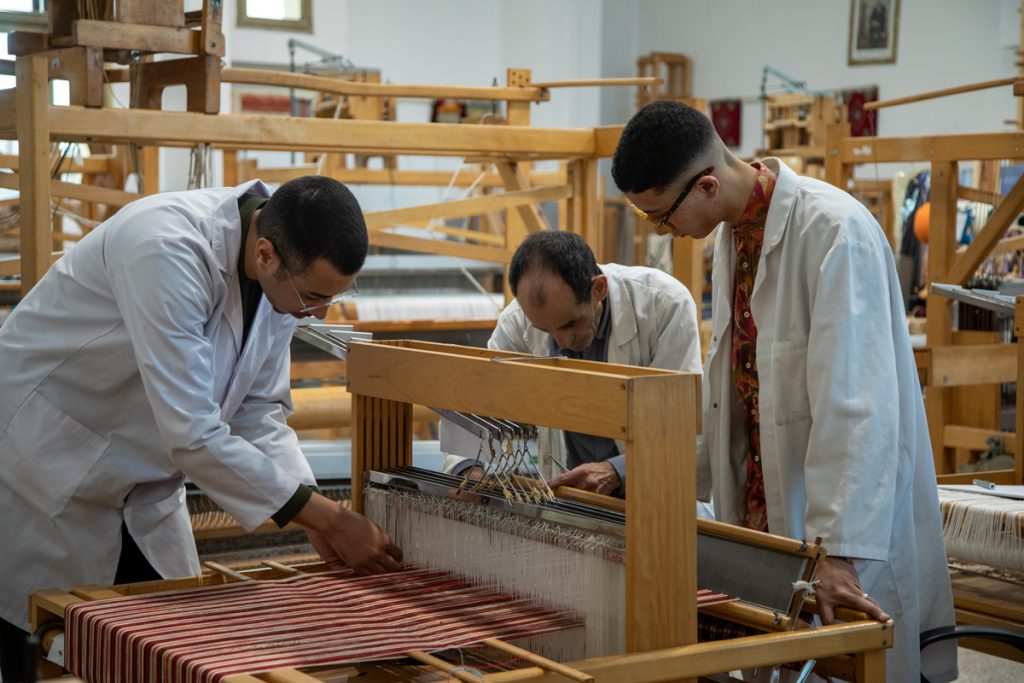
Following independence, training centers under the Ministry of Handicrafts expanded access to these professions, integrating technical, legal, and commercial modules. Two institutions now embody excellence in this field: the OFPPT, which trains high school graduates in craft-related programs with an entrepreneurial focus, and the Academy of Traditional Arts in Casablanca (AAT), offering a rigorous curriculum that combines ancestral knowledge and innovation.
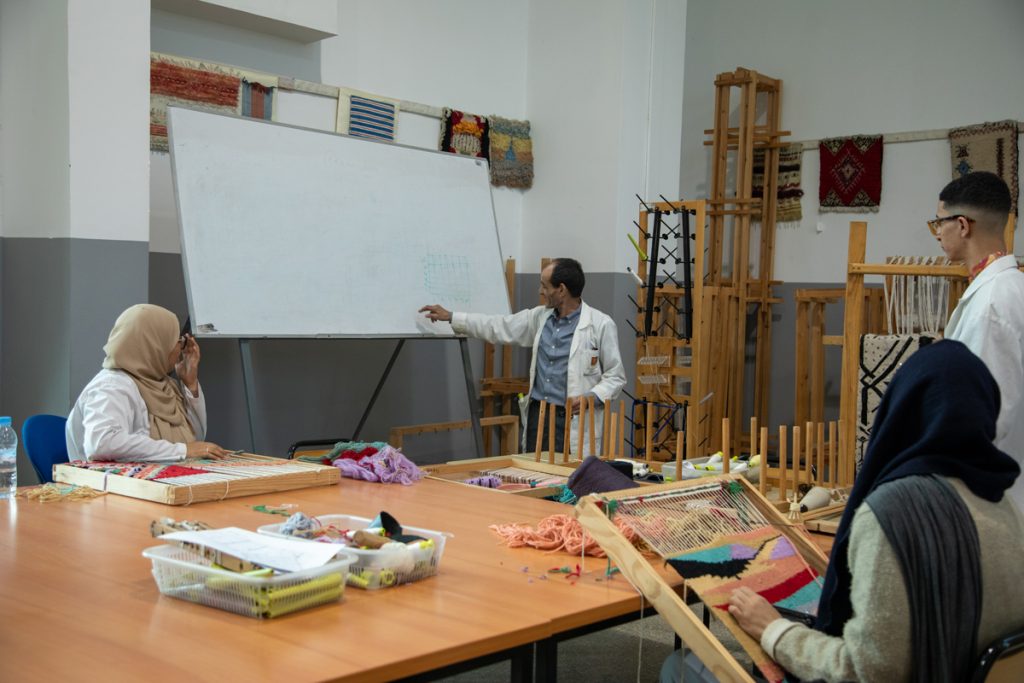
However, the transmission of know-how today goes beyond technical learning. It faces several contemporary challenges:
- Economic: globalization and industrial competition require the training of versatile professionals.
- Cultural: declining youth interest demands a renewed image of artisanship.
- Digital: modern tools enrich learning but may weaken the spirit of artisanal mentorship.
- Ecological: respect for materials and nature must become a core value of training.
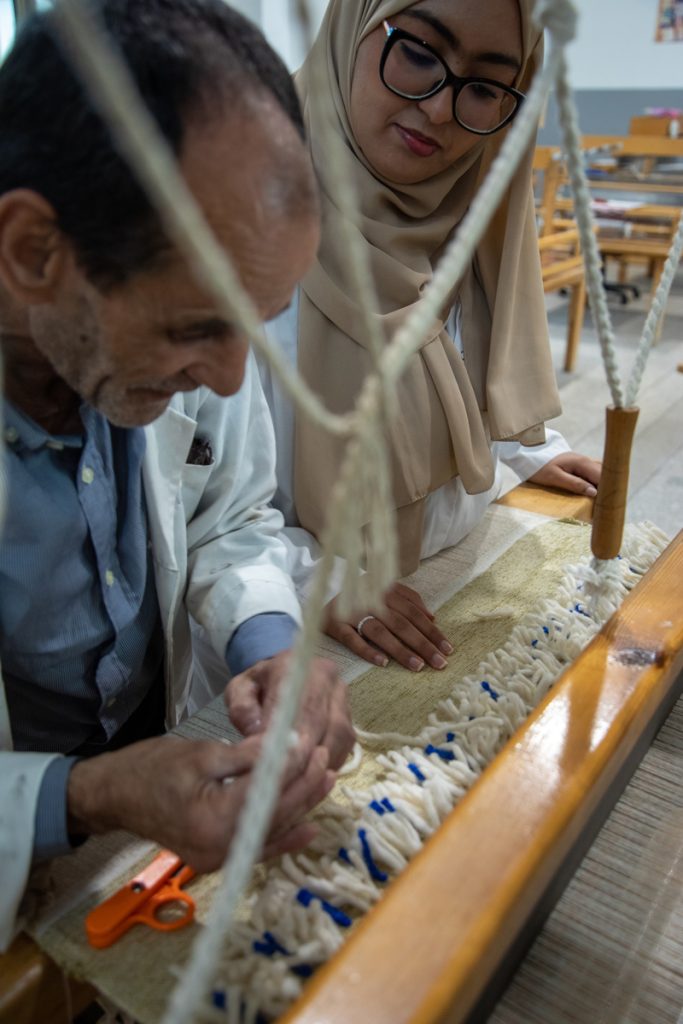
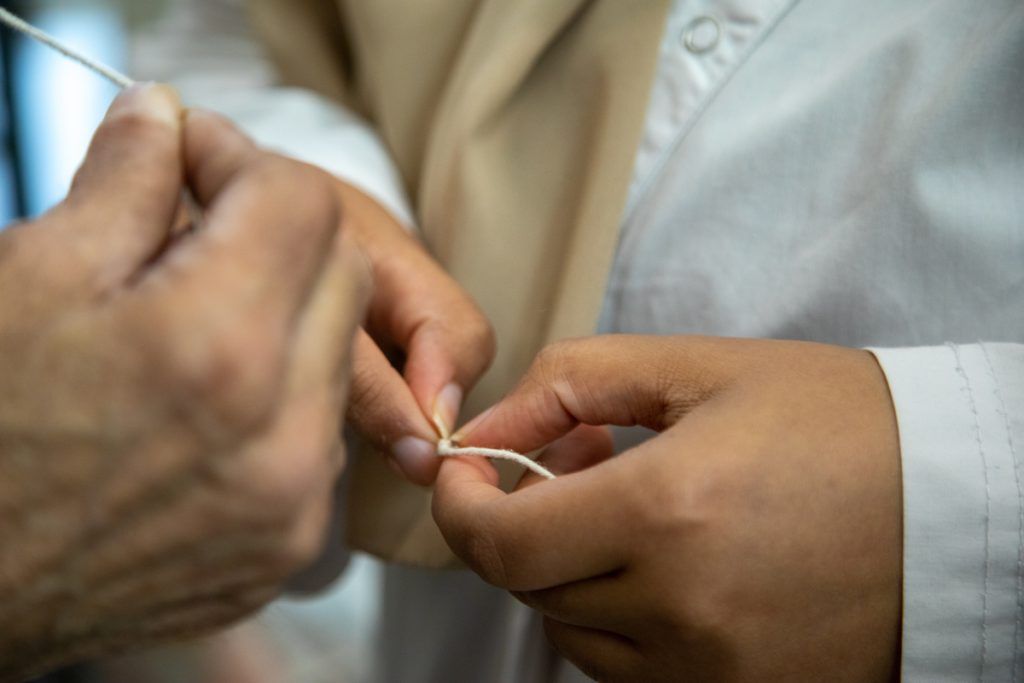
To transmit carpet weaving today is to teach more than a skill—it is to pass on a worldview, a relationship to time, beauty, and matter. Encouraging hybrid approaches that combine craftsmanship, creativity, and entrepreneurship is essential to shape a new generation of knowledge keepers. Transmission thus becomes a founding act, a thread stretched between past and future, memory and innovation.
The R’bati Carpet Weavers’ Community: Between Tradition and Modernity
The R’bati carpet weavers’ community embodies ancestral know-how passed down from generation to generation. Once integrated into artisanal guilds governed by precise rules, these women were supervised by key figures such as the Maâlem, a master artisan responsible for training, and the Amine, who ensured compliance with standards. Transactions and customary practices were recorded in manuscripts called lehrafa, which served as living archives of the craft.
Over time, these traditional structures evolved. To adapt to contemporary economic and social realities, the weavers regrouped into cooperatives. This modern model promotes pooled resources, access to continuous training, marketing opportunities, and legal recognition. The first weavers’ cooperative was created in the 1960s, marking a major milestone in the economic empowerment of women artisans.
The Office for the Development of Cooperation (ODCO) actively supports these cooperatives by providing legal frameworks, facilitating access to financing, and organizing training sessions in management and marketing. The Ministry of Tourism, Handicrafts and Social and Solidarity Economy complements this structure through programs aimed at enhancing value, certification, and economic integration. The Maison de l’Artisan, founded in 1957, also plays a key role through its Centers of Excellence, offering specialized training, product development tools, and strong support for participation in national and international fairs.
In Rabat, several women-led cooperatives continue the heritage of the R’bati carpet while adapting to market requirements. Thanks to the combined efforts of these institutions, these women have maintained a balance between tradition and modernity, between heritage preservation and professional development. Through their dedication, they contribute not only to the transmission of a noble craft, but also to the affirmation of their central role in the Moroccan artisanal economy.
My Grandmother's Rug
As part of its educational mission, the Foundation raises awareness among younger generations about the importance of safeguarding intangible heritage. To this end, it has created the magazine « Roya » — a platform for artistic, journalistic, and literary expression for middle school students. Here is a story on the R’bati carpet by Malak Razzak.
One day, I went to the city of Rabat to spend the holiday with my grandmother. As soon as we arrived at her house, her face lit up with joy and she welcomed us warmly. However, I noticed that she often went to a room isolated from the rest of the house, where she would spend many hours. My curiosity led me to ask her what she did there, and she smiled widely before saying, “Then come with me.” She took me to that room, and to my surprise, I discovered that it was a workshop for weaving rugs. I was amazed by the colorful wool, the various weaving tools, and the collection of vibrant rugs that looked like pieces of art. I asked her, in awe, “Where did you get all this, Grandma?” She replied, “All these rugs you see here were made by my own hands, specifically in this workshop, where I would spend many hours, coordinating the colors with my sense of feeling, for each pattern has a story.”
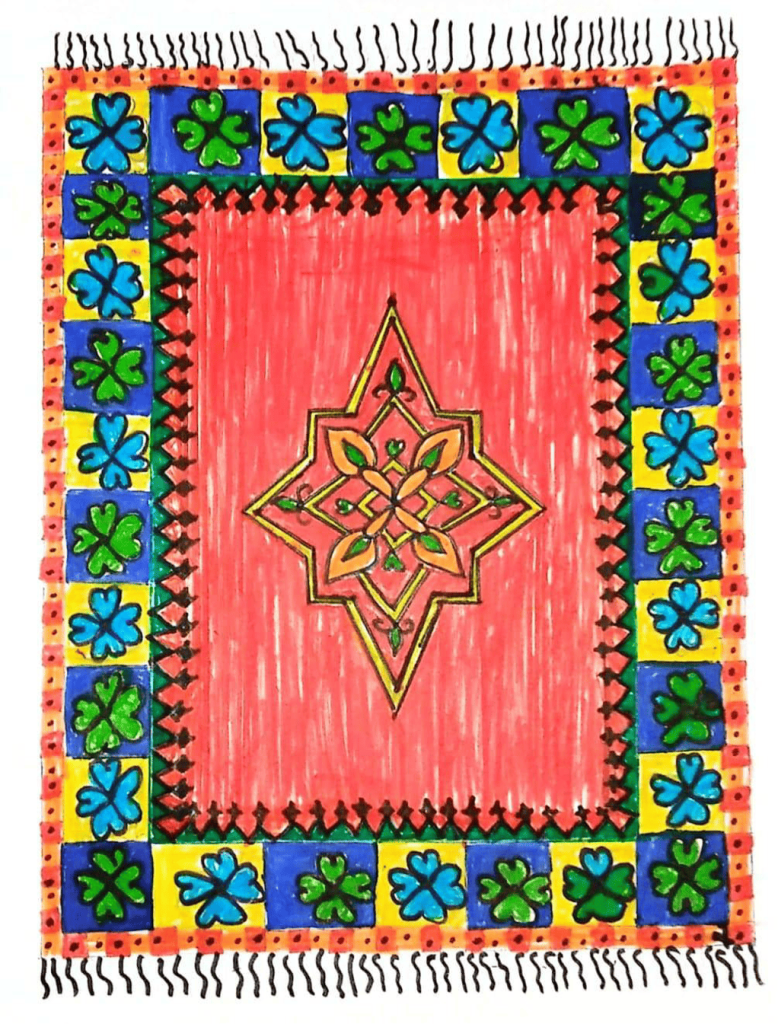
I spent the entire holiday accompanying her to her workshop, watching her weave her rugs with passion and love. When it was time for me to leave, as I was bidding her farewell, she surprised me with a red rug, beautifully patterned with harmonious colors. She handed it to me and said, “This rug is called the free Rabat rug. Keep it safe, for it is part of our heritage and ancient traditional crafts that have been passed down from generation to generation. It holds a special place in my heart. I’ve received many offers, but I never will and never could part with it.”
On my way back, I encountered a foreign tourist who was fascinated by the rug in my hand. He asked if I would sell it to him for a significant amount of money. I understood that it was quite a sum, but I immediately declined, remembering my grandmother’s words to preserve it… For it is a symbol of my authenticity and identity.
By : Student: Malak Razzaq, Age: 14
Supervising Teacher : Fadwa Oulad Ben Ahmad
Imam Al-Bukhari Middle School – Rabat